The rba meeting has opened against an unexpected budgetary backdrop: an oil shock linked to the Iran conflict that hands the government short-term fiscal gains while threatening renewed inflationary pressure. With unleaded above $2. 20 a litre and diesel topping $2. 60 a litre, economists urge that windfall revenues be used for lasting reforms rather than immediate cost-of-living handouts.
Rba Meeting: Why the central bank’s ‘narrow path’ matters
The Reserve Bank, which began its two-day rates-setting meeting on Monday (ET), has signalled a continued preference for walking a “narrow path” — raising rates gradually so unemployment stays low while guiding inflation back to target. That posture frames the immediate trade-offs confronting fiscal policymakers: stimulating households through fuel excise cuts or energy rebates would boost disposable incomes and, by extension, demand, at precisely the moment the RBA prefers demand moderation.
HSBC chief economist Paul Bloxham warned that familiar demand-side responses risk repeating the post-pandemic error of adding to inflationary pressures. “The challenge is that some of the economics tools previously used to manage cost-of-living challenges actually added to demand and inflation problem, ” he wrote in a research note. Bloxham added that subsidies and excise cuts amount to effectively the same stimulus for households — whether delivered as lower bills or cash-like relief — and therefore could undermine the central bank’s effort to keep inflation on a downward trajectory.
Budget choices amid an oil shock
Politicians are thus confronted with a classic policy tension: use improved fiscal receipts from higher commodity prices to cushion households now, or lock those gains into reforms that raise productivity and reduce structural deficits. The context makes the argument for restraint sharper: the same commodity-driven uplift helped the budget after an earlier geopolitical shock, and that episode was later judged to have masked underlying weaknesses.
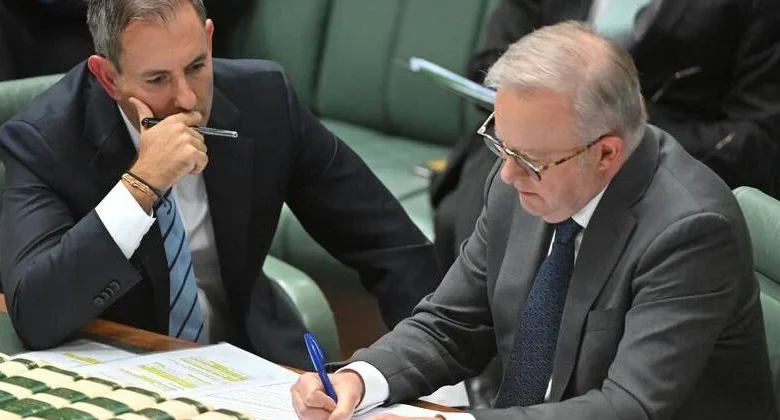
Treasurer Jim Chalmers has resisted calls to cut the fuel excise even as pump prices have risen sharply, signalling a preference to pursue reform packages focused on savings and productivity. “I see developments around the world and pressures on Australians here at home not as a reason to go slower, but a reason to go further, and that’s the approach that I’ll be taking to the deliberations that I lead with the cabinet colleagues, ” Dr Chalmers said, describing plans to offer colleagues “a whole bunch of options when it comes to tax reform. ” The Treasurer’s stance frames any fiscal choice against an institutional commitment to longer-term fiscal repair rather than short-lived relief.
Expert perspectives and implications for tax reform
UNSW economics professor Richard Holden warned of the political risk in treating windfalls as permission for broad spending increases: “They treated budgetary good luck as if it was good management, and then said, we can get away with spending a bunch more money. ” Holden highlighted that rising commodity prices and inflation could lift tax revenue enough to improve the fiscal position, but he cautioned that higher interest costs and slower growth might offset those gains. His assessment underlines the limited durability of resource-driven fiscal improvements and the need for disciplined policy choices.
Taken together, the views of Paul Bloxham, Dr Chalmers and Professor Holden create a clear policy triage: resist immediate, demand-boosting relief that would complicate the RBA’s narrow path; prioritise reforms that raise productivity and expand non-inflationary growth; and use any temporary budgetary breathing room to shore up long-term sustainability through tax reform and targeted savings. The rba meeting context makes those trade-offs more acute, as monetary policy settings are unlikely to accommodate a fresh surge in demand without risking higher inflation.
For policymakers, the question is whether the political convenience of visible cost-of-living measures can be set aside in favour of structural change that reduces vulnerability to future shocks. The rba meeting’s emphasis on gradual tightening underscores the perils of choices that boost disposable income now at the expense of inflation control and economic stability later.
As the government prepares reform packages and deliberates with cabinet colleagues, one pressing question remains: will short-term political relief win out over the fiscal discipline and tax reform advocates argue is necessary to turn transitory commodity fortune into lasting resilience — or will this oil shock become another episode of budgetary good luck mistaken for good management?