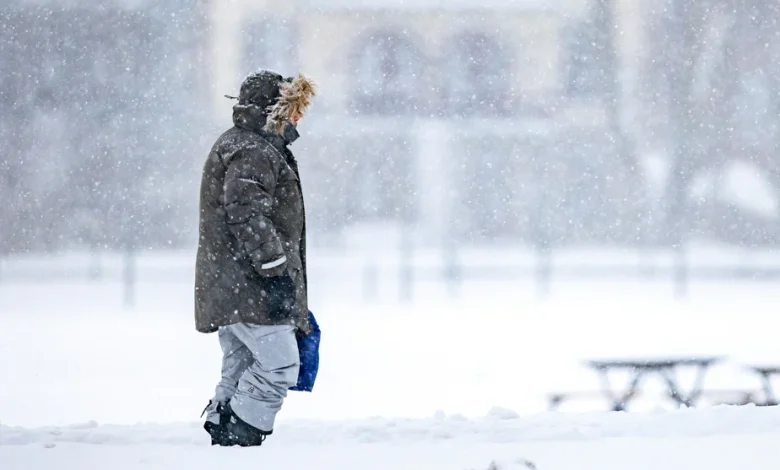
On the edge of a northern town, streetlights blur behind a curtain of falling flakes as residents nail plywood to windows and businesses move snowblowers closer to doors: this is the scene many might face as the tempete neige moves in. Weather bulletins promise heavy, changing precipitation across vast stretches of the province that will force people to decide whether to travel or wait it out.
Which regions will be hardest hit by the Tempete Neige?
Forecasts span a wide swath of Quebec. Environment Canada expects the heaviest snow in Abitibi-Témiscamingue, on the Côte-Nord and in parts of the Nord-du-Québec, where accumulations could reach between 20 and 50 cm in some places. The north-west of Saguenay–Lac-Saint-Jean and parts of Mauricie are forecast to see 15 to 30 cm, while the Laurentides may receive about 5 to 10 cm. At the same time, the St. Lawrence Valley, including the greater Montréal area and regions south of the river, are likely to be spared the worst of the snow and see mainly rain.
What conditions should people expect and how dangerous will travel be?
Winds are expected to gust strongly enough to create blowing snow and reduced visibility; gusts near 50 km/h are noted in forecasts and even stronger winds are mentioned for some southern areas. An Environment Canada warning emphasizes that travel will probably be difficult and that visibility could be suddenly reduced to near zero at times, with the possibility of road closures. Guillaume Perron, meteorologist at Environment Canada, said: “It’s a Colorado low that will move toward Quebec and will bring mainly snow for those sectors. ” He added that the snow is likely to change to rain when temperatures rise above freezing and that freezing rain is possible during that transition.
How will the mix of snow, sleet and freezing rain affect communities?
The system is expected to be a complicated blend of precipitation types in many areas. Forecasters note the potential for sleet and freezing rain to accompany the snow in spots, and a period of freezing rain could leave 2 to 5 mm of glaze on the ground where it occurs. That glaze can greatly increase the risk to power lines, trees and road surfaces. In more northerly zones, models cited in forecasts suggest sustained heavy snowfall at times, creating deep drifts and straining municipal plowing operations.
Forecast briefings also highlight a stark swing in temperatures: after a temporary warm spell that will bring rain and milder conditions in the south, a sharp cold front will follow. Temperatures are expected to plunge again, with lows falling to around −20°C in some places during the cold snap after the system passes. That rapid change raises concerns about refreezing and the return of icy hazards on treated surfaces.
Local officials and road authorities are preparing for interruptions and have been urged to consider closures if conditions deteriorate. Plow operators, municipal emergency managers and provincial road services are positioned to respond, while Environment Canada has issued warnings to the public to limit non-essential travel.
What should residents do now?
Prepare for limited mobility: top up essential supplies, secure outdoor items and keep vehicles fuelled if travel cannot be avoided. Pay attention to Environment Canada statements and local road advisories through official channels. For those in the most northerly and western zones expecting the deepest snow, make plans for clearing heavy accumulations safely and watch for abrupt visibility losses from blowing snow.
Back on that quiet main street, lights now glow longer into the evening as neighbours trade updates and plow drivers check routes. The tempete neige will test equipment and patience, but with warnings in place and crews mobilized, the aim is to keep people safe until the weather settles. When the storm finally moves on and the air bites back with bitter cold, communities will measure the damage, clear the streets and set their clocks to watch the next swing of the season.