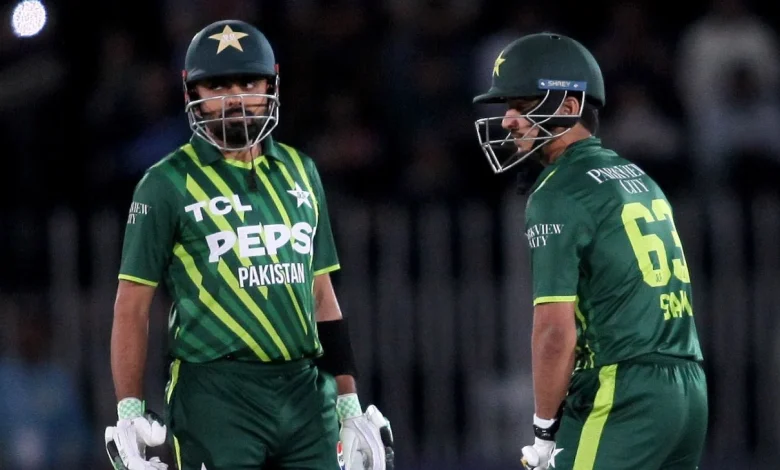
Pakistan’s decision to hand ODI caps to four newcomers has rewritten expectations for the opening match against Bangladesh, and it frames a stark choice for selectors and coaching staff in the run-up to the three-match series: ban vs pak as a test of talent infusion versus experience retention.
What exactly changed in the Pakistan squad?
Verified facts: The Pakistan Cricket Board (PCB) retained Mike Hesson as white-ball head coach. Shaheen Shah Afridi will lead the side as captain. The ODI playing XI for the first match was set to include four debutants: Sahibzada Farhan, Shamyl Hussain, Abdul Samad and Maaz Sadaqat. The squad contains six uncapped players overall. Established names omitted from the 50-over squad include Babar Azam, Saim Ayub, Mohammad Nawaz and Naseem Shah. Mohammad Rizwan remains as wicketkeeper while Salman Ali Agha, Abrar Ahmed and Faheem Ashraf keep places in the squad. The three-match series is scheduled to begin on March 11, with the second and third matches on March 13 and March 15, all in Dhaka.
Analysis: The scale of change is notable: it is the first Pakistan ODI side with as many debutants since 2008, and only the second such occurrence since 1980. Retaining Mike Hesson at the helm signals institutional continuity even as playing personnel are overhauled. The mix of experience retained in the bowling group and fresh faces in the top and middle order suggests a deliberate selection profile that prioritizes batting reinvention alongside a more familiar pace and spin core.
Ban Vs Pak: Is this a strategic reset or a reckless gamble?
Verified facts: Mike Hesson, Pakistan white-ball head coach, described the incoming players as “an exciting group, ” and said the fresh faces had “earned the right” to opportunities with the senior team. Sahibzada Farhan, age 30, was the leading scorer at the recent T20 World Cup with 383 runs at that tournament and has been identified for a top-order role. Shamyl Hussain, 21, finished as the second-highest scorer in the most recent Quaid-e-Azam Trophy and averages over 46 in 13 List A games. Abdul Samad, 28, averages over 35 in List A cricket and has two List A hundreds. Maaz Sadaqat, 20, has three hundreds and two half-centuries in his last 12 50-over games and bowls slow left-arm orthodox; no specialist slow left-arm orthodox bowler was selected for the conditions expected in Dhaka.
Analysis: The selections foreground several explicit judgments by management. One is faith in players who have strong recent white-ball form or demonstrable capability to transfer T20 success to 50-over cricket. Another is a willingness to accept short-term risk to accelerate development of a new ODI core. The retention of experienced seamers and a lead legspinner indicates a hedged approach: selectors are supplementing a known bowling base with experimental batting options rather than rebuilding across all departments at once.
Who stands to gain and who must answer for this overhaul?
Verified facts: The Pakistan squad change has displaced leading international names from the ODI group: Babar Azam and Saim Ayub are omitted from the 50-over squad. The PCB also appointed a touring support team, with Irtaza Kumail named team manager replacing Naveed Akram Cheema, and staff changes that include Ashley Noffke (bowling coach), Shane McDermott (fielding coach), Hanif Malik (batting coach), Cliffe Deacon (physiotherapist) and Grant Luden (strength and conditioning coach), along with analysts, media and medical staff.
Analysis: The personnel shifts in both playing and support groups create multiple accountability nodes. Selectors and the PCB will be judged on the immediate on-field outcomes in Dhaka; coaches and support staff will be assessed on preparation and integration of the debutants. Players dropped from the ODI list will face scrutiny over form and selection rationale, while the newcomers will be evaluated on their ability to adapt quickly in overseas conditions.
Final assessment: The Pakistan approach places rapid renewal at the centre of the first ODI selection. The move to deploy four debutants turns the opening match into more than a fixture; it becomes a focal experiment in selection philosophy and talent pathway validation. For readers tracking this confrontation of strategy and consequence, the phrase ban vs pak now describes not only a match-up on the field but the choosing between conservative continuity and aggressive renewal by the Pakistan Cricket Board and team management.