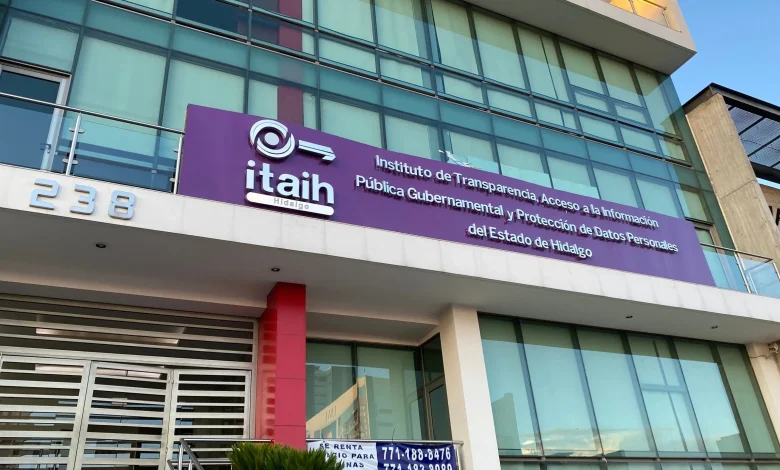
On a humid morning in Pachuca, the small reception room of the Institute of Transparency feels both ordinary and suddenly fragile: clerks sorting requests, a noticeboard still pinned with public-study summaries, and the quiet hum of servers that host public records. For residents who file freedom-of-information requests, this everyday scene now sits at the center of a constitutional turn in hidalgo that dissolves the institute’s autonomous status and begins a formal transition away from the body known as ITAIH.
What does the constitutional reform mean for Hidalgo’s transparency institutions?
The recent constitutional modification removes the classification of the Instituto de Transparencia, Acceso a la Información Pública Gubernamental y Protección de Datos Personales del Estado de Hidalgo (ITAIH) as an autonomous organism. The change also withdraws the institute from the State Anti-Corruption System. Lawmakers in the state congress are required to harmonize the secondary legislation within 180 days, and the harmonization must include the process and the date when the ITAIH will be formally extinguished. The governor, Julio Menchaca Salazar, is the executive authority tasked with issuing the specific decree of extinction.
How will the ITAIH’s functions, staff and resources be handled?
Under the reform, any savings generated by the institute’s disappearance will be transferred to the Secretaría de Hacienda of the state executive. Human resources currently employed by the institute will become part of the state Contraloría. The measure also preserves the legal effects of acts carried out by the ITAIH before the harmonization decree takes effect and states that materials, records, platforms and electronic systems will pass to whichever entity assumes the institute’s functions.
For the immediate period before the harmonization enters into force, “the ITAIH will continue operating in accordance with its attributions. ” Commissioners and officials will remain in their posts until the new regime is formalized, after which their mandates conclude on the date established by the extinction decree.
Who will manage the transition and what protections remain for the public?
The Secretaría de Contraloría must lead the administrative transition: within 30 days after the harmonization takes effect it is charged with installing and presiding over an Interinstitutional Transition Committee. That committee will include representatives of the executive, legislative and judicial powers as well as the institute itself to coordinate the process. The constitutional changes also reaffirm the public’s right to access information and to protection of personal data, assigning responsibility for guaranteeing those rights to contralorías or equivalent bodies within the three branches of government and to internal control organs.
Obligations written into the reform require public bodies to preserve up-to-date administrative archives and to publish full and current information on public resource use through electronic means and the national transparency platform. The constitutional text preserves free access to public information without the need to demonstrate interest and anticipates mechanisms for review and sanctions in cases of noncompliance.
From an institutional perspective, the Secretaría de Contraloría will act as specialist coordinator of the technical and administrative tasks necessary to transfer systems and to ensure continuity of access. The legal framings to be drafted by the legislature during the 180-day harmonization window will determine operational details and the precise moment when the institute’s autonomous chapter ends.
For citizens who have relied on the ITAIH for years—some since its first councilors were sworn in 2008—the change raises practical questions about where to submit requests, how archived records will be accessed and how sanctions for opacity will be applied. The constitutional reform retains the underlying rights but relocates the institutional guardianship that enforced them.
Back in the institute’s reception room, a packet of printed freedom-of-information forms waits on a counter. The immediate instruction for staff is clear: continue business as usual until the legislature defines the transition and the governor issues the extinction decree. Yet for the resident who has queued here for answers about local spending, the legal shift feels personal and uncertain—an ordinary morning now refracted through the slow machinery of constitutional change in hidalgo.