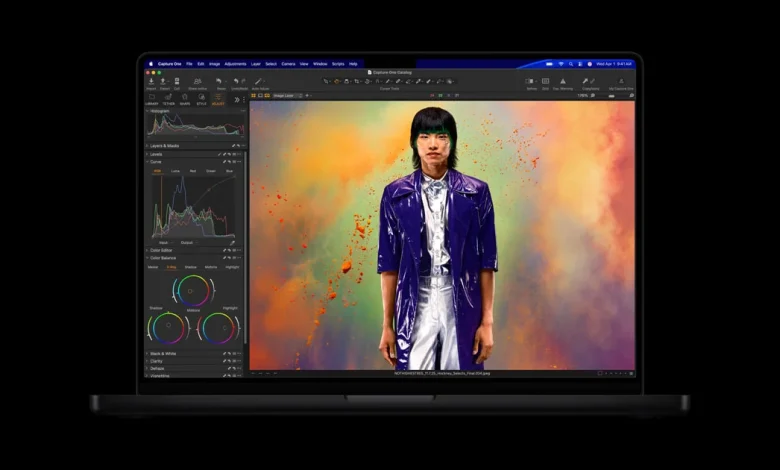
The Apple Macbook Air has received an M5 chip upgrade that brings the laptop in step with Apple’s latest processors, but the move also carries a $100 starting-price increase and fresh minimum storage. Apple announced the refreshed Air with a 512 GB baseline, N1 wireless offering Wi‑Fi 7 and Bluetooth 6, standard 16 GB of RAM, and 13‑ and 15‑inch screen options. Preorders open March 4 (ET) with availability beginning March 11 (ET), positioning the new Air alongside Apple’s more ambitious M5 Pro and M5 Max MacBook Pro family.
Background & Context
Apple unveiled a broader Mac refresh that includes a high‑end MacBook Pro powered by all‑new M5 Pro and M5 Max chips and an updated entry model in the MacBook Air line. The MacBook Pro announcement emphasized major AI and performance gains enabled by the new Fusion Architecture, Neural Accelerators in GPU cores, up to 2x faster SSD speeds, and larger starting storage options for pro configurations. In parallel, the Apple Macbook Air adoption of the M5 chip represents a more modest, consumer‑focused iteration: the Air receives the same processor family but without the Pro‑grade expansion in cores and memory bandwidth that underpins the Pro models.
Deep analysis and expert perspectives
The technical split between the Pro lineup and the refreshed Air is deliberate: Apple presented M5 Pro and M5 Max as engineered for demanding, AI‑enabled professional workloads, with claims of up to 4x AI performance versus the prior generation and up to 8x versus M1 models. Those chips feature up‑to‑18‑core CPUs in certain configurations, higher unified memory bandwidth, and enhanced GPU architecture. For consumers, the Apple Macbook Air’s M5 move focuses on bringing the latest core technology to a lighter, more portable product while keeping the rest of the platform stable—storage and wireless are the headline changes for the Air.
John Ternus, Senior Vice President of Hardware Engineering, Apple, stressed the company’s intent to broaden on‑device AI and pro performance with the M5 family, noting the role of Neural Accelerators in enabling advanced language models and AI workflows on laptops. His statement frames the M5 Pro and M5 Max as distinctly pro‑oriented silicon while the Air’s M5 configuration serves mainstream users who value portability and updated internals.
What Apple Macbook Air changes mean for buyers
Buyers face a straightforward calculus: the Apple Macbook Air now starts with 512 GB of storage and retains 16 GB RAM as the base memory option, while also gaining the N1 wireless chip with Wi‑Fi 7 and Bluetooth 6. The manufacturer increased entry prices—about $100 higher than the prior baseline—placing the 13‑inch and 15‑inch Apple Macbook Air variants at new starting points that reflect the added storage and updated silicon. Those who primarily use web, office, and creative apps may find the Air’s M5 sufficient, while users targeting heavy AI workloads, pro rendering, or simulation would remain directed toward M5 Pro and M5 Max MacBook Pro configurations that offer higher CPU/GPU core counts and expanded storage starting at 1 TB for Pro and 2 TB for Max.
Practical implications include faster baseline SSD performance on newer models across the lineup and improved wireless throughput for users on modern networks. The Air’s modest hardware changes beyond the chip mean many design and component choices are unchanged; buyers must weigh the value of the CPU update and larger base storage against the higher starting price and the absence of Pro‑class features such as expanded GPU core counts and greater unified memory bandwidth.
Regional and market ripple effects
The synchronized release cadence—preorders opening March 4 (ET) and availability beginning March 11 (ET)—places the refreshed Air directly in the spring upgrade window. The strategy of moving newer silicon into both premium and mainstream lines while reserving the largest architectural gains for pro SKUs may influence upgrade cycles, encouraging power users to migrate to the Pro models for AI and heavy multithreaded tasks while nudging mainstream customers toward the refreshed Air for incremental performance and connectivity gains. Industry and institutional buyers will likely reassess procurement plans based on the new baseline storage and the different starting points across the M5 family.
Apple’s product statements and specifications provide clear fact lines about what changed and what did not; uncertainties remain around real‑world AI performance on the Air versus Pro models until independent testing is widely available. How will buyers prioritize storage, connectivity, battery life, and raw AI capability in light of a price increase and differentiated chip designs?
Will the Apple Macbook Air’s M5 refresh be enough to reset upgrade demand, or will buyers wait for future iterations that carry deeper hardware changes and larger AI capabilities?