In hokum, a private journey to an isolated inn becomes something far less controlled: grief, folklore, and a disappearance collide in a single night. That is the striking promise around Adam Scott’s return to horror, and it is also the film’s central tension — a story that begins as a personal retreat and ends as a confrontation with the past.
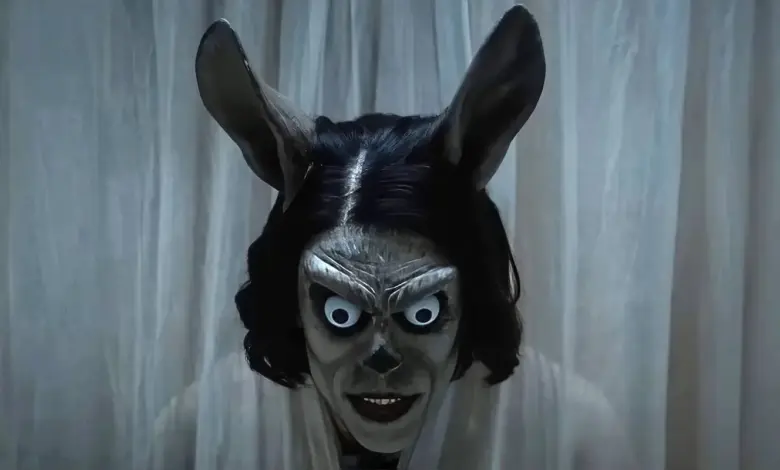
Verified fact: Damian McCarthy wrote and directed the film, which follows author Ohm Bauman, played by Scott, as he travels to a secluded inn in the Irish countryside to scatter his parents’ ashes. Once he checks in, the retreat is disrupted by folktales about a witch haunting the closed-off honeymoon suite. Informed analysis: The premise is built to turn intimacy into unease, using memory and place as traps rather than comforts.
What is Hokum really promising audiences?
The film’s setup matters because it does more than sell a scare. It positions hokum as a folky fright story that links personal mourning to a larger legend, then tightens that link with a shocking disappearance. The result is a narrative in which a harmless-seeming fairy tale becomes dangerous almost immediately.
Verified fact: Scott has described himself as a massive fan of horror and said this project is bringing him back to the genre. He also said the film is going to be “uniquely terrifying. ” Informed analysis: That wording suggests the appeal is not just shock value, but a carefully designed atmosphere in which dread grows from the setting itself.
Why does the film’s setting matter so much?
The secluded inn in the Irish countryside is not just scenery. It is the mechanism that isolates Bauman from anything ordinary, including the emotional distance he may have needed to keep the trip manageable. The closed-off honeymoon suite, in particular, introduces a symbolic contradiction: a room associated with intimacy becomes the site of haunting and disappearance.
Verified fact: The story unfolds over one night, and the witch legend is tied specifically to that sealed-off room. Informed analysis: By compressing the action into a single night, the film appears designed to remove escape routes, forcing the character — and the audience — to sit inside the same pressure cooker.
How does Adam Scott frame horror in this moment?
Scott’s comments during the CinemaCon 2026 conversation help explain why this project stands out in his broader career. He moved from comedy to a hit Apple TV series and said he has an effortless relationship with genre. He also discussed favorite films by Steven Spielberg, Stanley Kubrick, and Martin Scorsese, offering a picture of an actor who treats movies as both craft and personal obsession.
Verified fact: He said he believes some films should be seen in a theater rather than in pieces at home, and he specifically made that point about Martin Scorsese’s The Irishman. He also said The Shining is the Kubrick film he knows best, while Barry Lyndon and 2001 are favorites as well. Informed analysis: That perspective matters for hokum because it reinforces the idea that the film is being built for a full sensory experience, not casual viewing.
Who stands to benefit from this kind of horror?
The film’s appeal seems to be shared across several levels. Scott benefits by returning to a genre he clearly values. Damian McCarthy benefits by extending the kind of eerie, folklore-driven world associated with his work on Oddity. And the film itself benefits from a premise that gives audiences both emotional stakes and supernatural danger.
Verified fact: At CinemaCon 2026, Scott was honored for Excellence in Acting alongside James Cameron, LaKeith Stanfield, and Noah Centineo. Informed analysis: That recognition adds weight to the release, but the film’s own selling point is narrower and sharper: grief, isolation, and a haunted room that will not stay closed.
What does the evidence suggest about the film’s deeper appeal?
Taken together, the details point to a horror film that is not trying to overwhelm with scale. Instead, it appears to build discomfort from collision: a family death ritual, a remote inn, a witch tale, and a disappearance that forces Bauman into his past. That structure makes hokum less about spectacle than about collapsing the boundary between private grief and public legend.
Verified fact: The story’s central turn comes when the seemingly harmless fairy tale turns sinister. Informed analysis: The hidden bargain is clear: the film offers a deeply personal setup, then uses folklore to strip away any illusion of control.
For audiences, the question is not only whether the film can frighten. It is whether it can make the familiar feel unsafe by turning memory, ritual, and place against each other. On the evidence provided, that is the real promise of hokum.