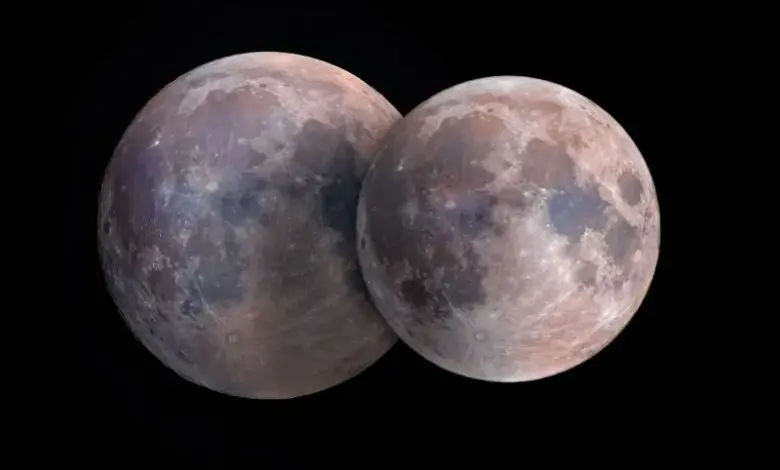
The flower moon is set to light up the night sky on Friday 1 May, rising as daylight fades and moving across the sky through the night. It will appear as a micromoon, meaning it will look slightly smaller than usual because it is at its farthest point from Earth in its orbit. The best viewing window begins low in the eastern sky and continues until it sets toward the south-west around dawn.
What to expect when the flower moon rises
The full Moon will first appear low in the eastern sky, then climb toward the south-east as midnight approaches. Throughout the night, it will cross the southern sky before setting off to the south-west around dawn. That timing makes Friday 1 May the key date for skywatchers looking for the flower moon.
This year’s full Moon is linked to a micromoon because it arrives close to apogee, the Moon’s farthest point from Earth in its monthly orbit. The difference is not dramatic to the naked eye, but the Moon may appear a touch smaller and a little less bright than average. In one cited comparison, the full Moon at apogee can be around 406, 135 kilometers away, while the Moon’s average distance is about 384, 472 kilometers.
Why this full Moon carries the Flower Moon name
The name flower moon comes from Native American seasonal naming traditions and was later popularized through sources such as the Farmer’s Almanac. The name reflects the natural world in May, when wildflowers burst into bloom, warmer weather returns, and plant growth renews. The timing fits the season closely, with early May bringing color, blossoms, and longer evenings.
In the UK, that seasonal shift is described as especially vivid, with bluebells carpeting ancient woodlands, hawthorn blossoms brightening hedgerows, and mild evenings stretching later into the night. Those details help frame why the flower moon name feels so closely tied to this point in the calendar.
Clouds could affect the best viewing
Weather may complicate the view in some places. Low pressure in the Bay of Biscay is expected to drift closer and bring a chance of showers, initially focused on western regions, with more cloud possible overnight. That means some locations may lose a clear, uninterrupted look at the Moon, even if skies remain patchy at times.
For those hoping to watch the flower moon, the main advantage is that the Moon will be visible for much of the night. If the early May opportunity is missed, there is also a rare second full Moon at the end of the month, known as a Blue Moon. In 2026, the May full Moon stands out not only for its seasonal name but also for its micromoon status, making the flower moon one of the month’s most notable sky events.