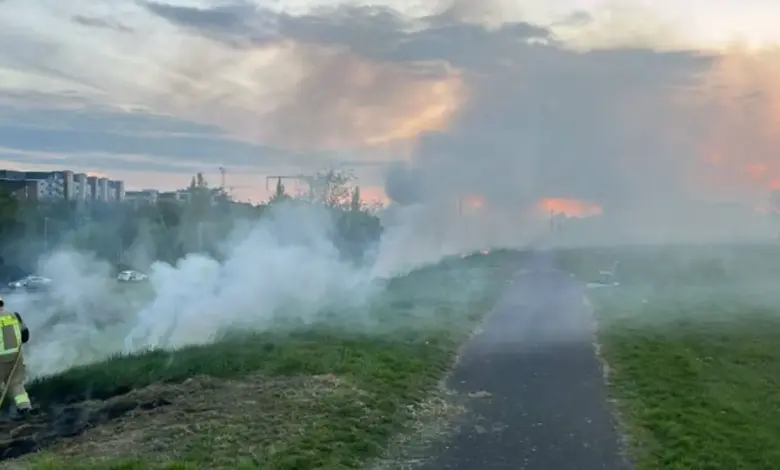
dublin fire is now part of a wider pattern of grass and gorse fires that have pushed crews across counties into repeated call-outs, with dry land, easterly winds and warm conditions creating a fast-moving risk window. The latest incidents show how quickly vegetation fires can escalate, stretch resources and threaten habitats even when no injuries are reported.
What Happens When Dry Weather Meets Open Land?
Fire crews from across Carlow and Kilkenny were called out overnight to extensive gorse fires on the Blackstairs Mountains, with the fires taking hold in the Raheendarragh area on Mount Leinster. It was the third time this week that crews had been sent to similar incidents, a reminder that the current risk is not isolated but repeated.
In Dublin, firefighters also tackled a grass blaze in Tolka Valley Park after a fire took hold in the park over the weekend. Finglas firefighters responded as Dublin Fire Brigade reminded the public about the wildfire risk. A Status Orange wildfire warning remains in place until Monday, April 27, and dry weather combined with easterly winds has been identified as part of the danger period.
What If the Fire Risk Stays Elevated Through the Week?
The practical issue is not only ignition, but spread. A Carlow Fire and Rescue spokesperson warned that these fires damage local habitats and take fire service resources out of urban areas to deal with them. The same spokesperson said the fires can spread very quickly because the land is so dry and winds, particularly in the evening, aid fast spread across large areas.
The public has been urged not to light fires or use barbecues, and to dispose of smoking materials responsibly in areas with very dry land and vegetation. The public is also being asked to remain vigilant and report any burning or fires to the Fire Service and to the Gardaí. During the warning period, landowners must obey all burning restrictions, and people are being asked to stay alert near dry grass or gorse and ensure parked vehicles do not block emergency access.
What If Multiple Incidents Keep Pulling Crews Away?
That is the clearest operational challenge in the current pattern. A Kilkenny Fire Service spokesperson said that this time of year fire services across the country are inundated with gorse fires. The same spokesperson noted that such fires can have a huge, devastating impact on nature, particularly ground-nesting birds, because habitats are destroyed.
There is also a wider prevention message embedded in the current warnings. The Environmental Research Institute at University College Cork explains that wildfires in Ireland are commonly associated with dry weather and may be started accidentally or as a result of controlled burns that become uncontrolled. Under Section 40 of the Wildlife Act, 1976, as amended, it is an offence to burn vegetation on uncultivated land from March 1 to August 31 in any year. Those restrictions matter now because conditions are giving even small fires a chance to become larger, faster-moving incidents.
| Current risk factor | Operational effect |
|---|---|
| Dry land and vegetation | Faster fire spread |
| Evening winds | Fire growth across larger areas |
| Repeated call-outs | Strain on fire service resources |
| Habitat destruction | Damage to local nature and wildlife |
dublin fire is therefore not just a local headline but a signal of how quickly seasonal fire risk can become a wider public-safety and environmental issue. The near-term outlook depends on whether dry conditions and warning-level weather ease, but the current pattern is clear: vigilance, restriction compliance and rapid reporting are the main tools available. If the warning period passes without further escalation, pressure may ease; if it does not, repeated vegetation fires may continue to pull crews away from urban areas and deepen the damage to land and wildlife. For readers, the lesson is simple: treat dublin fire as part of a broader wildfire season that is already active.