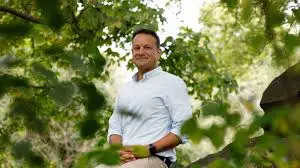
Leo Varadkar is back in the middle of a rural-urban argument that is older, sharper, and more personal than his latest apology suggests. The immediate dispute began with his comment that taxes paid in urban areas subsidise rural livelihoods, especially agriculture. But the reaction has also reopened an earlier memory in Leitrim, where one councillor recalled that leo varadkar once joked there was “no such thing as Leitrim. ” The result is not just embarrassment; it is a reminder of how quickly language can harden into political identity.
Why the latest apology did not close the argument
Varadkar said on Wednesday that he “did not mean to annoy anyone” and later acknowledged that he “went too far. ” That clarification matters, but it did not fully settle the dispute because the criticism was never only about tone. The central claim — that urban Ireland pays while rural Ireland receives support — touches a familiar nerve in Irish politics, where questions of fairness often overlap with geography, class and identity.
The reaction was immediate because the remark was heard not as a technical point about taxation, but as a value judgment. In the context of housing, public spending and regional inequality, statements like this can be read as defining one part of the country as productive and another as dependent. That is why leo varadkar’s comments have continued to travel beyond the original exchange.
Leitrim, memory and the politics of being dismissed
The Leitrim angle gives the story its most revealing edge. Cllr Paddy O’Rourke, the leas-cathaoirleach of Ballinamore Municipal District, recalled on Ocean FM that Varadkar had once claimed “there’s no such thing as Leitrim. ” The remark, made years earlier when Varadkar was a young Fingal County Council member, was remembered in the county as a slight, not a joke.
In that earlier episode, a proposal for tsunami aid prompted Varadkar’s quip that “Leitrim is a figment of the imagination and is nothing more than a social welfare scam. ” The chamber reportedly erupted in laughter, but the fallout was real. Varadkar later accepted it was “a very poor attempt at humour and a very silly and an ill-informed comment. ” For critics, that history matters because it suggests the latest controversy is not an isolated lapse. For supporters, it may simply show a politician whose humour has often outrun his judgment.
What the exchange says about rural and urban Ireland
The deeper issue is not one remark but the frame underneath it. leo varadkar’s comments sit inside a long-running political habit of casting the country as a ledger: one side pays, the other side receives. That framing can be useful in debate, but it also simplifies a relationship that is far more interdependent than the language suggests.
Once public discussion becomes a contest over who is carrying whom, policy arguments quickly acquire moral overtones. Rural communities hear a dismissal of their contribution. Urban residents hear a rebuke for being told to shoulder more than they already do. The dispute then moves away from evidence and into grievance, which is harder to resolve and easier to repeat.
That is why the latest row has resonance beyond one politician. It exposes how easily a discussion about taxation and services can become a battle over recognition. In political terms, that is costly: it narrows the space for compromise and makes every correction sound like an insult.
Housing, inequality and the wider policy backdrop
The argument also lands against a broader housing and inequality backdrop. The context provided here links the row to the government’s approach to modular housing and planning, which critics see as part of a wider pattern of policy designed around market logic rather than collective need. In that environment, remarks about who subsidises whom do not sound abstract. They sound like proof of a governing mindset.
Fine Gael leader and Tánaiste Simon Harris disavowed the comments, saying he does not believe in dividing people. Yet the disagreement is larger than one response. It reflects a political culture in which economic language increasingly stands in for social solidarity. When that happens, even a badly phrased joke can become a symbol of a much broader system.
Expert reaction and the public meaning of leo varadkar
Independent Ireland TD Michael Fitzmaurice sharpened the criticism by asking, on Virgin Media’s Tonight Show, why Varadkar would apologise if he believed what he said. That intervention matters because it frames the issue as one of conviction rather than correction. If a politician is seen as retreating without changing his underlying view, the apology can deepen suspicion instead of easing it.
From an editorial standpoint, the significance of leo varadkar’s latest apology lies in what it reveals about political memory. In Leitrim, an old joke still travels. In the national debate, a newer apology has not erased the original message. That combination suggests the controversy will remain alive as long as rural Ireland feels it is being defined from a distance.
The question now is whether this row becomes another temporary flare-up or a longer argument about who gets to define fairness in Ireland — and who keeps being asked to prove they deserve it.