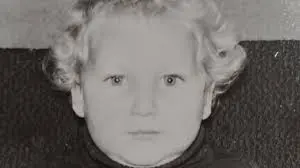
Half a century after the disappearance of Sandy Davidson, one family’s unanswered questions are being placed back at the center of a case that has never faded from memory. A new image prepared by Police Scotland’s Forensic Services is intended to show what the three-year-old might look like now, adding a visual dimension to a disappearance that began on a warm April day in Irvine in 1976. For Sandy’s sister Donna, the latest appeal is not simply about history; it is about whether someone still holds the missing piece that could explain what happened.
What happened on the day Sandy Davidson vanished
On 23 April 1976, Sandy was playing in the garden of his grandparents’ house in Irvine with his sister Donna when the family dog ran out toward the street. Sandy followed the dog, and Donna went after them. When she returned, Sandy was gone. He has never been seen since. That is the central fact at the heart of the disappearance of Sandy Davidson, and it has shaped every anniversary since.
At the time, a major police search was launched. Work on nearby homes and a school on the Bourtreehill estate was suspended while efforts continued, but no sign of the child was ever found. Over the years, theories have ranged from an accident in the nearby Annick River to the possibility that he was taken by a man delivering leaflets. None has been confirmed.
Why the new appeal matters now
The latest appeal comes as Sandy’s family marks the 50th anniversary with a balloon release at a pub in Saltcoats, gathering with friends. Donna, who was two when her brother disappeared, has spoken publicly about the emotional burden of living with no answers. released through Police Scotland, she described it as “beyond heartbreaking” to still have no explanation for what happened on 23 April 1976.
The disappearance of Sandy Davidson remains unresolved not because of a lack of attention over the years, but because no conclusive evidence has emerged. The new image is meant to reframe public memory: not as a photograph of a lost child, but as a prompt for recognition, recollection, and possibly a fresh lead. That approach matters because cold cases often depend less on physical traces than on human memory, and memory can surface decades later when a familiar face is given a new form.
Disappearance of Sandy Davidson: family memory and enduring uncertainty
Donna has said the case has always been part of her life. She recalled that day in 2017, saying the dog ran from the garden, Sandy followed, and he was never seen again. She has also said she believes her brother is no longer alive. In her view, the best possible outcome would be that he had been raised in a loving family, but she has also said she thinks he was murdered and deserves to be laid to rest.
That statement is important because it shows the difference between hope and belief within the family. The disappearance of Sandy Davidson is not being treated as a case with easy answers. Instead, it is being presented as a long-running search for clarity, one where even a small new detail could matter. Donna’s appeal reflects the reality that families live with uncertainty in a very personal way long after the public attention has moved on.
Expert perspective and the search for one overlooked detail
Detective Inspector Louise White of Police Scotland said Sandy remains a missing person and stressed that the anniversary is a difficult time for the family. She said someone must have seen Sandy that day and that the answers his family needs are still out there. She added that even the smallest piece of information could help establish what happened, urging anyone with relevant details to contact police and noting that anything new will be thoroughly assessed.
That language points to a wider truth about long-term missing-person inquiries: progress often depends on re-examining what seemed insignificant at the time. The disappearance of Sandy Davidson has already generated several theories, but no verified resolution. In that sense, the new image is not a conclusion; it is an attempt to unlock memory by asking the public to imagine the child as he might have appeared 50 years later.
Broader impact beyond one family
The case also resonates beyond Irvine because it shows how unresolved disappearances can shape families, communities, and policing priorities over generations. A case that began with a child chasing a dog has become a reminder of how quickly ordinary moments can turn into lifelong uncertainty. For investigators, the challenge is to turn an anniversary into actionable information. For the family, the goal is simpler and more painful: to know the truth.
As the disappearance of Sandy Davidson reaches its 50-year mark, the question is whether a new image, a renewed appeal, and one person’s memory can finally answer what has remained unresolved since that April day in 1976.