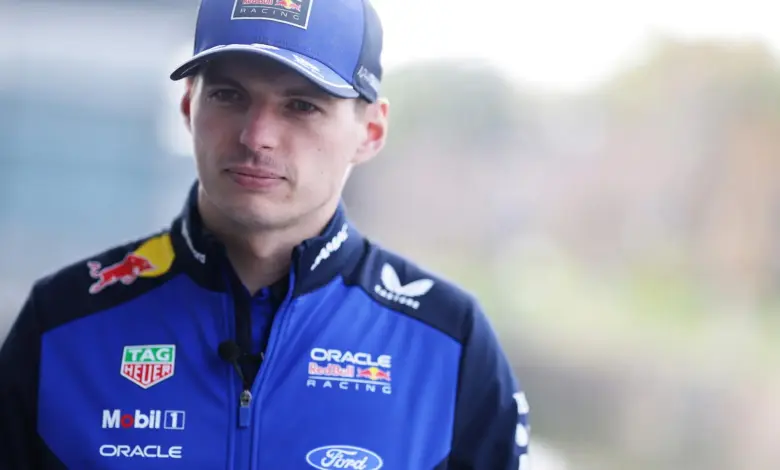
At the Nordschleife, where the margins are measured in seconds and instinct can matter as much as speed, red bull racing is now being pulled into a bigger argument about control, risk, and responsibility. The debate sharpened after a tragic accident during the Nurburgring 24 Hours Qualifiers last weekend, which claimed the life of driver Juha Miettinen.
Why is Red Bull being asked to intervene?
The immediate question is whether Red Bull should allow Max Verstappen to keep racing outside Formula 1 at all. Former F1 driver Juan Pablo Montoya said the team should stop Verstappen’s outings at the Nordschleife after the latest tragedy. He argued that the team has invested heavily in the driver and should protect that investment by setting a clear limit.
Montoya said that if he were in charge, he would tell Verstappen not to get back into the car. His view was blunt: the danger is not only the spectacle of racing, but the possibility of a serious injury that could affect Verstappen’s F1 career as well. For Montoya, the issue is not abstract. It is about a driver whose value to his team is enormous, and a circuit where danger is always close to the surface.
That argument lands harder because Verstappen was present at the event as he prepares for his debut in the 24-hour race next month. He has also raced there before, including toward the end of 2025 and again in March this year. The pattern has made his non-F1 racing a recurring talking point, and the latest accident has turned that talk into pressure.
Can a team really stop Max Verstappen racing outside F1?
Naomi Schiff, a former driver and now a Sky Sports F1 pundit, said Red Bull would not be able to stop Verstappen from following his racing ambitions. Her response focused on the nature of the sport itself: dangerous circuits exist, and drivers who are determined to race often keep making their own choices.
Schiff described the Nordschleife as especially difficult, pointing to the narrow track, limited runoff, blind corners, and major speed differences between cars. She made clear that the danger is not unique to one event, but said the circuit’s layout makes the challenge even greater. In her view, Verstappen is in a position where “he calls the shots. ”
That line captures the tension at the centre of the story. On one side is a team that has invested in a champion and may want to protect him. On the other is a driver with the freedom, confidence, and appetite to keep racing in different settings. red bull racing now sits between those two realities, with no easy answer visible.
What do experienced voices say about risk?
Bernd Maylander, the F1 safety car driver, added a different kind of warning. He offered Verstappen advice ahead of his first Nurburgring 24 Hours, stressing cooperation, patience, and the need not to take excessive risks. Maylander, who won the event in 2000, said the most important lesson is to stay on the track and avoid being too aggressive.
His comments were grounded in experience rather than theory. He described the race as long, unpredictable, and shaped by traffic and rules that can punish overconfidence. His message was simple: speed matters, but finishing matters more. In a race like this, a driver may not need to lead early; the race can still be won later if the car stays intact.
That perspective adds an institutional kind of caution to the debate around red bull racing and Verstappen. It does not call for a ban. It does not dismiss the ambition either. Instead, it places the focus on survival, discipline, and the narrow line between competitive bravery and unnecessary risk.
What happens next for Verstappen and Red Bull?
For now, Verstappen is set to return from his month away from F1 at next weekend’s Miami Grand Prix, which will also feature the sprint weekend format. His next steps outside Formula 1 remain part of the wider conversation, especially after the Nordschleife tragedy brought safety back to the front of the sport.
The divide is clear: Montoya wants restraint, Schiff doubts it can be imposed, and Maylander is offering practical caution rather than a ban. Between those views sits red bull racing, facing a difficult choice about how much freedom it is willing to leave in the hands of its most valuable driver. At the Nordschleife, that question now carries a sharper edge, because the cost of the wrong answer is no longer theoretical.