Saskatchewan Snowfall exposes a hidden spring risk: why this storm is more than a travel headache

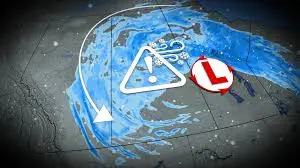
The scale of this saskatchewan snowfall is unusual for late spring: 30–50+ cm of snow, whiteout conditions, and wind gusts of 60–90 km/h are combining to make travel dangerous across parts of the Prairies. What looks like a weather event is also a test of how quickly people can respond when a slow-moving system stalls, shifts westward, and keeps roads hazardous for days.
Verified fact: a powerful storm is expected to bring widespread heavy snow, especially across northern Saskatchewan and Manitoba, with impacts stretching from Alberta to Manitoba through the end of the week. Informed analysis: the concern is not only total snowfall, but the duration of the disruption, since the system is expected to retrograde westward into Saskatchewan on Friday before easing this weekend.
What is this storm actually doing to Saskatchewan?
The immediate issue is visibility. Strong winds are creating blowing snow and whiteout conditions, with hazardous travel already likely in parts of the Prairies. The Yellowhead Highway and Highway 1 west of Saskatoon and Regina are named as especially vulnerable corridors, where reduced visibility can turn routine driving into a serious risk. This is not a brief burst of winter-like weather; it is a sustained system with the power to interrupt movement across a wide region.
Heavy snowfall is already affecting northern Saskatchewan and Manitoba, and wind gusts above 60 km/h are making conditions worse. In central and northern Manitoba, an orange blizzard warning has been issued because of severe blowing snow and poor visibility. The same storm is expected to continue shifting and intensifying its effects as it moves back west into Saskatchewan on Friday.
Why does the timing make this saskatchewan snowfall more disruptive?
The timing matters because the storm is lingering. Atmospheric blocking is keeping the system stalled over the Prairies, which means the weather is not passing through quickly. Instead, it is retrograding westward and triggering local snow squalls and bands of heavy snow beginning late Thursday in parts of Alberta, with effects spreading into the broader region by Friday morning.
Snow squalls near Edmonton, Cold Lake, and Prince Albert are expected to be brief but intense, creating rapidly changing conditions and localized impacts. Snowfall totals from these squalls could reach 5–15 cm, though the exact location of the heaviest bands remains uncertain. By contrast, northern Saskatchewan and Manitoba are expected to keep seeing ongoing heavy snowfall with accumulations of 30–50+ cm by the time conditions begin to ease on Saturday.
Who is most exposed, and what are the official warnings?
Verified fact: travel disruptions and hazardous road conditions are likely, and local updates are being urged for the latest weather alerts. Strong winds of 60–90 km/h, widespread heavy snowfall, and sustained poor visibility are the main threats. The storm is also expected to deliver 20–50+ cm in the north, with some areas likely surpassing 50 cm of accumulation.
Informed analysis: the most exposed areas are not necessarily the ones getting the highest totals alone, but those sitting on major travel routes while the snow is blowing sideways. That is why the road risk around key highways matters so much. When visibility drops sharply, even modest snowfall can become an operational problem for drivers, transport, and emergency response.
There is also a second-order effect. The precipitation is described as much-needed moisture as the region prepares for fire season. That creates a complicated picture: the storm is disruptive now, but the added moisture may matter later. That does not reduce the immediate danger, but it does explain why the same event can be seen as both a hazard and a resource.
What should the public understand before this storm moves on?
The central question is not whether this is a normal spring system. It is whether communities are treating the duration and movement of the storm as seriously as the snowfall totals. A storm that stalls, retrogrades westward, and repeatedly renews heavy snow bands can strain travel planning more than a fast-moving system with the same amount of precipitation.
What is being told is clear: dangerous travel, whiteout conditions, and major disruptions are expected through the end of the week. What should also be understood is that saskatchewan snowfall in this case is part of a larger pattern of unstable, wind-driven impacts that can change quickly and hit different parts of the Prairies in sequence. The public reckoning now is simple: treat the warnings as immediate, not theoretical, and expect conditions to remain volatile until the system finally dissipates this weekend.