Tamil Nadu Election 2026: 70% turnout, a stabbing inside a booth, and the pressure behind the numbers

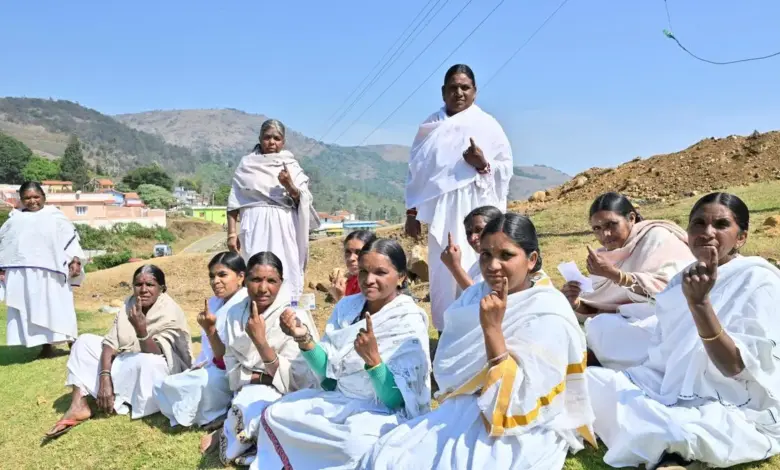
The Tamil Nadu Election 2026 has become more than a test of voter enthusiasm. By 3 p. m., turnout had touched 70%, but the day was also marked by a policeman being stabbed inside a polling booth, while TVK president C Joseph Vijay pressed for a two-hour extension of polling. The contrast is striking: a large democratic exercise moving forward under tight security, yet strained by transport complaints, crowding, and isolated violence that could shape how the public reads the conduct of the vote.
Polling day momentum meets security strain in Tamil Nadu Election 2026
Over 5. 73 crore voters are deciding the fate of 4, 023 candidates across all 234 constituencies in the assembly election. The scale alone explains why authorities were on alert, with a massive crackdown in place to prevent inducements and a large police deployment supporting polling day operations. The Tamil Nadu Election 2026 is not only a contest between the DMK-led Secular Progressive Alliance and the AIADMK-led National Democratic Alliance; it is also a stress test for election management at a time when every procedural lapse is being watched closely.
Chief Electoral Officer Archana Patnaik said the state was fully prepared for the exercise. She put the electoral strength at 5. 73 crore, including 2. 93 crore women, 2. 83 crore men and 7, 728 third-gender persons. She also noted that 14, 59, 039 first-time voters were enrolled, a reminder that the turnout figure is being built on a very large and diverse voter base.
Why the turnout figure matters beyond the headline
A 70% turnout by 3 p. m. suggests strong participation, but the figure also sits alongside complaints about slow polling and transport disruption. Vijay’s letter to the Chief Election Commissioner claimed that thousands of voters were unable to reach booths because of a shortage of buses at terminals in Chennai and elsewhere. He cited crowding at Koyambedu, Kilambakkam and Madhavaram, saying voters from within the state, other states and abroad were left without transport after buses were diverted for poll duty.
That complaint gives the Tamil Nadu Election 2026 a sharper political edge. The issue is not just whether citizens are voting, but whether the system is making voting equally accessible. Vijay asked for emergency public transport, including additional government buses and shuttles, to move voters from terminals to polling stations. His appeal framed the disruption as a threat to the fundamental right to vote and to free and fair elections under Article 324.
The turnout also sits within a wider picture of everyday election behavior. At Stella Maris College in Chennai, a three-generation family of 14 arrived together to vote, treating polling as a shared civic tradition. Elsewhere, a newly married couple voted soon after their 4 a. m. wedding, reflecting the personal routines that often animate high-participation elections even when the logistics are difficult.
Security, symbolism and the cost of disruption
The stabbing of a policeman inside a polling booth is a reminder that electoral order can be fragile even when the numbers look healthy. Combined with reported clashes near a Coimbatore booth and other disruption around polling stations, it points to a day in which turnout and tension are unfolding together. In practical terms, such incidents can affect voter confidence, especially in an election already marked by discussions over movement, queue delays and booth-level friction.
That is why the Tamil Nadu Election 2026 matters beyond state boundaries. The state is hosting 34 delegates from 17 countries under the International Election Visitors’ Programme, alongside representatives from foreign missions in New Delhi and a representative of the International Institute for Democracy and Electoral Assistance. Their presence turns the vote into a visible test of administrative discipline, particularly when turnout is high but the conduct of polling is under scrutiny.
What the day could mean for the bigger political contest
The current numbers do not decide the contest, but they do frame the battle between the ruling DMK and the AIADMK, with Chief Minister M. K. Stalin seeking to retain power and AIADMK general secretary Edappadi K. Palaniswami attempting a return to office. High participation can strengthen the legitimacy of the result, yet the issues raised during polling may influence how the outcome is interpreted.
For now, the most telling feature of the Tamil Nadu Election 2026 is its contradiction: a large electorate turning out in significant numbers while administrators, transport systems and security personnel are all being tested at once. If the final tally confirms the same momentum seen by 3 p. m., the larger question will be whether the vote is remembered mainly for its scale or for the pressure points that exposed how hard it is to conduct a smooth election at this size.