John Mullane calls September league final ‘absolute nonsense’ in a clash over who hurling is really for

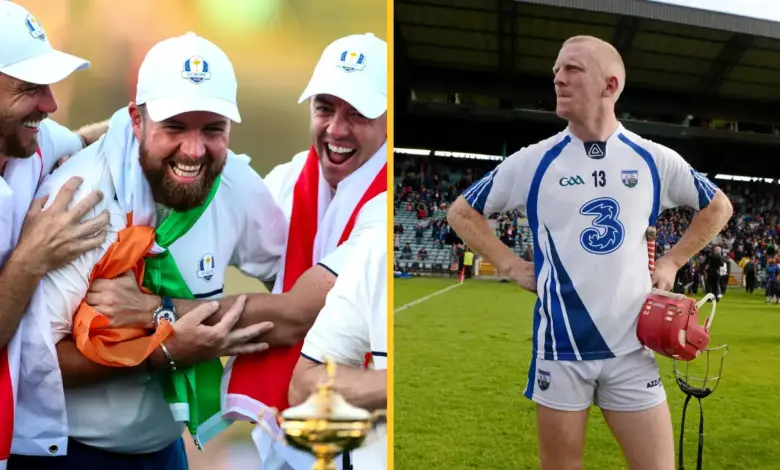
John Mullane has turned a scheduling proposal into a wider warning about the direction of hurling. His objection is not only to moving next year’s National Hurling League Division 1A final into September; it is to the purpose behind it. In his view, the plan is being framed around promotion rather than the game itself, and that is where the tension begins.
Why does John Mullane call the September plan ‘absolute nonsense’?
Verified fact: Mullane has described the idea of staging the Allianz Hurling League final as a September warm-up for the Ryder Cup as “absolute nonsense. ” He also used stronger language, calling the notion “absolute bullshit” and “insane” while speaking on a hurling podcast.
Informed analysis: The phrase that cuts through his criticism is simple: he believes the match would be moved not for sporting necessity, but to serve an outside marketing moment. That is why he repeatedly returned to the idea of promoting hurling “to a load of Yanks. ” In this context, the controversy is not about one fixture alone. It is about whether the sport is being repositioned for a transient audience rather than its own base.
That concern matters because the proposal, as described in the context, would shift the final from April to the weekend of September 17-19 and keep it at the TUS Gaelic Grounds in Limerick. The timing would place it alongside the Ryder Cup at Adare Manor. Mullane’s argument is that the logic of coincidence is being put ahead of the logic of the league.
What is the proposal trying to solve, and who does it serve?
Verified fact: The plan is presented as a likely change, with the final moved to September to coincide with the Ryder Cup. Mullane’s response suggests he sees the move as a form of showpiece scheduling rather than a decision rooted in the competition itself.
Informed analysis: That is where the stakeholder divide becomes clear. If the main goal is exposure, then the beneficiaries are the event promoters and anyone looking for a bigger stage during Ryder Cup week. If the priority is continuity for the league, then the traditional spring slot appears more logical. Mullane’s language implies that those two goals are not being balanced honestly.
He also widened the issue beyond one date. His criticism pointed to a broader pattern in which the game risks being packaged for external consumption while leaving existing supporters feeling secondary. The phrase “to a load of Yanks” is not subtle, and it is meant to underline his view that the proposed move is less about Irish hurling culture than about presenting it to a foreign audience.
Why does GAA+ become part of the same argument?
Verified fact: Mullane has called on clubs in Ireland to launch a grassroots campaign to move the association’s own streaming service, GAA+, back onto free-to-air television. He said clubs should do their best to make games on GAA+ free-to-air because of concern about a drop-off in underage playing numbers.
Informed analysis: This second strand is important because it shows the dispute is not only about one final. Mullane is linking media access, participation, and long-term survival. In his telling, if games are harder to watch, then engagement weakens; if engagement weakens, underage numbers suffer; and if underage numbers suffer, the sport’s future becomes less secure.
That is why his complaint carries a strategic edge. He is not simply objecting to inconvenience. He is warning that a sport cannot simultaneously ask for loyalty from communities while making access more difficult or shifting its showpiece moments for broad promotional effect. The call to return GAA+ to free-to-air television sits beside the Ryder Cup criticism as part of the same fear: visibility should not come at the expense of belonging.
What do John Mullane’s remarks reveal about the wider direction of hurling?
Verified fact: Mullane warned that the game could “sleepwalk into a big problem in the next 10-15 years” if nothing changes. He tied that warning to both the September final proposal and the question of access to games.
Informed analysis: Taken together, his comments suggest a distrust of short-term spectacle. He sees two signs of drift: one in scheduling, the other in distribution. The first risks turning a league final into a promotional add-on; the second risks moving live sport behind a platform that may not reach enough viewers. In his account, both choices pull hurling away from ordinary supporters and toward a narrower, more curated presentation.
The key issue is accountability. The proposal has been described as having a strong chance of happening, but the public case for it has not been laid out in the material provided here. Mullane has filled that silence with a blunt counterargument: a final should not be displaced to serve a marketing moment, and the sport should not ignore the grassroots while trying to impress outsiders.
What should the public know next?
The immediate question is whether the authorities behind the proposal can explain why September is better than April in sporting terms, not only promotional ones. The second question is whether the push around GAA+ will be matched by a serious effort to preserve access for ordinary viewers and young players. Mullane has made the stakes plain: if the game keeps chasing outside attention while overlooking local participation, the cost may be felt long after this single fixture has passed. The debate around John Mullane is therefore about more than one final; it is about whether hurling is being shaped for the crowd that already supports it, or for a headline moment that may not last.