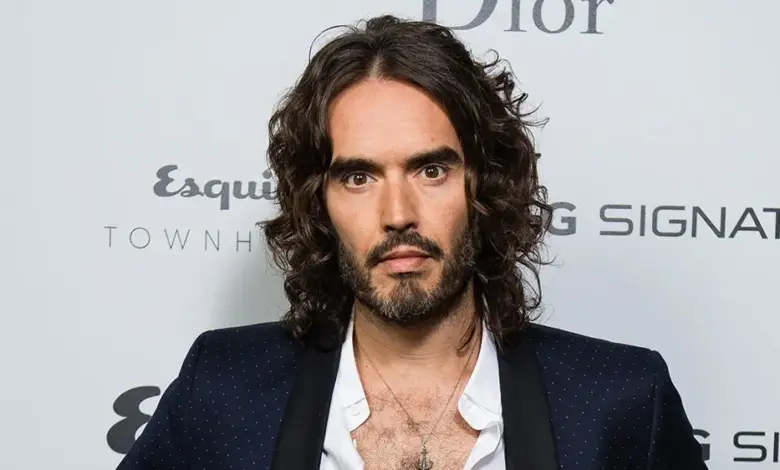
russell brand has placed a stark personal confession at the center of an already serious legal and public reckoning. In a recent interview on The Megyn Kelly Show, he said he slept with a 16-year-old when he was 30, and called the age gap “exploitative. ”
The remark landed with particular force because it was not made in isolation. It came as Brand is already facing multiple criminal charges in London, and as his case continues to move through the courts. What he described was not only a memory from years ago, but a public acknowledgment of a power imbalance he now says he failed to understand.
What did russell brand say about the relationship?
Brand said that in the United Kingdom, where he is from, the age of consent is 16. He also said that, while that fact is part of the legal framework, it did not change his view that sleeping with someone so much younger than him was exploitative. In his words, he was “a very different person” at 30 and “an immature 30-year-old. ”
He went further, saying that sexual conduct involving a strong power differential can amount to exploitation when one person has the kind of fame he had at the time. He described his past behavior as selfish and said he did not give enough consideration to how it affected other people. The choice to speak in those terms makes the admission more than a passing comment; it becomes part of a wider conversation about responsibility, influence, and accountability.
Why does this admission matter beyond the moment?
The significance of the statement lies in the contrast between legality and ethics. Brand pointed to the age of consent, but then immediately framed the encounter as exploitative. That distinction matters because it highlights how a legal threshold does not settle every question about power, maturity, or the capacity to cause harm.
For many people, especially those watching from outside celebrity circles, the issue is not simply what the law allows, but what a person with status, attention, and access should recognize as unequal. Brand’s own language centers that tension. He said the combination of fame and opportunity created a situation where consent could appear abundant while the underlying imbalance remained real. That is the human reality at the heart of the admission: not only an age gap, but a gap in power.
How does this fit with the legal case around Brand?
Brand is also facing serious criminal charges in London. In April 2025, he was charged with rape, indecent assault, and sexual assault relating to four separate women in alleged incidents between 1999 and 2005. In December of that same year, a rape charge and a sexual assault charge were brought against him relating to two other women in incidents that allegedly took place in 2009. He has pleaded not guilty to all charges.
His trial was originally scheduled to begin at London’s Southwark Crown Court on June 16, but it was pushed to Oct. 12. That delay leaves the public with more time to absorb the admission, while the formal allegations remain unresolved in court. The legal process and the personal confession now exist side by side, each shaping how the other is understood.
What are the broader social questions raised here?
Brand’s comments also point to a wider social concern: how fame can distort boundaries. He said that his status gave him the ability to attract women and that this created a power differential. In practical terms, that means public recognition can make ordinary social interactions uneven long before any legal issue is raised.
The story is not only about one man’s words. It also reflects the way society increasingly examines celebrity behavior through the lens of power, vulnerability, and harm. The phrase he used — exploitative — is unusually direct, and it places the burden of interpretation on the speaker himself. That does not resolve the underlying questions, but it does show a public figure naming the imbalance rather than avoiding it.
As the date at Southwark Crown Court approaches, the image of that interview may linger: a man explaining what he did, naming the imbalance, and leaving behind a question that no confession can fully answer. If fame can create endless consent in appearance, what responsibility comes with recognizing its limits in reality?