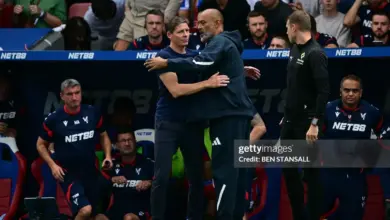
uae vs nepal began as a milestone and ended as a warning. Nepal’s first international match played at night at TU Cricket Ground finished with a six-wicket defeat, after the hosts were limited to 122 for 8 in 18. 5 overs and the United Arab Emirates chased a revised target of 78 in 8. 5 overs. The result did more than hand UAE the opening T20I of the home series; it exposed how fragile Nepal’s batting became once conditions tightened under floodlights.
What was the central problem in uae vs nepal?
Verified fact: Nepal chose to bat first, but the innings never settled. Arjun Saud made 13, Sundeep Jora fell cheaply, and Kushal Bhurtel was run out for 16 after a brief flourish. Kushal Malla added 17 before being trapped lbw, leaving captain Dipendra Singh Airee to hold the innings together. He finished unbeaten on 32 from 35 balls, the only substantial resistance in a collapse that also included Gulshan Jha for 1, Nandan Yadav for 13, and Sher Malla for 0.
Informed analysis: The scoreline suggests Nepal were not undone by one lapse alone, but by repeated failures to convert starts into control. The innings was already under strain before rain reshaped the match, and the revised target only magnified how much ground Nepal had ceded.
How did UAE turn the match in their favor?
Verified fact: UAE captain Muhammad Waseem set the tone with 33 off 15 balls, striking three fours and three sixes. His innings came after a dropped chance by wicketkeeper Arjun Saud. Sandeep Lamichhane eventually removed Waseem, then added the wickets of Adeeb Usmani and Harpreet Singh to finish with 3 for 23. But UAE still closed the chase quickly through Alishan Sharafu, who made 18, and Akshdeep Nath, who finished 17 not out.
UAE were helped by Nepal’s inability to sustain pressure. Zuhaib Zubair took 3 for 29, Junaid Siddique returned figures of 2 for 18, and Haider Ali claimed 1 for 32. Debutant Hemant Dhami endured a difficult over, conceding 20 runs, while Kushal Malla was expensive despite taking one wicket. The chase was clinical rather than dramatic; once the target was reduced, UAE played with clarity and avoided the hesitation that defined Nepal’s innings.
What did the night match reveal about Nepal’s wider challenge?
Verified fact: This was Nepal’s first international match under lights. It was also coach Stuart Law’s first home series since taking charge 13 months ago, and the debut of separate captains for T20 and ODI formats. Nepal were also missing regulars Rohit Paudel, Sompal Kami, Karan KC, Lalit Rajbanshi, and Aasif Sheikh.
Informed analysis: Those absences matter because they leave a young side with less experience to absorb pressure in unfamiliar conditions. The context does not explain every error, but it does show why the team looked short of rhythm when the game demanded discipline. Airee’s post-match assessment was direct: the wicket was tricky and the batting did not click, and Nepal expected a comeback in the Tuesday match. That response matters because the issue in uae vs nepal was not only execution, but adaptation.
Who gained momentum from the result?
Verified fact: The win levelled the T20I head-to-head, with both sides now on six victories each. For UAE, the opening result offered immediate confirmation that their bowling discipline and chase control were enough to punish any batting collapse. For Nepal, the loss turned several milestones into pressure points: the first night international, the first home series for Stuart Law, and the first outing with separate white-ball captains all became part of a disappointing opening chapter.
Informed analysis: The result does not settle the series, but it sharpens the next match. Nepal now face a straightforward question: can their batting survive longer under lights, especially when early wickets fall? The answer will determine whether the opener is remembered as a one-off setback or the first sign of a deeper problem.
For Nepal, the evidence from uae vs nepal is plain: the bowlers created moments, but the batters never built a defendable total. Until that balance changes, the gap between promise and result will remain visible.