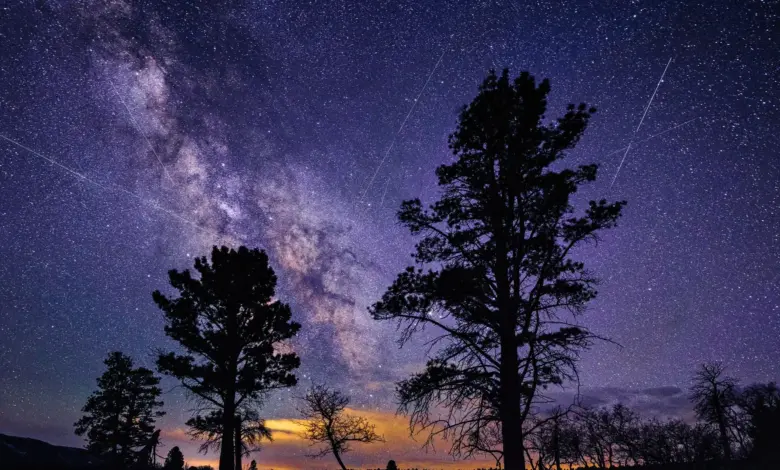
The lyrid meteor shower returns with a narrow viewing window that may matter more than the headline number of meteors. The best time to view it this year will be early morning on April 22, and the moon will not interfere after midnight. That combination creates a rare, cleaner look at one of spring’s most familiar sky events.
What is the central question about the Lyrids this year?
The question is not whether the lyrid meteor shower will happen. It will, and it occurs between April 16 and April 25 every year. The real issue is when observers can actually see it at its best. The peak is expected in the early hours of April 22, but visibility depends on a short stretch of predawn darkness before sunrise begins to wash out the sky.
Verified fact: The best viewing time is early morning on April 22, with the shower active across its usual April window.
Informed analysis: For skywatchers, that means timing is more important than simply stepping outside any time during the week. A few hours, and even a few minutes, can determine whether the shower appears lively or muted.
How many meteors are likely to appear?
On an average year, the Lyrids produce 15 to 20 meteors per hour. One account places the maximum rate at about 18 per hour, while also noting that the shower can become much stronger in rare outbursts. Those outbursts may reach up to 100 meteors per hour, but the timing of such spikes is difficult to predict.
That uncertainty is part of the story. The lyrid meteor shower is not just a fixed spectacle; it is a reminder that even well-known celestial events can shift in intensity. The difference between average activity and an outburst is significant, but no source in this case offers a firm way to forecast one.
Verified fact: The shower’s usual rate is modest, not overwhelming. Verified fact: Rare surges can be far brighter, but they cannot be scheduled with confidence.
Where in the sky should viewers look?
The meteors appear to originate from a point called the radiant, located in the constellation Lyra near Vega, one of the brightest stars in the night sky at this time of year. The radiant will be high in the evening sky, but the clearest views are expected after midnight, when darkness is deeper and the radiant is better placed.
There is also a caution built into the viewing advice: do not stare directly at the radiant. Looking slightly away can help observers catch the longest meteor trails. That detail matters because the shower is described as bright and fast, with some meteors leaving smoky trains across the sky.
Verified fact: The radiant is in Lyra near Vega. Verified fact: The best views come after midnight and in the predawn hours.
What do the origins of the Lyrids tell us?
The records of the lyrid meteor shower stretch back to 687 BC, making it one of the oldest documented meteor showers in the skywatching record. Its origin is tied to Comet Thatcher, discovered in 1861, and the meteoroids that create the shower are described as having once been part of the comet’s tail of dust. Comet Thatcher itself orbits the sun every 415. 5 years and last reached its closest approach in 1861.
That long arc of observation gives the event a deeper significance than a routine spring display. The shower is both ancient in human record and precise in astronomical explanation. It is not an unexplained phenomenon; it is debris from a known comet, crossing Earth’s view on a predictable seasonal schedule.
Informed analysis: The contrast is striking: a shower first recorded more than two millennia ago is still being tracked through modern timing, location, and visibility forecasts.
Who benefits from the best conditions, and who is limited?
The clearest benefit goes to observers in dark-sky conditions after midnight, especially in the Northern Hemisphere where the radiant stands higher. The moon setting after midnight is an important advantage this year because it leaves darker skies for the peak viewing period. By contrast, as morning progresses, the sky brightens and the sunrise begins to reduce visibility.
Viewers in the southern hemisphere face a different challenge. The radiant will lie low in the northern sky, which restricts the view. That means the same event will be experienced unevenly depending on location, even though the shower itself is the same.
For anyone planning to watch, the practical message is straightforward: find darkness, wait for the post-midnight window, and do not expect the same result once daylight starts to creep in. The best chance to see the lyrid meteor shower is not simply on the right date, but in the right slice of night.
Accountability conclusion: The evidence points to a simple public takeaway: the Lyrids are predictable in calendar terms, but not in intensity. Clearer communication about timing, viewing conditions, and the limits of forecasting would help the public understand what is known, what is uncertain, and why the best experience depends on a very short window. For skywatchers, the lyrid meteor shower will reward patience, darkness, and precision.