In the mummy, a family’s grief is the engine of the story: a daughter vanished years earlier in Cairo, then returns transformed after being found in a 3, 000-year-old sarcophagus. Off screen, the film has faced a different kind of test, opening in third place domestically while drawing a sturdier response overseas.
Why did The Mummy open in third place?
The answer is partly timing and partly competition. Lee Cronin’s horror film entered a crowded box office frame dominated by The Super Mario Galaxy Movie and Project Hail Mary, both of which held strong. The Mummy opened domestically with an estimated $13. 5 million, while its overseas start added $17. 5 million for a worldwide debut of $34 million against a modest $22 million net budget.
That domestic placement matters because the film was positioned as a large genre release with familiar horror-fan ingredients: a damaged family, ancient Egyptian lore, and a transformation that turns a missing child into something unsettlingly alive. But it also had to share premium large-format screens with Project Hail Mary, limiting its reach in a weekend where audience attention was already locked onto returning titles.
What is the story at the center of the film?
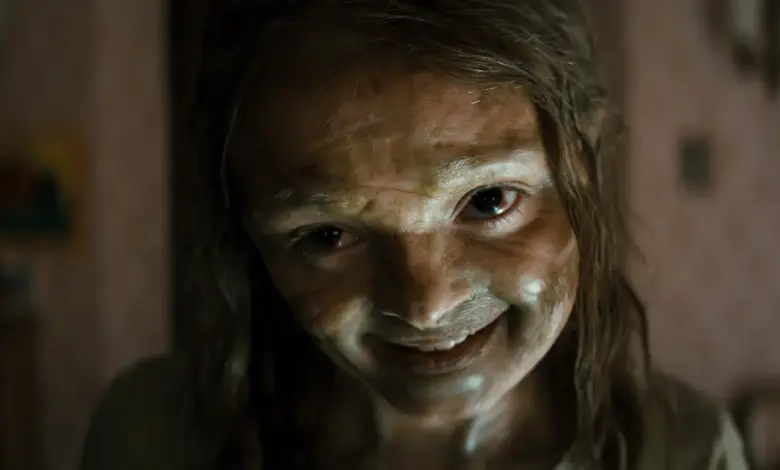
The film centers on a family that has spent eight years grieving the disappearance of their daughter. A call from Egyptian officials changes everything: she has been found after spending the past eight years inside a 3, 000-year-old sarcophagus, and she has become a living mummy-like creature. The cast includes Jack Reynor, Laia Costa, May Calamawy, Natalie Grace, and Veronica Falcón.
That premise gives the mummy its emotional frame. It is not just a horror setup built around spectacle; it is a story about recognition, loss, and the fear that the person who comes back may not be the same one who left. The film was written and directed by Cronin, with Jason Blum, James Wan, and John Kevillle producing alongside him.
What do critics and audiences seem to be saying?
The film has divided critics, while audience exits appear more encouraging. It earned a C+ CinemaScore, which is not unusual for a horror release. That split suggests the movie may have found some viewers willing to meet it on its own terms, even if the critical response is cooler.
Its tone is part of the challenge. The material leans into gore and ancient dread, but the story also asks audiences to sit with family trauma and the idea of a child returning in altered form. That combination can be hard to balance, especially in a theatrical market where lighter crowd-pleasers and bigger franchise titles can quickly pull attention away.
How does this fit into the bigger box office picture?
The broader weekend was dominated by strong holdovers. The Super Mario Galaxy Movie remained atop the North American chart in its third weekend with an estimated $35 million domestically and a global total of $747. 5 million. Project Hail Mary continued to outperform expectations as well, taking in an estimated $20. 4 million domestically in its fifth weekend and reaching $573. 1 million globally.
For the mummy, those numbers matter because they define the field it entered. The film was not launching into an empty marketplace; it was arriving beside established hits with momentum, brand recognition, and audience loyalty. Even so, its overseas total offered some relief, showing that the movie’s appeal is not confined to the domestic frame.
What comes next for the film and the studio strategy?
The immediate next step is sustaining theatrical interest long enough for the overseas start to matter. The film’s modest budget gives it a workable path, even with a mixed domestic opening. Its performance also reflects a larger theatrical reality: horror can still travel, but it often depends on clear audience appetite, timing, and the ability to stand apart from bigger event titles.
In that sense, the mummy is both a box office story and a human one. It begins with a vanished daughter, returns her in altered form, and asks how a family lives with that change. At the same time, the film itself is now asking a different question: whether a stronger overseas start can give a bruised domestic opening a second life.