Red Dead: Why a Third Game Could Unite Fans and Expose the Franchise’s Biggest Dilemma

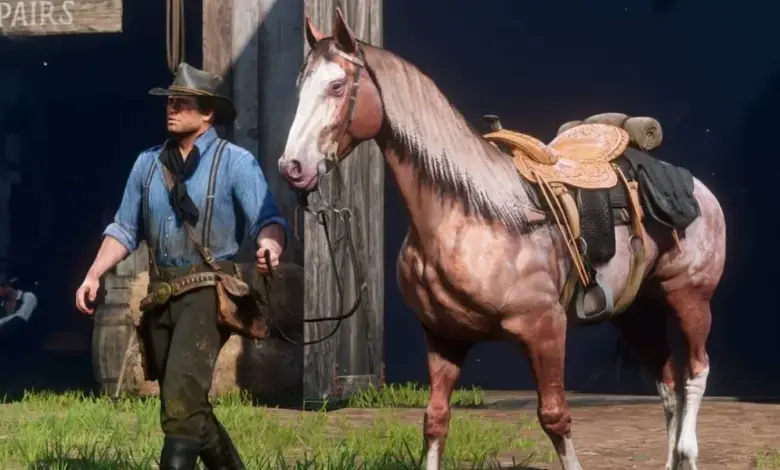
Red Dead is back in the center of a debate that has little to do with a confirmed game and everything to do with what the series is supposed to be. At the time of writing, Red Dead Redemption 3 has not been officially confirmed by Rockstar Games, yet the conversation is already revealing a split between fans who want continuity and fans who want something entirely new.
Verified fact: Rockstar co-founder Dan Houser has said a continuation could be “sadder” because the series formed a cohesive two-game arc. Informed analysis: That warning is not just about storytelling taste. It points to a larger pressure on any future Red Dead project: preserve the myth, or keep expanding it until the myth weakens.
What Is Not Being Said About Red Dead?
The central question is not whether a third game would be popular. The question is what kind of story can be told without breaking the structure that made the first two games stand out. The existing Red Dead games began with Red Dead Revolver in 2004, then continued with Red Dead Redemption in 2010 and Red Dead Redemption 2 in 2018. Together, they span the 19th and 20th centuries and follow outlaws moving through a lawless period at the turn of the century.
Verified fact: The franchise has no official confirmation for a third installment. Informed analysis: That silence has created a vacuum, and in that vacuum the setting debate has become a proxy war over identity. Some fans want a prequel to deepen the early Van der Linde gang story. Others want a brand-new protagonist and a fresh era, even one set earlier than the familiar timeline.
Why Does the Setting Divide Fans So Deeply?
The split is not random. It reflects two competing ideas of what Red Dead should deliver. One side sees value in expanding the existing arc, especially if the story can illuminate the Van der Linde gang in its infancy. The other side sees the first two games as complete enough that a new chapter should move away from direct ties and stand on its own.
That argument became sharper after Dan Houser, Rockstar co-founder and former chief writer, said on the Lex Fridman Podcast that the series was “a cohesive two-game arc” and that continuing it might be “more sad. ” Verified fact: Houser framed Red Dead differently from Grand Theft Auto, which he described as more standalone in structure. Informed analysis: His warning suggests a creative limit, not just a nostalgic preference. If the core appeal of Red Dead is its closure, then extending it risks changing the very quality fans are trying to protect.
Who Wants Continuity, and Who Wants a Break?
Fan discussion shows how quickly a franchise can become a referendum on its own success. One group argues that a third game is not necessary, but another Red Dead story could still work if the writers make it fit. Others push for a completely new direction, including a setting during the gold rush or another horse-drawn era. The strongest common ground is that many want a prequel-style timeline if the series continues at all.
Verified fact: Some fans believe a prequel would reveal more about the early gang years, while others say the next game should not be tied so closely to the previous two. Informed analysis: That disagreement reveals a deeper concern: continuity can feel respectful, but it can also become restrictive. A new protagonist could give the franchise breathing room, yet a familiar structure may be easier for players to trust.
What Does This Mean for Rockstar’s Next Move?
For now, the only concrete marker is that Rockstar is still approaching the launch of Grand Theft Auto VI. Until that happens, attention on a possible Red Dead project remains speculative. The studio has not confirmed what comes next, and that absence matters because it keeps every idea in play: prequel, sequel, reboot-like reset, or no new game at all.
Verified fact: The franchise has been successful enough to create expectations before any formal announcement. Informed analysis: That is the real pressure point. A future Red Dead game will not just need to be good; it will need to justify why it exists at all. Dan Houser’s warning shows that even inside the company, continuation is not viewed as an automatic gain. The series may be beloved precisely because it feels contained, and that makes any expansion an unusually delicate decision.
The evidence points to a simple but uncomfortable truth: the debate around Red Dead is already bigger than a title reveal. Fans are not only asking for the next game; they are asking whether the franchise can grow without losing the meaning of what came before. If Rockstar ever returns to the series, transparency about the creative direction will matter as much as the announcement itself.