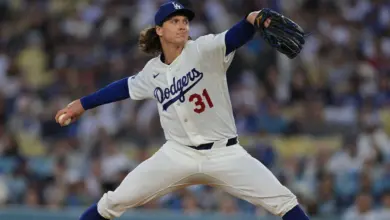
The first meeting of reds vs twins in this stretch carries more than normal early-season weight because both clubs arrive at 11-8, and the pitching matchup adds a personal layer to the night. Brandon Williamson is back in Minnesota, where he grew up in Trimont, and the setting turns a routine start into something closer to a homecoming.
What Happens When a Homecoming Becomes a Measuring Stick?
This is not just another April game. Williamson has never faced the Twins and has never pitched in Minnesota, but Friday’s start comes in the state where he is from and within a short drive of his hometown. More than 100 friends and family are expected to be in attendance, which gives the outing a different texture than a standard road assignment.
That matters because the game also sits inside a broader early-season checkpoint. The Reds finished 83-79 last year and were swept in the wild card round, while the Twins are trying to turn a strong start into something more durable after a 70-win season in 2025. Both clubs are sitting at 11-8, so the result will not define the season, but it can shape how each team is framed going forward.
What Do the Numbers Say About Reds Vs Twins Right Now?
The present state of play is clear enough: the Twins are favored, and the matchup features a Reds team that has leaned on pitching and defense against a Minnesota club that has been hitting with more force than many expected.
| Team | Record | Key early theme |
|---|---|---|
| Reds | 11-8 | Pitching, defense, and uneven offense |
| Twins | 11-8 | Improved run production and stronger overall form |
Cincinnati’s offense has been led by rookie Sal Stewart, who has seven home runs, and Elly De La Cruz, who remains a central force in the lineup. But the Reds have also struggled to score consistently, and that is where the matchup becomes difficult. Joe Ryan gives Minnesota a steadier arm on the mound, while Brandon Williamson enters with questions after spending much of 2024 and 2025 on the injured list and posting uneven results this season.
Williamson’s profile is specific and workable: low-90s fastball and cutter, plus a change against right-handed hitters and a slider or sweeper against left-handed hitters. The issue is not the shape of the arsenal so much as whether it plays against a Twins lineup that has been producing at a high level.
What Forces Are Reshaping This Game?
The main force is balance. Minnesota’s offense has been stronger than the market expected, and Cincinnati’s pitching-heavy identity is being asked to carry more weight while the lineup looks for more consistency. That makes the game a test of whether a strong rotation can offset a weaker scoring profile.
The second force is context. Williamson’s Minnesota roots are not just a feel-good detail; they create a visible emotional hook that can amplify attention around the start. His hometown of Trimont is small, and the expected turnout makes Friday feel like a community event layered onto a baseball game.
The third force is uncertainty around health and workload. Williamson’s recent injury history, the Reds’ bullpen usage, and the Twins’ own roster stresses make this the kind of game where one inning can swing the shape of the night. In that sense, reds vs twins is a matchup where reputation, form, and availability all matter at once.
What Are the Most Likely Outcomes?
- Best case: Williamson settles in early, the Reds get enough contact from Stewart and De La Cruz, and the game stays tight into the late innings.
- Most likely: Minnesota’s deeper current run production and Joe Ryan’s steadiness create the edge, especially if Cincinnati’s offense remains quiet.
- Most challenging: Williamson struggles to navigate the Twins lineup, and Cincinnati’s scoring issues make it difficult to recover.
For the Reds, the upside is that one strong start can change the feel of a road trip and strengthen confidence in a pitcher who has been through an injury-heavy stretch. For the Twins, the upside is simpler: keep showing that the 11-8 start is real, not a short-lived burst.
Who Wins, Who Loses if the Trend Continues?
If this game plays to the current shape of each roster, Minnesota benefits from the more stable run-scoring environment and the more reliable mound option. The Twins also get the advantage of playing into a narrative that they are better than expected.
Cincinnati wins if Williamson can use his offspeed pitches to keep traffic down and if the offense turns a few opportunities into runs. The Reds lose most if the same pattern repeats: good enough pitching to stay competitive, not enough offense to finish the job.
That is why the night matters beyond one box score. It is a snapshot of where both clubs stand in the middle of April, and it may say more about sustainability than standing alone ever could. The takeaway for readers is straightforward: watch whether Cincinnati can support Williamson, and whether Minnesota can turn its strong start into proof of staying power. In a game like reds vs twins, the result is important, but the underlying signals matter even more.