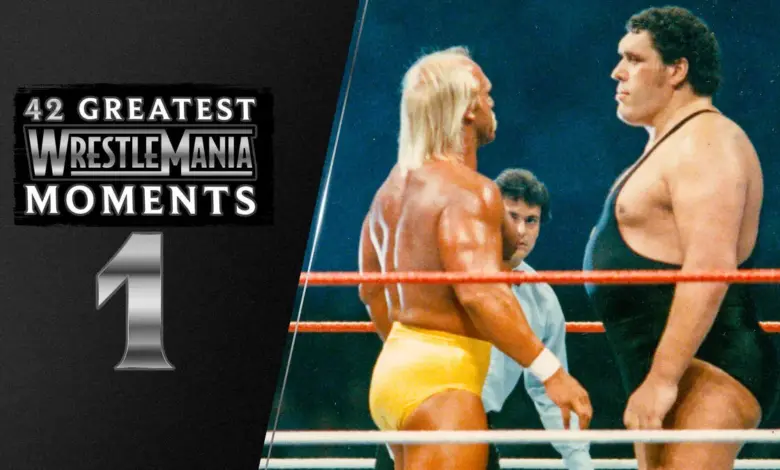
Wrestlemania has become more than a annual showcase; it is a record of moments that changed careers and redirected the mood inside the ring. One recent look at the event’s history points to 41 WrestleManias, 473 total matches, and a legacy built from both unforgettable highs and bouts that faded fast.
Why do the biggest Wrestlemania moments still matter?
The answer begins with the way a single match can reshape a larger story. A standout example is Bret Hart versus Steve Austin, a contest described as one that saved the WWF at a time when WCW had the momentum in the Monday Night Wars. In that match, Austin entered as the heel but left with the crowd behind him, while Hart began as the hero and emerged as the villain. The match did more than settle a result. It changed perception.
That is the human core of Wrestlemania: the audience is not only watching athletic performance, but also watching identity shift in real time. The visual of Austin bloodied and trapped in the Sharpshooter became a defining image, and the story around it was bigger than one night. It marked a turn in momentum, and it helped transform the WWF into a phenomenon.
Which Wrestlemania matches shaped the style of wrestling?
Some matches are remembered because they altered how wrestling is performed. Randy Savage versus Ricky Steamboat is one of those examples. The bout was said to be a starting point for fast-paced professional wrestling, with 22 false finishes in just over 14 minutes. Both men were at their athletic peak, and the crowd energy helped push the pace into something that felt new.
That style, where action rarely pauses and every exchange feels urgent, is now common. But the legacy of that Wrestlemania match sits in the fact that it helped define what came after. In the same way, Hulk Hogan and The Rock created a moment powered less by technical precision than by crowd connection. Hogan came in as part of the invading nWo faction, yet the audience response pulled him back toward the red-and-yellow hero image. The Rock adjusted too, feeding into Hogan’s punches and boots until the building felt like it was seeing a version of Hogan from years earlier.
These are not simply highlight clips. They are examples of how Wrestlemania has worked as a stage for reinvention, where performers respond to the moment and, sometimes, rewrite it.
What do the legacy stats say about Wrestlemania?
The numbers around Wrestlemania show a history built on repetition, durability, and marquee pressure. Roman Reigns is set to enter Allegiant Stadium in Las Vegas for his 11th Wrestlemania main event, beginning a run in 2015 that has placed him at the center of many of the biggest bouts of the modern era. The context surrounding that run is clear: he has been the focal point of the show, drawing attention and interest across recent years.
The Undertaker’s record is even more singular. He wrestled 27 matches on the grand stage and finished with a 25-2 record. Those matches included victories over 12 Hall of Famers and battles against 18 former world champions. His final Wrestlemania bout came during the COVID-19 period, when he defeated AJ Styles in the first and only Boneyard Match. For nearly three decades, no name was more closely tied to the event.
Triple H also stands out in the statistical portrait. He has competed in 23 Wrestlemania matches and lost 13, more than any other Superstar named in the legacy overview. Nine of those bouts were world title matches, and nine were in the main event spot. His opponents included The Undertaker, John Cena, and Batista, underlining how often Wrestlemania has placed him in the center of major storylines.
How does Wrestlemania keep turning history into a human story?
The answer lies in the mix of numbers and emotion. A total of 473 matches can sound abstract until it is connected to the way a crowd changes its mind, the way a rival promotion loses ground, or the way a performer’s final match becomes part of the event’s memory. Wrestlemania is a ledger of wins and losses, but it is also a collection of shifts in tone, status, and belief.
That is why the most lasting moments are not always the most polished. Sometimes a match matters because it is ambitious and misses. Sometimes it matters because it is direct, emotional, and impossible to ignore. In Wrestlemania history, the greatest legacy is not only who won, but what the audience felt when the lights were brightest.
And that is what keeps the opening scene alive: the ring, the crowd, and the sense that Wrestlemania is never just one night. It is a place where a match can still change everything.