The shooting crisis in Turkey has widened beyond school walls and into the digital space. Police detained 162 people over online posts tied to two deadly incidents this week, a move that shows how quickly authorities are trying to contain both violence and the fear spreading around it. The arrests come after two school attacks in as many days, one in the southeast and another in Kahramanmaras, leaving families grieving, students shaken and officials under pressure to explain how these events unfolded.
Two attacks, one fast-moving national response
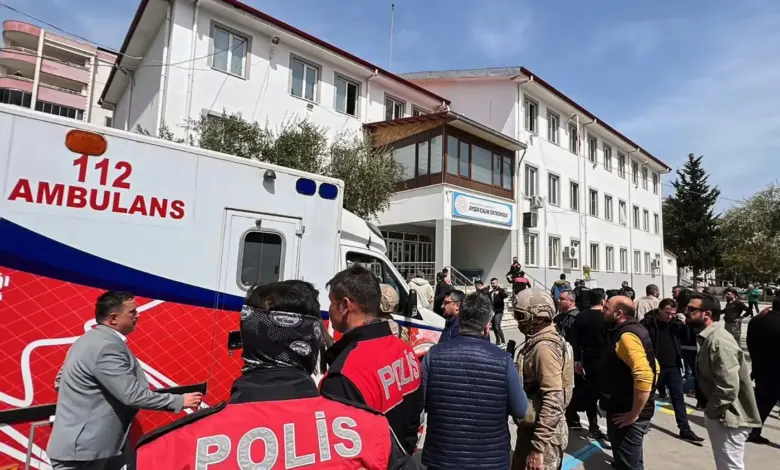
The first attack left 16 people injured at a high school in Siverek district on Tuesday. A day later, another school shooting in Kahramanmaras killed eight students and a teacher, with one more victim later dying in hospital, bringing the death toll to 10. 13 others were wounded in the second attack, including six in critical condition. The suspect in Kahramanmaras was 14 years old and died during the incident. The Tuesday attacker was described as a former student in his late teens who later killed himself.
Authorities have linked the shootings to a broader security concern that now includes social media behavior. Justice Minister Akın Gürlek said 95 people had been taken into custody over online activity after the attacks, while later updates pushed the total to 162 detained. The accused posts included footage of the incidents, content said to create fear, praise for crime, and misinformation aimed at discrediting official statements. In a country where school shootings have been rare, the speed of the government response suggests an effort to control not only violence but also its aftershocks.
What the detentions reveal about the wider crisis
The detentions point to a deeper concern: in the aftermath of violent incidents, online spaces can accelerate panic faster than facts can settle. That is especially significant when a shooting has already triggered public mourning and official scrutiny. Hundreds gathered near Kahramanmaras’s main mosque for funerals, while three government ministers were expected to attend. The emotional atmosphere, combined with the circulation of graphic or misleading posts, creates a climate in which authorities appear determined to draw a hard line.
The investigation into the Kahramanmaras attack has also focused attention on access to weapons. the student who carried out the attack used guns that belonged to his father, a retired police superintendent who was arrested afterward. In the earlier attack, the assailant fired with a shotgun and later killed himself. These details matter because they shift the public debate from isolated school violence to the systems around it: storage, supervision, family access and enforcement.
Expert and official warnings around school security
Justice Minister Gürlek said prosecutors had launched an investigation into the shooting, while the local prosecutor’s office said digital material found on the suspect’s computer suggested planning in advance. A document dated April 11, 2026, was found indicating intent to carry out a major operation in the near future. Police also said the suspect had referenced US mass killer Elliot Rodger in a WhatsApp profile image.
At a joint school security meeting in Ankara, the interior and education ministries gathered provincial governors, police chiefs and education directors from all 81 provinces. The Family and Social Services Ministry said it set up a team to provide psychosocial support to students and families and planned a comprehensive investigation of similar incidents. That response underscores a dual reality: the immediate need for counseling and the longer-term need to understand how a school shooting can occur despite existing controls.
Families, meanwhile, are left with losses that cannot be reduced to policy language. One victim was identified as 10-year-old Zeynep; her uncle, Mahmut, said she was a clever girl who respected others. The aunt of another child, Shura, said she learned of her niece’s death only when the name was read out on television. Their grief frames the debate in human terms, reminding officials that every new security measure arrives after irreversible damage.
Regional ripple effects and the pressure to respond
The second attack in two days has already produced a wider institutional ripple. Hundreds of educators gathered in Ankara and Izmir to demand stronger protection in schools. That public pressure matters because it signals a shift from shock to expectation: families and teachers are no longer only asking what happened, but why warning signs did not stop it.
Turkey’s school system now faces a test that goes beyond immediate policing. The rise in detentions over online posts shows how quickly panic can spread after a shooting, but it also raises a difficult question about balance: how can authorities limit harmful content without allowing fear to deepen? With funerals continuing, investigations still open and education officials meeting over security, the country is being forced to confront both the violence itself and the fragile environment that follows it. The next steps will determine whether the response stays reactive or leads to lasting change after this shooting cycle.