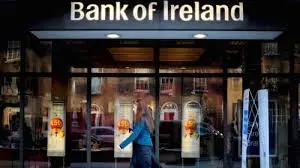
Bank of Ireland’s latest interest rate increase is small in percentage terms, but it lands at a moment when savers are watching every move. The bank has lifted the rate on its 12-month fixed-term deposit by 0. 40 percentage points, signaling that traditional lenders are feeling pressure from newer digital rivals. With households holding about €170bn in savings and current accounts, even modest changes can influence where money sits, how long it stays there, and whether customers decide to move it elsewhere.
Why the savings move matters now
The new rate takes the 12-month fixed-term deposit from 1. 75% annual equivalent rate to 2. 14%. Existing account holders will keep earning their original rate until the end of their term, while new deposits will benefit from the updated pricing. The bank also said its Advantage Fixed Term Deposit accounts, available over 6, 12 or 18 months, allow customers to access up to 25% of their deposited funds during the term.
This is notable because the change arrives alongside a broader shift in the market. Competition from neobanks and other online providers is clearly becoming more visible, and the move to lift the interest rate looks designed to keep mainstream customers from drifting elsewhere. The timing suggests banks are no longer treating savings pricing as a background issue. It is becoming part of the contest for deposits.
Interest rate pressure and customer behaviour
For ordinary savers, the headline improvement may look reassuring, but the underlying picture is more complicated. Bank of Ireland’s SuperSaver account continues to offer 3. 00% AER fixed for the first 12 months. After that, the regular saver rate applies on balances under €30, 000, currently 2. 00%. That means the bank is using multiple products to address different customer needs, from short-term deposits to regular savings.
Daragh Cassidy of the price comparison site Bonkers. ie said mainstream banks are under pressure from online banks Monzo, MoCo and Bankinter, which all have competitive savings rates. He said several new providers are now active in Ireland’s savings space, and that the latest change is “perhaps a response to increased competition. ” He also said the new Bank of Ireland 2. 15% rate does not match inflation, adding that DIRT of 33% on gains means money left in such a product can still lose value in real terms.
What the competition from neobanks changes
The competitive backdrop matters because it is not only about one bank adjusting a product. Monzo said this week it had 100, 000 customers in Ireland on a waiting list for current account and savings products. MoCo is part of Bawag, which is due to buy PTSB, while Bankinter has established Avant Money in Ireland as a fully fledged bank. That combination raises the stakes for established lenders.
In practice, the fight is not just over yield. It is also about convenience, trust, and how easily customers can shift deposits. The revised interest rate may be enough to slow some churn, especially for people seeking a place for a rainy day fund. But for longer-term goals, the same commentary pointed customers toward other options, including investing. That distinction is important: deposit products can preserve flexibility, but they are not automatically the best route for money intended to grow over many years.
Expert view on savings, inflation and real returns
Mr Cassidy’s assessment highlights the tension at the heart of today’s savings market. Higher deposit rates are welcome for consumers, but they do not automatically equal meaningful gains after tax and inflation. His warning that savers are still losing money in real terms underscores why rate rises are being judged not only on the headline number, but on what remains after deductions.
He also framed the product as a decent home for short-term cash because customers can access up to 25% of their money before the term ends. That feature gives Bank of Ireland’s offering a practical edge for savers who want some flexibility without giving up all the certainty of a fixed-term account.
Broader impact on Ireland’s savings market
The wider implication is clear: banks are being pushed to react as digital challengers gain visibility and customer interest. With household savings and current accounts carrying large balances, even a modest change in the interest rate can influence where money is parked. The immediate effect may be limited, but the direction of travel matters. A rate increase of this kind suggests the savings market is becoming more competitive, and that competition may continue to sharpen as new providers expand.
The real question is whether this is the start of a wider repricing of deposits, or just a tactical adjustment to hold ground while challengers build momentum. For savers, the answer will shape whether cash stays put, moves to a rival, or is rethought altogether.