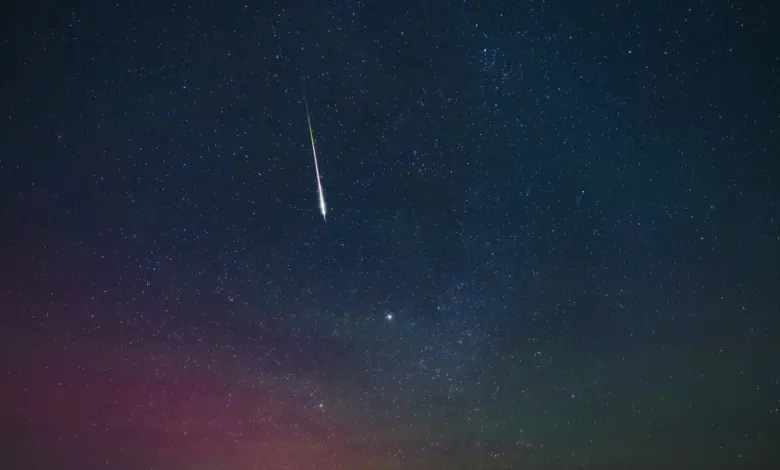
The lyrids meteor shower can feel like a private reward for anyone willing to wait out the night. In one account from a city observer, a camera was left outside through the hours before dawn, only for a brilliant meteor to appear after the equipment had already been switched off.
What makes the Lyrids worth watching?
The answer is simple: even a relatively minor display can produce a striking fireball. The scene described by the observer is familiar to many skywatchers in cities, where light pollution limits the view but does not erase the possibility of a sudden, memorable streak across the sky.
This year, the lyrids meteor shower peaks overnight on Tuesday, April 21, through Wednesday, April 22. The predicted peak is around 20: 00 UTC, or 4: 00 p. m. EDT, on April 22. That timing means the best viewing windows differ by region: the early hours of Wednesday are likely to favor North American observers, while post-sunset hours are better for European skywatchers.
How can city viewers improve their chances?
The main advantage in the city is not perfect darkness. It is persistence. One described method uses a tripod, a wide-angle lens, and repeated exposures firing every 30 seconds. That approach does not guarantee a bright meteor, but it can stack the odds in favor of catching one when the eye misses it.
The Lyrids are expected to hold near their peak rates for a night or so on either side, at about 18 per hour under perfect skies. That gives committed observers more than one chance, including the early hours of Thursday, April 23. The sweet spot is around 4 to 5 a. m., when the radiant in Lyra climbs high in the northeast, close to Vega.
Why is this year’s timing especially favorable?
Lunar conditions are helping. A new moon on April 17 means moonlight should not wash out the peak mornings. In dark-sky locations, even fainter meteors may stand out more clearly. That matters because the shower’s value is not only in the brightest streaks, but also in the way a quiet sky can suddenly break with motion.
For many people, the appeal of the lyrids meteor shower is not just what appears, but when it appears: at the end of a long wait, in the few seconds after someone decides to look up. The camera may keep watch longer than the human eye, yet the sky still reserves its best moment for chance.
What is the broader story behind the light show?
The Lyrids return every April, and the shower is visible for about two weeks. In Australia, the display is expected to be most active between April 16 and 25, with a peak just after midnight on April 22 or in the very early hours of April 23. During that period, viewers can expect sporadic flashes throughout the night.
The shower is also among the oldest known, with origins traced in Chinese texts more than 2, 500 years old. It forms when Earth moves through the dust trail left by comet Thatcher, and the debris burns in the atmosphere as fiery streaks. No telescope is required, but clear skies and distance from artificial light remain important.
That leaves the same practical advice for city and non-city observers alike: give your eyes about 30 minutes to adjust, avoid checking a phone too often, and stay patient. The scene at dawn, with a camera packed away and one last meteor crossing the sky, is a reminder that the lyrids meteor shower can still surprise even those who think they have already missed it.