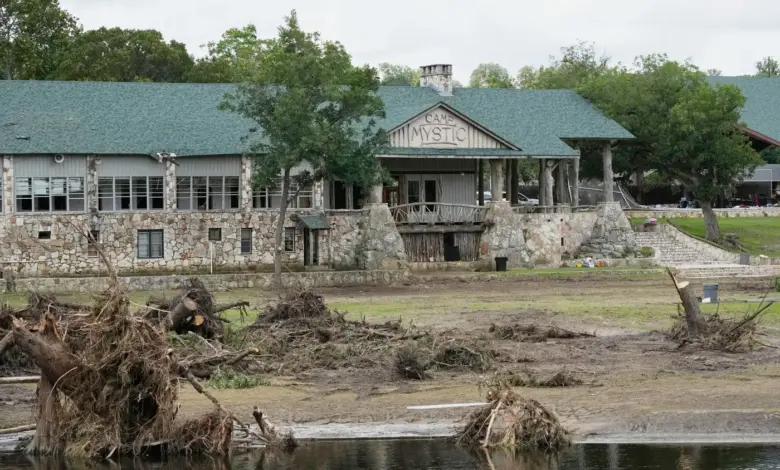
The flood that killed 27 campers and counselors at Camp Mystic now raises a sharper question: how could warnings issued the day before the storm not reach the people in charge? In court on Monday, Camp Mystic director Edward Eastland said he did not see the early warnings and that staff had no meetings about the danger ahead.
What did the camp know before the flood?
Verified fact: Eastland testified in a court hearing tied to lawsuits filed by families of the victims of the July 4 disaster on the banks of the Guadalupe River. He said he and other staff were signed up for an emergency warning system on their phones and used weather apps, but he did not see flood watch social media posts from the National Weather Service and the Texas Department of Emergency Management on July 2 and July 3. He also said he was not following those agencies on social media.
Verified fact: A July 3 National Weather Service alert asked area broadcasters to note that locally heavy rainfall could cause flash flooding in rivers, creeks, streams, and low-lying areas. The camp property included those features. Eastland said the local CodeRED mobile alert system and weather apps staff used at the time were “enough. ”
Informed analysis: That answer is now central to the families’ case because it frames the dispute as more than a failure to anticipate severe weather. It becomes a question of whether the camp relied on partial information when more explicit warnings were already circulating.
Why was there no staff meeting on the warning?
Verified fact: Eastland said he did not believe camp staff held a meeting about the alerts and warnings that day. He added that his father, camp co-owner Richard Eastland, typically monitored weather issues. He also said the storms hit overnight.
Verified fact: The overnight flooding killed 25 campers, two teenage counselors, and Richard Eastland. Eastland testified that cellphones were not allowed in the cabins and that only some staff carried walkie-talkies for communication.
Informed analysis: Those details matter because they show a communication chain with obvious limits. If campers had no phones and only some staff had walkie-talkies, then the burden of recognizing and relaying danger rested heavily on adult supervision. The testimony suggests that the camp’s internal system may not have been designed for a fast-moving emergency.
Who is implicated as the camp seeks to reopen?
Verified fact: The hearing was held as camp operators appealed a judge’s order to preserve damaged areas of the camp grounds as evidence in several lawsuits. It also came as the camp pursued a state license to reopen this summer on a part of the campus that did not flood.
Verified fact: Eastland testified for several hours in a courtroom packed with the families of the girls who were killed. An attorney for the families, Brad Beckworth, told Eastland, “You were warned. ”
Informed analysis: The timing is politically and legally significant. The camp is asking to restart operations while families are still seeking preservation of the physical evidence that could explain what happened. That creates a tension between reopening and accountability: one side wants a future license, while the other wants the past kept intact long enough to be tested in court.
What does the testimony mean for accountability?
Verified fact: This week’s hearing could produce the most extensive public comment from the all-girls Christian camp’s operators since the disaster. Eastland’s testimony placed the focus on what he saw, what he did not see, and what staff did not discuss before the storm arrived.
Informed analysis: The core issue is not whether warnings existed; the testimony confirms they did. The issue is whether the camp’s leadership had a reliable enough system to detect them, share them, and act on them before the night the flood turned deadly. The families’ lawsuits now stand on that question, and the answer may shape both the legal record and the camp’s effort to reopen.
For Camp Mystic, the story is no longer only about a storm. It is about whether a warning chain failed at the exact point where lives depended on it. Until that is fully examined, the public will keep asking what was missed, who should have seen it, and why the flood warnings did not trigger a stronger response at Camp Mystic.