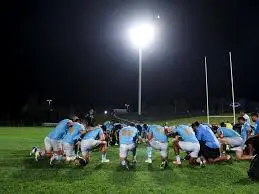
Moana Pasifika is facing a finish line that is not being framed as a performance problem alone. The sharper issue is funding: the club’s owner has told players and staff it will meet obligations for the rest of the 2026 season, but not continue next year. That leaves one question hanging over Super Rugby Pacific — who, if anyone, will pay to keep the franchise alive?
What is not being said openly about the club’s future?
Verified fact: the club’s owner, Pasifika Medical Association, will not run the team next year if the current plan holds. The playing group was informed that the franchise would not be involved next season because of a lack of funding. The annual running cost has been placed at between $10 million and $12 million, a level that appears to be beyond the current owner’s reach.
Informed analysis: this is not simply a short-term cash problem. It is a structural test of whether a competition can sustain a team whose financial base was already fragile and increasingly dependent on outside support. For Moana Pasifika, the funding question is now the central story, not a side issue.
How did Moana Pasifika reach this point?
Verified fact: the franchise entered Super Rugby Pacific in 2022 and has struggled for financial stability from the start. In its first year, about $7. 4 million of $9. 3 million in revenue came from grants and subsidies. The club received about $2 million a year from New Zealand Rugby, about $1. 9 million from World Rugby, and additional loans and grants from government entities.
The support base has since thinned. Government money has been exhausted, World Rugby is no longer contributing, and Sky is believed not to be looking to extend its front-of-jersey sponsorship beyond 2026. A government contract worth $44 million was also lost, adding pressure to the owner’s finances.
Informed analysis: taken together, those facts point to a franchise that was never built on a self-sustaining commercial engine. The club’s finances depended on a mix of grants, institutional backing, and sponsorship support that now appears to be shrinking at the same time. That is why the present crisis carries more weight than a single bad season.
Who could step in, and why is certainty urgent?
Verified fact: New Zealand Rugby would take possession of the licence from Pasifika Medical Association if the current owner steps away. Any new owner would need to satisfy New Zealand Rugby that it has both the money and the business plan to run the club for the long term. There have also been discussions in the market, including earlier interest from former All Black Ali Williams and his wife Anna Mowbray, although those talks did not develop. A consortium led by former Moana Pasifika chief executive Pelenato Sakalia is believed to be a possible contender to try to save the club.
The urgency is not just internal. Other Super Rugby sides in New Zealand and Australia are pressing for certainty over how many teams will be in the competition next year. That pressure matters because a 10-team tournament would reshape the calendar and the commercial logic of the season.
Informed analysis: the speed of the decision will matter as much as the identity of any buyer. If no credible owner emerges quickly, the club may not have enough time to move from rescue talk to a workable operating plan. That creates leverage for New Zealand Rugby, but it also narrows the room for a late turnaround.
Why does the wider competition now depend on Moana Pasifika?
Verified fact: Super Rugby Pacific started as a 12-team competition in 2022 and would be reduced to 10 sides from 2027 if Moana Pasifika exits, following the winding up of the Melbourne Rebels at the end of the 2024 season. The competition has already absorbed one major collapse, and another departure would deepen concerns about its long-term shape.
The club’s off-field instability has mirrored its on-field strain. It has played across multiple home venues, including Mt Smart Stadium, Pukekohe, Rotorua, and Albany, and had hoped to take a match to Tonga this year before that plan was dropped when a major sponsor could not be found. Even its best season, helped by Ardie Savea’s arrival, did not translate into durable stability. Savea later chose to spend the 2026 season in Japan, and coach Tana Umaga has already moved into the All Blacks set-up.
Informed analysis: that combination makes the franchise vulnerable to a blunt assessment: visibility has not yet become viability. If the club disappears, the lesson for the competition will be uncomfortable. Expansion can create momentum, but without durable ownership and predictable revenue, momentum can fade quickly.
What happens now?
Verified fact: Moana Pasifika is still due to travel to Sydney for its clash with the Waratahs, a match scheduled for Friday night in Eastern Time. The club’s immediate playing commitments continue, even as its future is questioned.
Accountability question: what the public should now know is whether New Zealand Rugby has a credible succession path, whether any buyer can prove long-term sustainability, and whether the competition has learned enough from the collapse of other teams to prevent another abrupt exit. The evidence already on the table points to a franchise in financial retreat and a governing structure under pressure to explain what comes next.
If the next move is not made in time, Moana Pasifika may become the clearest example yet of a club whose purpose was widely celebrated while the business model around it quietly weakened.