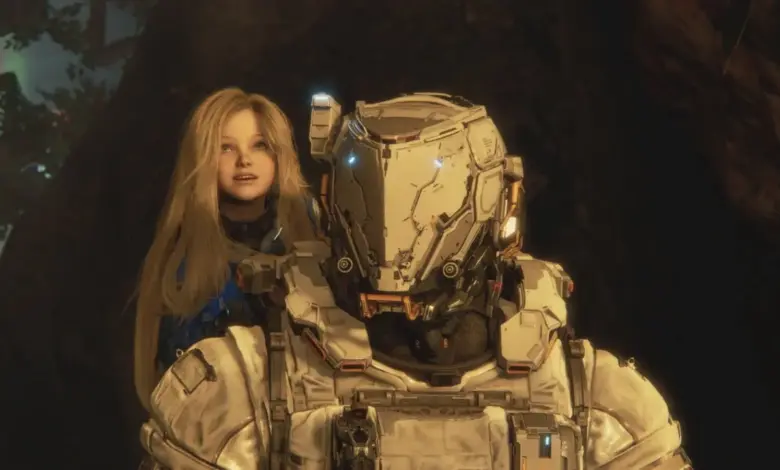
Pragmata arrives with the kind of ambition that can sink a game before it finds its footing, but this one turns delay into identity. Set on a moon base run by the Delphi Corporation, the action follows astronaut Hugh and the android Diana as they fight off rogue robots in a place that should feel sterile, not desperate. The result is a sci-fi shooter that does not simply ask players to aim faster. It asks them to think faster, move faster, and trust a partner who is as central to the combat as she is to the story.
Why Pragmata feels different on the moon
The most striking thing about pragmata is that it makes its setting matter in every encounter. This is not a distant backdrop used for flavor. The moon base is a working environment, and that sense of purpose gives the chaos a sharper edge when the bots turn hostile. Hugh is not just surviving a collapse in security; he is moving through a place that still feels like it was meant for research and human ambition. That tension gives the game its emotional pressure, and it is why the setup lands with more force than a generic futuristic firefight.
That sense of place also supports the story’s central pairing. Hugh and Diana are not presented as a throwaway duo. Their relationship develops while they investigate the base and the reason the robots have gone rogue, and that shared problem-solving gives the game a more grounded rhythm than most action-heavy sci-fi stories. In pragmata, the moon is not a metaphor. It is a testing ground for cooperation.
Pragmata and the real-time combat gamble
The core of pragmata is its combat system, and that system is where the game takes its biggest risk. Every enemy is a robot, and every robot must be hacked before it can take meaningful damage. Hugh’s bullets alone are weak by design, which forces players to treat each fight as a layered puzzle rather than a straightforward shooting gallery. Diana’s hacking minigame opens weak points on enemies, and only then does Hugh’s firepower become effective.
That structure changes the feel of combat in a way that is easy to describe but harder to pull off. While aiming, dodging, and repositioning, players must also guide Diana through a grid using the controller’s face buttons. The process sounds busy, and at first it can be. Yet the game’s real accomplishment is that the system settles into muscle memory. What begins as a juggling act becomes a rhythm, and that rhythm is what gives pragmata its identity. The action never pauses, and that is exactly why each successful exchange feels earned.
There is a larger design lesson buried in that approach. Pragmata does not try to impress by adding more systems; it impresses by making two familiar systems depend on each other. The shooting matters because the hacking matters, and the hacking matters because the shooting does not work without it. That interdependence is the game’s sharpest idea.
What the delay story reveals about pragmata
Pragmata has also carried the burden of anticipation for years, with players seeing only cutesy delay messages before the game finally reemerged. That history could have turned into a punchline. Instead, the game’s current form suggests that time may have been part of the design philosophy. The finished experience feels deliberate, as if the team understood that a concept this specific could not be rushed into relevance.
That matters because delayed games often face a brutal question: was the wait worth it? In pragmata, the answer depends on whether players value originality over familiarity. The game is not trying to be everything. It is trying to be one thing with conviction, and that conviction is visible in the way the combat loop, the setting, and the Hugh-Diana partnership all reinforce one another. The result is a game that feels built around a thesis rather than a checklist.
Why pragmata could resonate beyond core shooter fans
pragmata may appeal beyond players who usually chase the fastest or most punitive action games. Its system is demanding, but it is also legible, and that makes it more inviting than many high-intensity shooters that rely on reflexes alone. The hacking layer gives each encounter a shape, which can help players read danger instead of only reacting to it.
That accessibility through structure may be its quietest strength. A game about a moon base, a rogue AI, and 3D-printed robots could easily become noise. Instead, it finds clarity through restraint. If the moon is humanity’s symbol of reach, pragmata treats it as a place where ambition is measured not by spectacle, but by whether two unlikely partners can survive together. And that leaves one final question: if this is what Capcom can build from a delayed moonshot, what might its next leap look like?