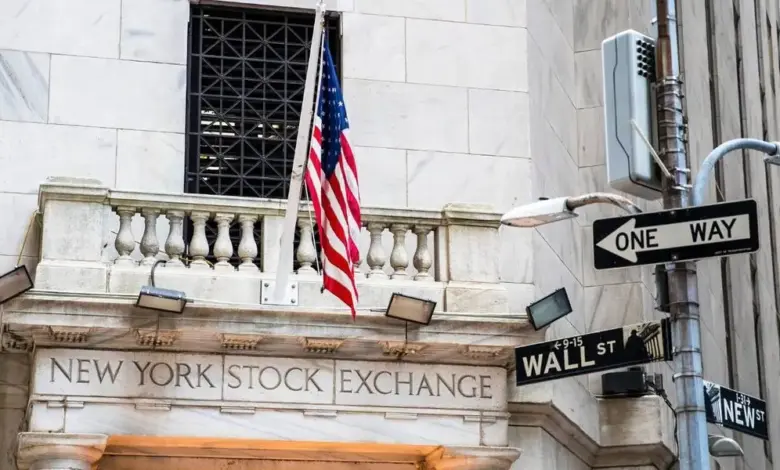
morgan stanley stepped into a fast-moving market on Wednesday with the launch of its own spot Bitcoin ETF product, a move that arrived just as Bitcoin was rebounding and many holders were still feeling the weight of a steep drawdown. The Morgan Stanley Bitcoin Trust began trading on NYSE Arca under the ticker MSBT.
For investors watching screens that had been red for weeks, the debut carried a different kind of significance: it was not just another product launch, but a signal that large institutions are continuing to build around digital assets even as the market remains unsettled.
What does the Morgan Stanley Bitcoin Trust add to the market?
The new product marks Morgan Stanley as the first major US commercial bank to issue its own spot Bitcoin ETF product., Ben Huneke, head of Morgan Stanley Investment Management, said the firm was “proud to introduce MSBT to the marketplace” and believed it aligns with long-term trends in financial innovation.
Huneke said the trust is meant to strengthen the range of investments available to clients and reflect the firm’s “collective strength and deep expertise across asset classes and market segments. ” That language matters because it places the launch inside a broader shift: digital investments are no longer being treated as a fringe category, but as part of the main conversation around portfolio construction.
The timing, however, also matters. Bitcoin was priced at US$71, 280. 98 on Wednesday, up 3. 3 percent over 24 hours, after hitting a three-week high. That move followed a sudden ceasefire deal between Washington and Tehran, which brought a wave of relief into global financial markets. Even with the rebound, Bitcoin remained roughly 40 percent below its US$126, 000 peak from last October.
Why does the launch matter for investors still recovering from the slump?
For holders who entered near the top, the market’s recent bounce does not erase the emotional and financial strain of the past several months. The trust debut lands in a period when optimism and caution are still living side by side. US spot Bitcoin exchange-traded funds drew in US$471. 3 million on Monday alone, a sharp reversal from heavy outflows seen only weeks earlier.
That change in flow suggests that some investors are returning, but the market structure still looks fragile. Perpetual funding sat slightly negative around −0. 002 at the close, signaling that long leverage is not driving the move. Four-hour liquidations were skewed toward short positions, suggesting some of the rally came from bears being forced out rather than from fresh spot demand.
Open interest also slipped modestly on the one-hour and four-hour windows after the initial jump. In practical terms, that means the latest rise is not yet built on a fully convincing base. The path higher exists, but it depends on whether spot buyers continue to step in.
How are institutions and regulators shaping the same story?
morgan stanley’s entry into this corner of the market arrives alongside another sign of changing institutional tone: the SEC formally acknowledged in its 2025 fiscal year enforcement report that several earlier legal actions against cryptocurrency firms failed to provide meaningful protection or benefit to investors. That acknowledgment suggests the policy debate around digital assets is evolving, even if the rules are still being tested in real time.
At the same time, the White House Council of Economic Advisers released a study examining stablecoin yield and its impact on deposit flight and bank lending. Its executive summary said eliminating stablecoin yield would increase bank lending by just 0. 02 percent, while resulting in a net welfare loss to consumers. The study added that even under worst-case assumptions, the model produced only limited gains relative to the scale required for major banking shifts.
For clients, those institutional signals may not feel abstract. They shape the menu of products, the pace of adoption, and the sense of whether digital assets are becoming more normal or simply more complicated. In that space, the Morgan Stanley Bitcoin Trust is both a product and a marker of changing expectations.
What should readers watch next?
The immediate question is whether the market can convert this burst of momentum into something more durable. The price move in Bitcoin, the return of ETF inflows, and the launch of MSBT all point in the same direction: renewed attention. But the data also show that the recovery is incomplete and the structure remains vulnerable to a reversal.
That tension gives the day its meaning. A new trust began trading while traders weighed ceasefire headlines, softer sentiment, and lingering distance from Bitcoin’s peak. For Morgan Stanley, the launch is a step into a growing field. For investors, it is another reminder that access is expanding even when certainty is not. In a market still searching for firmer footing, Morgan Stanley’s debut may be remembered less for the product itself than for the moment it entered: one where opportunity and fragility were moving in the same direction.