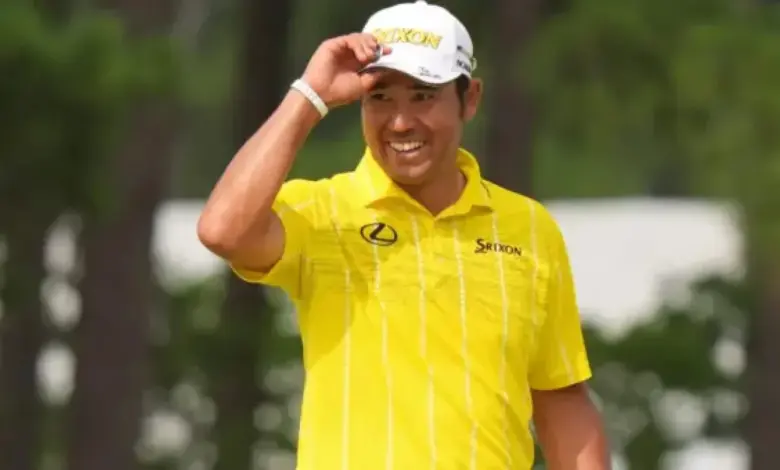
hideki matsuyama remains part of the 2026 Masters conversation because Augusta National continues to reward the exact skills he still brings into the week. The question is not whether he has the pedigree. It is whether his recent form and tee-shot issues can be contained long enough for his short game and approach play to matter at the decisive moment.
What Happens When Augusta Rewards Precision?
The case for hideki matsuyama starts with history. He is a 15-time Masters entrant and a 2021 Green Jacket winner, becoming the first Japanese player to win the tournament. He also owns five other top-15 finishes at Augusta, including fifth in 2015 and seventh in 2016. That is not a background note; it is a record that shows repeated comfort with a course that asks for patience, recovery, and control under pressure.
His 2026 season has not followed a straight line. He opened with four consecutive top-15 finishes, including a runner-up finish at the Phoenix Open, before dropping outside the top 20 in each of his last four tournaments. That split is the central tension in his profile. Masters contenders are often judged not only by what they have done at Augusta, but by whether their present form can hold up under its demands.
What If the Short Game Keeps Carrying Hideki Matsuyama?
The statistical profile supports the idea that hideki matsuyama still has a viable lane. He ranks first in scrambling, 15th in strokes gained on approach, and 19th in strokes gained total. Those numbers fit Augusta’s broader demands, where recovery shots and quality iron play can protect a player when the field starts to separate.
At the same time, the concerns are specific and measurable. He ranks 105th in strokes gained off the tee and sits outside the top 75 in both driving distance and driving accuracy. That is a real limitation, because Augusta may reward precision, but it does not erase the cost of repeated misses from the tee. His career scoring average of 71. 70 at The Masters suggests he has found a workable formula there before, yet the current driver profile narrows his margin for error.
| Signal | What it suggests for Augusta |
|---|---|
| First in scrambling | Strong recovery potential when holes become messy |
| 15th in strokes gained on approach | Reliable iron play that can create birdie looks |
| 105th in strokes gained off the tee | Driver inconsistency could create pressure |
| Recent stretch outside top 20 | Current form is less stable than earlier in 2026 |
What If the Field Forces a Narrower Path?
The wider 2026 Masters picture makes hideki matsuyama more of a durable threat than a headline favorite. Rory McIlroy enters as the defending champion after last year’s Masters victory. Scottie Scheffler remains the world No. 1 and is chasing a third Augusta win in five years. Ludvig Aberg and Xander Schauffele bring upside, while Jon Rahm and Bryson DeChambeau deepen the pool of threats.
That crowded field matters because Augusta rarely gives one clean storyline. It tends to produce clusters of contenders with one or two clear strengths and one or two obvious vulnerabilities. In that environment, hideki matsuyama does not need to be perfect to stay relevant. He needs enough tee-ball stability to let his scrambling and approach play do the work that has historically kept him in contention there.
The betting market reflects that middle ground, with his listed price at +3800 to win. That placement signals respect without suggesting he is the dominant favorite. It also reinforces the broader reading: his path exists, but it is narrower than it was during his strongest Augusta runs.
What Are the Most Likely Scenarios?
- Best case: The tee game holds just enough, the scrambling stays elite, and hideki matsuyama turns Augusta’s recovery demands into an advantage.
- Most likely: He remains in the conversation for placement markets, with enough course fit to matter but not enough driving consistency to control the week.
- Most challenging: Persistent issues off the tee leave too much recovery work, and Augusta’s precision demands expose the gap between strong short-game numbers and unstable long-game form.
Who benefits if that middle path holds? Players with balanced profiles and fewer obvious flaws gain value in a field this deep. Who loses? Any contender dependent on one skill to mask another, especially on a course that punishes repeated mistakes. The real lesson is that Augusta does not erase weakness; it tests whether a player can survive it long enough to contend.
For readers tracking the 2026 Masters, the key point is simple: hideki matsuyama is still relevant because his strengths match Augusta’s demands, but the margin is thinner now than it has been before. The short game remains the anchor, the approach play remains a support, and the driver is the swing factor that can decide whether this becomes a serious run or just another respected week at a familiar venue. hideki matsuyama