Masters Golf Leaderboard: McIlroy’s lead vanishes as Young and Day set up a tense Sunday finish

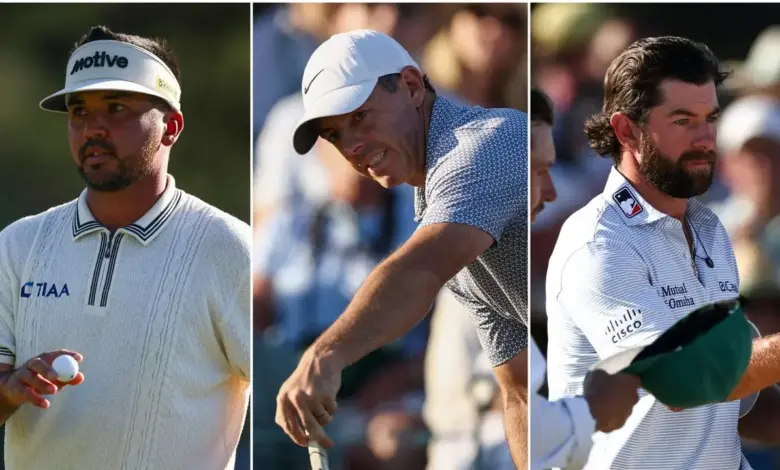
The Masters golf leaderboard turned sharply on a chaotic moving day at Augusta National, where Rory McIlroy’s once-commanding advantage disappeared and the contest tightened into a co-lead. By the end of the third round, McIlroy and Cameron Young sat at 11-under par, while Jason Day had forced his way into the conversation with a strong late charge. What had looked like a controlled march toward Sunday became something far less predictable, with the pressure shifting to every shot around Amen Corner and beyond.
McIlroy’s stumble changes the shape of the tournament
McIlroy began the day with a record 36-hole lead, but the Masters golf leaderboard was transformed by a one-over par 73 that opened the door for the field. His round swung repeatedly: he dropped shots early, briefly regained the outright lead with birdies at 14 and 15, then surrendered it again with a bogey at 17 after a drive that went into the trees. The key damage came at 11 and 12, where a double bogey and a bogey erased the cushion he had carried into the round.
That sequence matters because it changed the psychological frame of the tournament as much as the numbers. McIlroy’s own assessment made clear that the round was a fight for survival rather than a routine defence. He said he knew the day would not be easy, that the chasing group was strong, and that he “didn’t quite have it” despite scrambling through much of the front nine. In a tournament where momentum can shift hole by hole, that admission underlines how quickly a lead can disappear at Augusta.
Jason Day’s late surge intensifies the chase
Australia’s Jason Day ensured the Masters golf leaderboard did not become a two-man story. His round of 68 featured four birdies in a row on the back nine, enough to lift him to within three shots of the lead and place him firmly in the final-day mix. In a field where names kept rising and falling through the afternoon, Day’s burst stood out because it came at the moment when many players were being pulled back by the course.
The context is important: Day’s run came on the same day McIlroy’s advantage shrank, which gave the leaderboard a very different feel heading into Sunday. Rather than one runaway favourite, the tournament now presents a compact, volatile chase. That is exactly the sort of setup Augusta tends to magnify, especially when the leaders are separated by only a few strokes and the field remains close enough to punish any mistake.
The challenge beneath the numbers
The deeper story behind the Masters golf leaderboard is not simply McIlroy’s slip, but how quickly the course exposed every small error. His hook into the water at 11, the missed short-range bogey putt after the drop, and the way 12 followed with another dropped shot showed how little room existed for recovery once the round turned. At the same time, McIlroy’s birdies at 14 and 15 proved he still had enough firepower to reclaim control, even if only briefly.
That balance of danger and resistance is what now shapes the final round. McIlroy remains tied at the top, but no longer with the freedom that came from his earlier lead. Young’s position is equally striking. He followed a difficult opening stretch in the tournament with a strong recovery, and his 65 placed him alongside McIlroy after a round that rewarded patience. The Masters golf leaderboard is therefore not just about who is leading, but about who can absorb the stress of Augusta without losing rhythm.
What the contenders are saying before Sunday
Young described the position as one he would have taken immediately if offered earlier in the week, especially after watching McIlroy play. He said Augusta punishes players who become angry or impatient, stressing the need to hit the next shot and move on after bad breaks. That perspective matters because Sunday at this venue often becomes a test of emotional control as much as execution.
McIlroy, meanwhile, acknowledged the quality of the group around him, naming Scottie and Cam among those who played superb golf. His comments suggest awareness that this is no longer a solo defence but a crowded battle where the Masters golf leaderboard can shift with a single mistake. The tension is heightened by the fact that the lead changed hands multiple times during the same round, turning the final day into a search for stability more than dominance.
Broader implications for the final round
With McIlroy, Young and Day all in range, Sunday now carries the look of a classic Augusta finish: close, unstable and shaped by small margins. The fact that McIlroy’s lead disappeared yet he still remained tied at the top shows how thin the gap is between control and vulnerability here. Day’s surge ensures the Masters golf leaderboard is not just about the two names at the summit, and that broader pressure could force caution or create opportunity in equal measure.
The open question is whether McIlroy can steady himself long enough to convert a shaky hold on first place into a retained title, or whether the leaderboard’s volatility will hand the final word to one of the chasers. Either way, the Masters golf leaderboard has already delivered the kind of uncertainty that turns a Sunday into a test of nerve as much as talent.