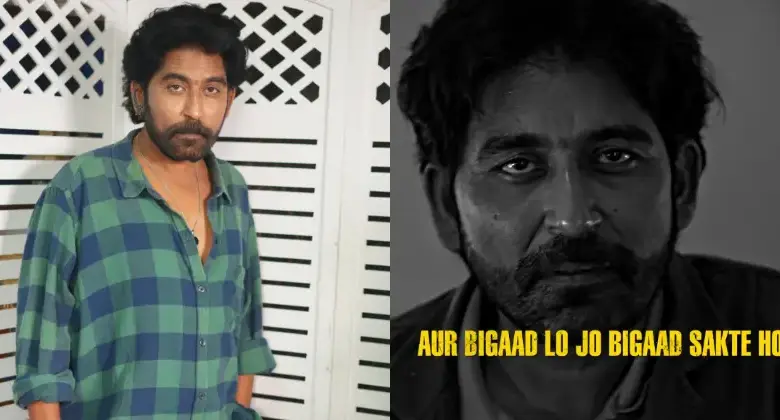
In Bombay, where success stories travel fast and rumors travel faster, Vivek Sinha found himself answering a question that had already taken on a life of its own: whether he had been paid Rs 1 crore for Dhurandhar. On April 10, he addressed the speculation directly, pushing back on the numbers that had been circulating around his name.
What did Vivek Sinha say about the payment rumors?
Vivek Sinha’s message was simple and direct. He said the rumored figures were wrong and that the money he received for Dhurandhar was not the amount being discussed online. In his own words, “Bhai, itna paisa nahi mila hai kasamse. Yeh sab mat dalo. ”
He also explained that the attention around his pay had created practical problems. People had reached out to him asking for financial help, apparently taking the larger figures seriously. His response made one thing clear: the noise around his fee had moved beyond gossip and into his daily life.
Why did the rumor spread so quickly?
The discussion grew in the wake of Dhurandhar 2: The Revenge, which released on March 19 and kept the franchise in the spotlight. The film’s cast had already been getting attention, and Vivek Sinha’s brief role stood out enough to leave an impression.
That visibility helped turn a simple payment question into a larger talking point. In Bombay, where the entertainment world often blurs personal life and public perception, even a short role can generate outsized assumptions. The result was a wide spread of figures, including Rs 60 lakh, Rs 80 lakh, and Rs 1 crore, none of which Vivek accepted as accurate.
How did Vivek Sinha explain his actual earnings?
Vivek Sinha did not deny that he was paid well. What he denied was the scale of the rumor. He said, “Mujhe Dhurandhar se paisa mila hai, achcha paisa mila. Jo expected the amount tha woh mila. Lekin utna paisa nahi mila, aur joh paisa mila tha khatam ho chuka hai. ”
He added that he lives in Bombay and that everyday expenses are high there, which he used to explain why the money was already spent. That detail matters because it shifts the story away from celebrity excess and toward the ordinary costs that shape life even for people working in high-profile projects.
What does this reveal about fame, money, and public perception?
The episode shows how quickly financial assumptions can harden around a public figure. A film’s success can create the impression that everyone involved shares equally in its gains, even when the reality is more modest. For Vivek Sinha, the issue was not just the rumor itself, but how easily it translated into expectations from others.
There is also a broader human side to this. Actors are often treated as symbols of wealth before they are seen as workers with fluctuating incomes, professional uncertainty, and ordinary expenses. The Bombay setting sharpens that contrast: the same city that amplifies visibility also magnifies costs, pressure, and misunderstanding.
How is the film’s success shaping the conversation?
Dhurandhar and its sequel have drawn attention for their scale, box office impact, and the reaction to the performances. The story at the center of the film, led by Aditya Dhar, follows an Indian spy who infiltrates the Lyari underworld and eliminates India’s enemies one by one. That intensity has kept the project in public conversation, and the cast has benefited from the spotlight.
Still, the case of Vivek Sinha is a reminder that popularity does not automatically mean windfall. His clarification brought the discussion back to a more grounded place, where the facts matter more than the chatter. The rumor may have been dramatic, but his answer was plain: the amount was not Rs 1 crore, and the money he received is already gone. In Bombay, where perception can move faster than truth, that kind of clarity can matter just as much as the film itself.