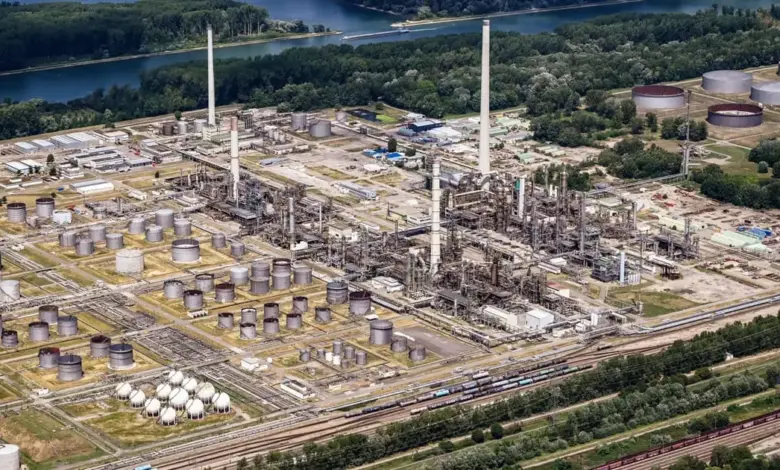
When the oil pipeline link from northern Italy went dark in late March, the interruption was felt far beyond the Alps. For three days, a major refinery near Karlsruhe had to live off stored crude, while another refinery in Bavaria did the same, turning a hidden act of sabotage into a test of how quickly Europe’s fuel system can absorb a shock.
What happened to the oil pipeline in northern Italy?
Police are investigating whether the attack was politically motivated. The incident affected the Transalpine Pipeline, which carries crude oil to Germany. The outage interrupted supply to Miro, Germany’s largest refinery near Karlsruhe, and forced the facility to rely on existing crude stocks until around 2 a. m. on March 30.
A spokeswoman for the Miro refinery said the site received no crude oil through the pipeline for three days. The Bayernoil refinery was also affected, with its sites in Neustadt and Vohburg in Bavaria drawing on local storage reserves to bridge the disruption.
Two people familiar with the matter confirmed that the outage was an act of sabotage. The failure was linked to an attack on the power supply of a pumping station near Terzo di Tolmezzo in the Italian Alps. The local police station responsible for the Carnia mountain communities confirmed that the damaged power pole is in that village.
Why does this matter for fuel supplies in Germany?
The immediate concern was not a full fuel shortage, but the fragility of a supply chain that serves millions. Miro said all products remained fully available during the outage, and there was no disruption to filling station supplies. Even so, it was unclear how long the refinery could have kept operating from on-site tank storage alone.
Now that the pumping station has been repaired, Miro is gradually rebuilding its crude inventories. The refinery says it supplies 10 million people every day with fuels and heating oil, and also provides district heating to thousands of households in Karlsruhe. Its products cover around 45 percent of Baden-Württemberg’s total primary energy demand.
The Interior Ministry in Germany said the Federal Criminal Police Office is in contact with Italian authorities on the case. The ministry also said whether the incident was a politically motivated attack on critical infrastructure remains part of the ongoing investigation in Italy. The company operating the pipeline did not comment on the cause of the outage, and Terna, the power grid operator in northern Italy, also declined to comment.
What does this say about critical infrastructure?
The episode highlights how a single strike on a pumping station can ripple across borders. A spokesperson for Germany’s Interior Ministry said critical infrastructures, particularly in the energy sector, face an elevated abstract threat level. In practical terms, that means resilience depends not only on pipelines and refineries, but also on the power systems that keep them moving.
For consumers, the disruption stayed largely out of sight. For operators, it was a reminder that stockpiles buy time, not certainty. For policymakers, the oil pipeline attack sharpened a broader question: how much redundancy is enough when a supply route is interrupted for only a few days?
In Karlsruhe, the answer is still visible in the tanks being refilled, one shipment at a time, after a brief outage that exposed how closely energy security depends on infrastructure few people ever see.