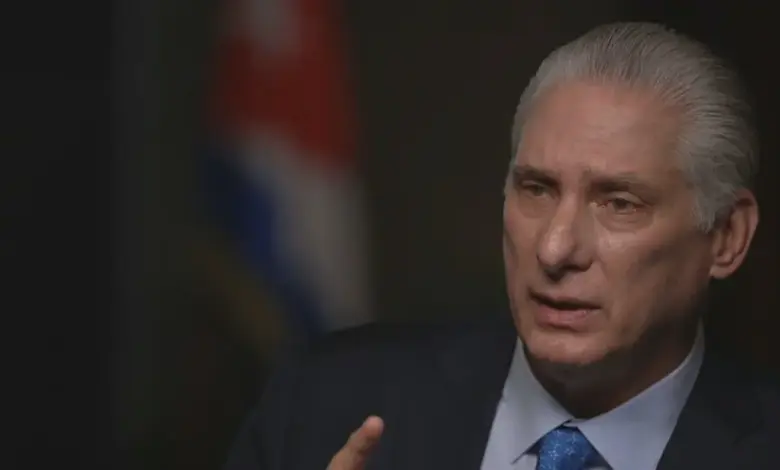
Miguel Díaz-canel is using his latest public remarks to draw a hard line: he says stepping down is not part of Cuba’s vocabulary, even as the United States increases pressure on his government. That makes this moment more than a diplomatic exchange. It is a test of whether outside coercion, domestic strain, and outside support can reshape Cuba’s next phase of leadership and survival.
What Happens When Pressure Meets Defiance?
In his interview with NBC News, Miguel Díaz-canel framed Cuba as a free sovereign state with self-determination and independence, rejecting the idea that the United States can dictate leadership changes in Havana. He also said that revolutionaries do not give up and step down. That message matters because it arrives while the Trump administration is escalating pressure, including threats tied to oil flows and broader demands for regime change.
The timing is important. Cuba is already under severe strain from an energy crisis, fuel shortages, and disruptions to water and food distribution. The current standoff is not happening in a vacuum; it is unfolding while the island faces one of the worst humanitarian crises in its history. That combination makes political signaling from both Washington and Havana more consequential than usual.
What Is the Current Balance of Power?
The present balance rests on three forces: U. S. pressure, Cuba’s internal vulnerability, and Russia’s decision to stay engaged. Washington has imposed what amounts to a blockade on oil supplies by threatening tariffs on any country that sells oil to Cuba. Cuba’s main supply from Venezuela was cut off after the U. S. moved against Nicolás Maduro in January, deepening the island’s energy shortages.
At the same time, Russia has made clear that it does not intend to abandon Cuba. Sergei Ryabkov, Russia’s deputy foreign minister, said Moscow cannot betray Cuba and will not leave it on its own. He also indicated that Russian help would go beyond the recent oil delivery. A Russia-flagged tanker carrying 730, 000 barrels of oil reached Cuba in late March, the first such delivery in three months. That is not a full solution, but it does show that Cuba still has at least one major external lifeline.
What If the Pressure Campaign Continues?
The next phase will likely be shaped less by rhetoric than by material constraints. The Cuban state produces only 40% of the fuel it consumes, leaving it highly exposed to interruptions in supply. If pressure on oil access continues and no stable replacement emerges, the economic and humanitarian strain will deepen further. If Russian support remains steady, it may help Cuba avoid an immediate collapse in supply, but it will not remove the underlying fragility.
| Scenario | What it looks like | Likely effect |
|---|---|---|
| Best case | Russian support remains consistent and oil flows stabilize | Short-term relief for shortages and some pressure on daily disruptions |
| Most likely | Pressure continues while outside support arrives intermittently | Ongoing instability, but no immediate political break |
| Most challenging | Oil access tightens further and supply shocks intensify | Worsening shortages, deeper humanitarian stress, and greater leadership pressure |
Who Wins, Who Loses in This Standoff?
The clearest winners, at least for now, are political actors who benefit from confrontation. The Trump administration can present its posture as maximum pressure. Russian officials can reinforce the image of reliability toward an ally. But the groups carrying the cost are easier to identify: Cuban households facing blackouts, fuel shortages, and disruptions to food and water distribution.
The Cuban leadership also faces a narrower path. Miguel Díaz-canel is trying to project defiance without conceding political ground, but the room for maneuver is limited when daily life is defined by scarcity. The United States, meanwhile, risks hardening the very alignment it wants to weaken if Cuba leans further on Russia for help. That is the central strategic tradeoff: pressure may force movement, but it can also push the target deeper into the arms of an external backer.
What Should Readers Watch Next?
The key question is whether the current standoff remains symbolic or becomes materially worse. Watch for three indicators: whether Russian deliveries continue beyond the latest tanker; whether the pressure on oil sales expands; and whether shortages in Cuba become more severe or prolonged. Those signals will tell us whether this is a temporary diplomatic flare-up or the beginning of a longer restructuring of Cuba’s external dependencies.
For now, Miguel Díaz-canel is betting that defiance can hold while outside support buys time. That may work in the short term. But if energy access remains unstable, the real contest will not be over slogans. It will be over whether Cuba can maintain basic functioning under sustained pressure. Miguel Díaz-canel