Robert Morin and the private tension behind Mon amour, c’est pour le restant de mes jours

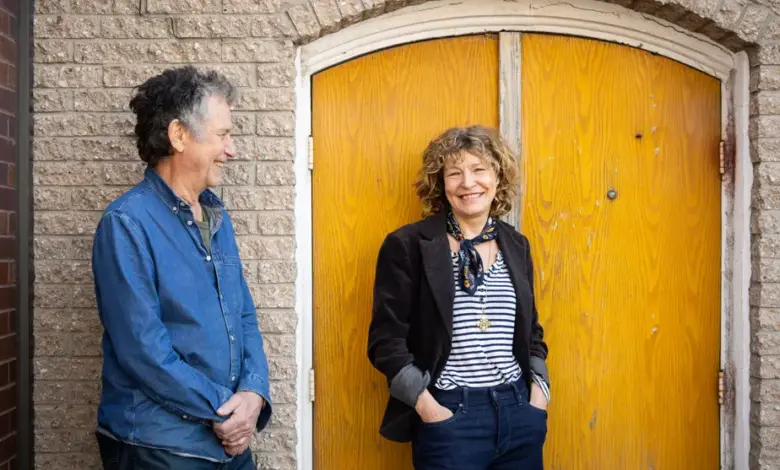
Robert Morin is the center of Mon amour, c’est pour le restant de mes jours, but the film does not treat him like a conventional subject. It follows a filmmaker who resists being explained, while revealing that the real story is the friction between intimacy and artistic distance.
What does the film reveal that a portrait usually hides?
Verified fact: André-Line Beauparlant made the documentary while she and Robert Morin were living through a difficult period in their relationship. The film was shaped inside a long artistic partnership that also began in private life, after they met on the set of Windigo in 1994 and built thirty years of shared work around cinema.
Verified fact: Morin is not comfortable in front of the camera or with interviews. In the film, he appears alternately gruff, funny, and resistant, and he says he does not have much to add beyond his films. Beauparlant responds to that refusal by structuring the documentary around his work, his silences, and the act of filming itself.
Analysis: That choice changes the meaning of the portrait. Instead of forcing a public confession, the film turns discomfort into evidence. The viewer is not asked to admire a polished life story, but to watch how a creative partnership holds together when it is under strain.
Why was Festin boréal the decisive setting?
Verified fact: The documentary was filmed mainly during the making of Festin boréal, a production described as physically demanding and emotionally difficult. Beauparlant says she wanted to see Morin at work, not simply hear him talk about cinema. She followed him while he worked, using the production as the framework for her own film.
Verified fact: The images capture their shared routine in the woods, in a small house surrounded by forest, hunting, fishing, and the practical life that organizes their days. The setting is not presented as decoration, but as part of how they live and make art.
Analysis: The documentary’s power comes from that overlap. The forest, the working set, and the home are all part of the same world. In that sense, Robert Morin is shown less as a distant cultural figure than as someone whose identity is inseparable from labor, place, and collaboration.
Who benefits from the film’s refusal of the usual interview format?
Verified fact: Beauparlant did not want a simple conversation about cinema. She wanted a film that would move with Morin’s rhythms, include extracts from his work, and remain close to the process rather than build a traditional biography. The montage, handled by Stéphane Lafleur, keeps silences, pauses, and unfinished thoughts.
Verified fact: The film uses material from Morin’s body of work, including Requiem pour un beau sans-cœur, Quiconque meurt, meurt à douleur, Le Nèg’, Les 4 soldats, and Le problème d’infiltration. No talking-head testimonials are used to explain him from the outside.
Analysis: That structure benefits neither mythmaking nor self-protection. It benefits complexity. The film gives Beauparlant a voice without taking control away from Morin, and it gives Morin space to remain resistant without turning that resistance into a gimmick. The result is a portrait that feels earned rather than claimed.
What should audiences understand about Robert Morin after this film?
Verified fact: Morin and Beauparlant both work in cinema, but they do so in different ways. She has built films around people she loves; he has often remained behind the camera, even when his own films are discussed. In this project, both artists are visible, but neither is simplified.
Analysis: The documentary suggests that the hidden truth is not a scandal or a revelation in the tabloid sense. It is something quieter and harder to film: how two filmmakers keep making art while negotiating doubt, affection, and the limits of language. That is why Robert Morin matters here not only as a subject, but as the measure of a relationship that is both personal and creative.
In the end, Mon amour, c’est pour le restant de mes jours asks for a public reckoning with private work: what it costs to make cinema from inside a life, and what it means when Robert Morin is revealed not as an icon to be explained, but as a man whose resistance is part of the story.