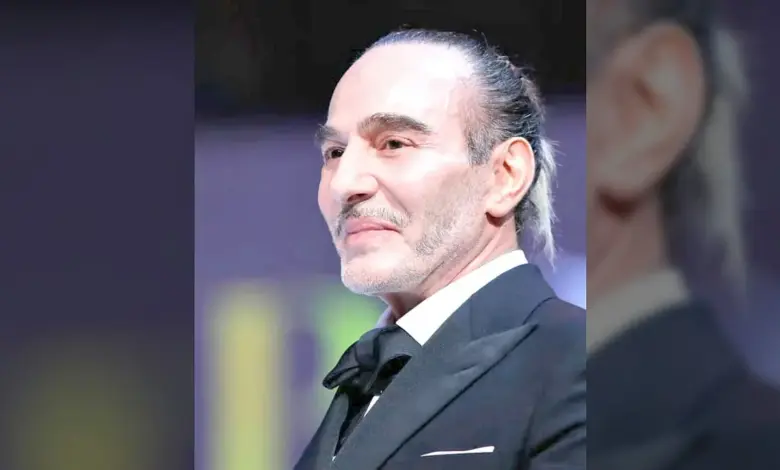
john galliano is back in focus through a two-year partnership with Zara, and that makes this moment feel like a turning point for both designer-led storytelling and fast fashion’s luxury ambitions. The collaboration arrives as the brand pushes further into haute couture territory while the wider industry debates how far mass-market labels can borrow from high fashion without losing credibility.
What Happens When a Fast-Fashion Brand Rewrites Its Own Code?
The immediate shift is simple: Zara is no longer treating designer partnerships as one-off headlines. It has signed Galliano to a long-term deal, with the first seasonal release set for September. The stated aim is to bridge mass-market appeal and luxury design, using pieces from Zara’s archives that Galliano will reinterpret and “re-author” for a contemporary audience.
This matters because the collaboration is not framed as a small capsule or a limited branding exercise. It is presented as part of a broader strategy, and that gives it more weight than a typical designer tie-in. In practical terms, it suggests Zara wants to turn a familiar formula — fast, accessible fashion inspired by the runway — into something that feels more authored, more elevated, and more selective.
Galliano’s role also changes the tone. He is associated with theatrical presentation, deconstructionist ideas, and a career that has repeatedly defined fashion moments. His return through Zara gives the project a stronger creative center than many fast-fashion collaborations, and that may help the brand stand out in a crowded market.
What Forces Are Reshaping the Luxury-Fast Fashion Boundary?
The clearest force is the industry-wide move toward designer partnerships. Zara is not acting alone. Other brands have used collaborations with couture or high-profile designers to create buzz and expand reach. That pattern has normalized the idea that a mass-market label can borrow prestige without becoming luxury itself.
Another force is consumer fatigue with subdued faux-luxury. The current appetite for quiet luxury has not erased demand for drama; it has left space for a more expressive alternative. Galliano’s style, which is described through theatricality, romance, and world-building, offers a different signal. It is less about blending in and more about making fashion feel like a narrative.
There is also a credibility test. Mixed reactions to the collaboration show that some observers see this through the lens of luxury-washing, meaning the use of high-end aesthetics while production realities remain unchanged. That tension will shape how the partnership is received, especially if the final product appears more symbolic than substantive.
What If the Collaboration Succeeds — or Stalls?
| Scenario | What it looks like | Likely effect |
|---|---|---|
| Best case | The September release translates Galliano’s style into a fresh Zara language without losing clarity. | Zara strengthens its fashion authority and sets a new template for designer collaborations. |
| Most likely | The project attracts attention, debate, and strong visibility, with the final product still partially undefined. | The collaboration becomes a high-profile experiment that raises Zara’s profile but leaves questions about long-term impact. |
| Most challenging | The collection is read as another case of luxury-washing, with style outweighing substance. | Consumer skepticism grows and the partnership becomes a cautionary example rather than a model to follow. |
The uncertainty is real because details remain limited. No full collection outline has been shared, and that leaves room for both anticipation and criticism. Still, the direction is clear enough: Zara is betting that a distinctive designer voice can give fast fashion a more premium cultural charge.
Who Wins, Who Loses in the New Prestige Economy?
The biggest winner could be Zara, if the collaboration helps it move beyond novelty into a more durable identity. A successful rollout would reinforce its position as a brand that can interpret runway ideas quickly while still reaching a broad audience.
Galliano also stands to gain from visibility. A partnership with a global mass-market retailer places his creative language in front of a much wider audience than a traditional luxury setting would allow. For a designer whose work is known for its scale and spectacle, that reach matters.
The risk falls on the idea of luxury itself. If high-fashion aesthetics are increasingly repackaged for mass consumption, the line between aspiration and dilution becomes harder to defend. That does not automatically damage the collaboration, but it does mean the market will judge it on more than style alone.
What Should Readers Watch Before September Arrives?
The key thing to understand is that john galliano at Zara is not just a fashion headline. It is a signal about where prestige is headed: toward collaborations that try to make luxury feel accessible without calling it luxury outright. Readers should watch the first collection closely, not for hype alone, but for whether it delivers a new creative logic or simply recycles familiar status cues.
If the partnership lands well, it could encourage more brands to chase the same hybrid model. If it misses, it will strengthen doubts about luxury-washing and the limits of designer retail crossovers. Either way, john galliano marks a meaningful inflection point in how fashion sells aspiration.