aaron rai arrived at Augusta National on Wednesday with a result that mattered less for the record book than for the mood around the course. In a setting built around family, laughter, and light pressure, he finished on top of the Par 3 Contest and became the latest player to use the eve of the Masters to show how much the event is about timing, touch, and composure.
What happens when the Masters week starts with family on the bag?
The Masters Par 3 Contest has long stood apart from the serious business that follows on Thursday, and this year the contrast was especially clear. Players were joined by wives, children, friends, and grandchildren, while some of the biggest names in the field treated the nine-hole event as a relaxed prelude rather than a competitive test. The result was a scene that blended elite golf with family entertainment in a way few other sporting events can match.
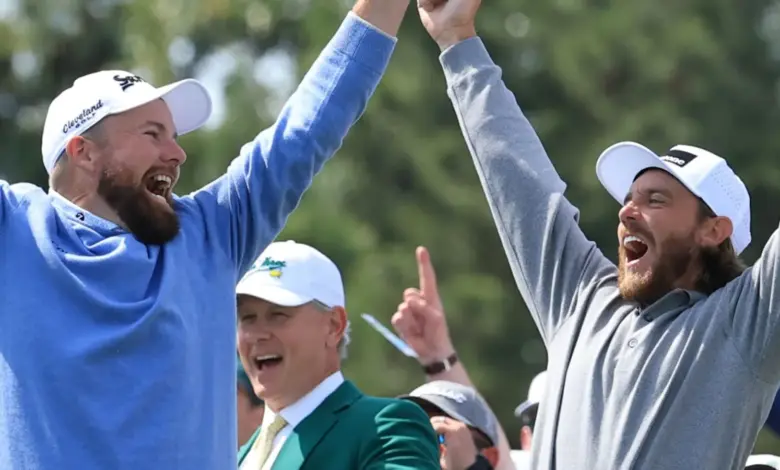
For Aaron Rai, the day finished with a bogey-free 21 and a one-shot margin over Jacob Bridgeman and Johnny Keefer. He called the experience phenomenal and said he shared the round with Patrick Reed and Jon Rahm, both of whom had family and kids out with them. Rai also credited his wife Gaurika, who is a professional golfer, for helping by reading his putts. In a week that can quickly become intense, that kind of support felt central to the atmosphere.
Tommy Fleetwood supplied one of the most memorable moments when he made an ace with his son Frankie acting as caddie. Frankie also drew attention for his own attempts to reach the green, while Rory McIlroy, Shane Lowry, Justin Thomas, Wyndham Clark, and Keegan Bradley were among the players who added to the day’s run of hole-in-ones. By the end, the contest had produced a reminder that the Masters opens with performance, but it also opens with personality.
What does Aaron Rai’s win tell us about the current shape of the week?
Rai’s win matters because it came inside a contest that has never translated directly into Masters glory. The annual event began in 1960, and nobody has ever won the Par 3 Contest and then gone on to win the main tournament in the same week. That does not reduce Rai’s result, but it places it in context: it is a strong sign of form and calm, not a forecast that can be taken too literally.
Even so, the broader picture is clear. Augusta’s Wednesday ritual remains one of golf’s most distinctive scenes because it puts the sport’s biggest names in a setting that is visible, human, and easy to understand. Gary Player, who will turn 91 later this year, was still moving energetically around the course, while two-week-old Remy Scheffler was carried by his mother Meredith. Those details underline the event’s unusual range, stretching across generations in a single afternoon.
| Moment | What it showed |
|---|---|
| Aaron Rai’s 21 | Steady, clean play in a relaxed setting |
| Tommy Fleetwood’s ace | The contest’s capacity for standout individual moments |
| Family caddies and children on the course | The event’s cross-generational appeal |
| Gary Player and Remy Scheffler | The widest possible age range in one scene |
What forces are shaping the Par 3 Contest now?
The biggest force is not a tactical one but a cultural one. Golf is competing for attention in a crowded leisure market, and the Masters has found a way to make one of its quieter traditions feel distinctly relevant. The Par 3 Contest gives the sport a softer entry point, one built around family participation and visual charm rather than tension alone.
There is also the force of contrast. The same players who will face the demands of the main tournament are seen here smiling, carrying children, or ceding the spotlight to younger family members. Bryson DeChambeau even had comedian Kevin Hart on his bag, while Jason Kelce caddied for Akshay Bhatia. Those pairings do not change the competitive stakes of the week, but they widen the audience for it by making the scene feel open and accessible.
That is why aaron rai matters beyond the scorecard. His win sits inside a format that rewards touch, patience, and calm more than brute force. It also fits a pattern in which the contest is less about predicting the champion than about showing how the tournament begins before the pressure hardens.
What happens next for the contenders and the spectators?
Three futures are easy to map from here. Best case: the Par 3 Contest does exactly what it is designed to do, giving players and families a memorable Wednesday while setting a positive tone for the week. Most likely: the event remains a beloved opening ritual, with a handful of standout moments and no meaningful link to who lifts the Green Jacket. Most challenging: the spotlight shifts too heavily toward spectacle, and the sporting purpose of the week gets blurred by the volume of attention around the lighter scenes.
The likely outcome is somewhere in the middle. The contest will keep producing memorable images because it is built for them, but the real competition still begins when the Masters proper starts. That is where Rai, Fleetwood, McIlroy, and the rest will be judged in a more demanding light.
For readers, the useful takeaway is simple: treat the Par 3 Contest as a signal of mood, not destiny. It shows who looks settled, who is enjoying the week, and how Augusta frames the sport before the pressure rises. If you are looking for the most honest reading, it is this: the event works because it refuses to be more important than it is, and that restraint is part of its strength. aaron rai