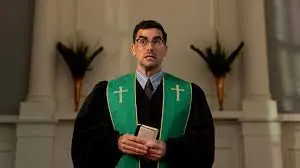
Dan Levy says Big Mistakes began with a fear of being trapped, and that single idea now anchors a new series built around a New Jersey pastor, his sister, and a criminal organization. The title suggests chaos, but the sharper story is about control: who gets pulled in, who gets to leave, and why a comedy premise can still feel like a warning.
What is Big Mistakes really about?
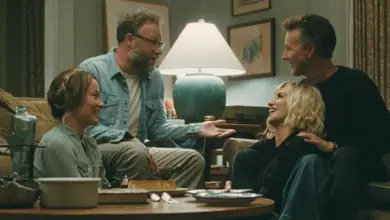
Verified fact: Levy is shooting Big Mistakes on the streets of New Jersey. In the series, his character is a pastor whose life becomes entangled with organized crime after an accidental trap. Taylor Ortega plays his sister, a teacher. Laurie Metcalf plays their mother. The show is co-created with Rachel Sennott for Netflix.
Informed analysis: That setup is not just a family comedy with an edge. It is a story built on mismatch: a religious figure, an educator, and a criminal system colliding in one household. Levy has said he would be “the biggest liability” if he were ever tasked with helping a criminal organization, which explains why the premise works as a comic pressure point. The humor comes from incompetence meeting danger.
Why does Levy keep returning to family dysfunction?
Verified fact: Big Mistakes is Levy’s first series since Schitt’s Creek, the comedy he starred in and co-wrote. He has said he did not feel pressure to live up to Schitt’s Creek while writing the new show. He described the earlier series as a “big crown jewel, ” but said everything else has to be something that makes him feel good.
He also said Schitt’s Creek was the first time he had written for television. Before that, he worked at MTV Canada in Toronto for eight years and said that period taught him to write, edit, produce, appear on camera, and prepare for show-running.
Informed analysis: The pattern matters. Levy’s work keeps returning to unstable family systems, but the new series appears to lean harder into absurd stakes. That makes Big Mistakes less like a repeat and more like an extension of the same creative instinct: using family tension to expose how quickly ordinary roles collapse under pressure.
What does the casting tell us about the show’s priorities?
Verified fact: Levy said Taylor Ortega has “brilliant” chemistry with him, and he described casting Laurie Metcalf as a major win. He said he knew that even if everything else failed, Metcalf would be great. Levy also said it had been his “life’s mission” to call her “mother” on-screen.
Levy’s comments suggest the series is built around ensemble timing rather than spectacle. The central trio carries the emotional frame, while the crime-ring premise supplies the disruption. In the context of Big Mistakes, that is important: the show is not being presented as a pure crime story, but as a character piece where casting is part of the engine.
Informed analysis: That balance may be the key to whether the series lands. A high-concept plot can attract attention, but performance chemistry determines whether the danger feels believable. Levy’s emphasis on Metcalf as a fail-safe points to a production strategy that values stability inside a deliberately unstable narrative.
What happened after Schitt’s Creek changed the stakes?
Verified fact: In its sixth and final season, Schitt’s Creek swept all seven major comedy awards at the Emmys. Levy also said the show’s name was controversial from the start, with many people objecting to it. He and his father, Eugene Levy, held firm anyway, and the Canadian Broadcasting Corporation picked up the series. The show followed the Rose family after they lost their fortune and wound up in a small-town motel.
Levy also recalled filming in Goodwood, Ontario, where Schitt’s Creek is located in reality, and said it was “wild” to return after filming ended. He noted that the town was so welcoming despite the provocative title.
Informed analysis: Big Mistakes now arrives under the weight of that history. The challenge is not only creative; it is reputational. Levy is asking audiences to trust him again with a new family story, but this time the frame is more overtly criminal and less rooted in a single-town premise. That shift could broaden the show’s reach or expose it to sharper comparisons.
For viewers, the central issue is not simply whether Big Mistakes is funny. It is whether the show can turn a fear of being trapped into a meaningful story about responsibility, identity, and the chaos families inherit. If the premise works, it will be because the danger feels personal, not decorative. If it fails, the risk is that the crime ring becomes background noise rather than the force that reveals character.
That is why Big Mistakes matters: it is Levy’s attempt to move forward without denying what made him successful, while betting that a new trap can still produce a new kind of truth.