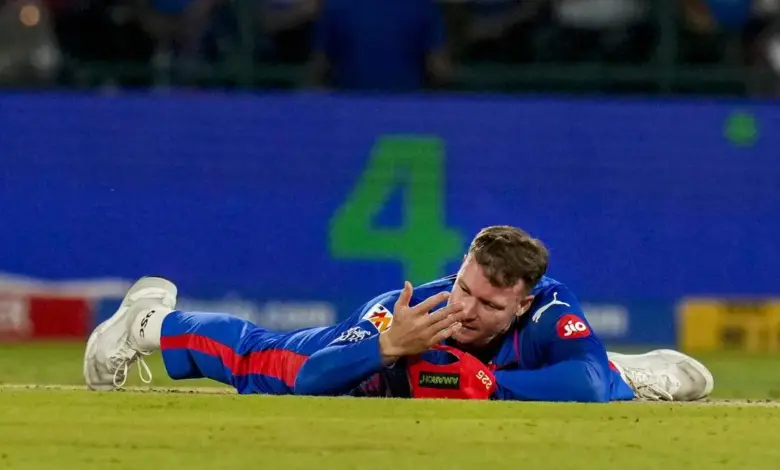
David Miller became the central talking point in Delhi Capitals’ tense chase against Gujarat Titans at the Arun Jaitley Stadium after he walked off retired hurt with a hand injury. The key issue now is simple: if DC need him later in the innings, can david miller return to bat?
What Happens When a Batter Is Retired Hurt?
The answer depends on the way he left the field. Miller was retired hurt, not retired out, which matters under the rules. That distinction keeps the door open for a return later in the innings if his condition improves enough for him to resume batting.
Miller picked up the injury earlier in the match while diving to stop Sai Sudharsan’s cover drive from reaching the boundary. He initially stayed on the field and continued fielding through the first innings, but the issue followed him into the chase. After coming in when DC were 112/3, he faced ten deliveries before walking back, holding his right hand as he left the middle.
The present state of play makes the injury more than a side note. DC still need quick runs, and the presence of a finisher can change the direction of a chase. Whether that happens here depends on how Miller’s hand responds in real time.
What Is the Current Match Situation?
The immediate picture is still fluid. Miller had to stop batting after scoring 12 off 10 balls, and Axar Patel replaced him in the middle. The match remains in the balance, with the chase demanding sustained acceleration and wicket protection at the same time.
There has been no official statement from DC on the extent of the injury yet, which leaves the next phase dependent on medical assessment after the match. A simple bruise or manageable strain would create a very different outlook from a fracture or a badly jammed finger. The uncertainty is real, but the rules are clear enough for one important conclusion: david miller is eligible to return if he is fit enough to do so.
| Scenario | What it means | Implication for DC |
|---|---|---|
| Best case | The hand settles quickly and he can return later | DC regain a proven finisher for the closing overs |
| Most likely | The injury limits comfort but is not severe enough to confirm long absence | DC wait on the medical readout and adjust the chase around available batters |
| Most challenging | The injury proves serious enough to rule out a return tonight | DC lose late-innings batting power and must absorb the gap elsewhere |
What Forces Are Shaping the Next Few Overs?
The first force is physical, not tactical. Miller’s ability to grip the bat appears to be the central issue, and that alone can decide whether a return is practical. The second force is the match pressure itself: when a chase is tight, even a partially fit batter can matter if wickets fall and options narrow.
The third force is procedural. Because he was retired hurt, the team still has the option of bringing him back later. That distinction gives DC strategic flexibility, especially if the innings reaches a phase where one wicket or one over could decide the outcome. In a high-pressure chase, the rulebook can become as important as the scoreboard.
There is also a broader selection question. Miller has been part of DC’s middle-order plans this season, offering experience and power-hitting. If this injury lingers beyond the match, the impact would extend beyond one evening and force the side to rethink its finishing structure.
What If He Returns, and What If He Does Not?
- If he returns: DC gain a batter who was already in rhythm enough to score 12 off 10, even while clearly uncomfortable.
- If he does not return: DC must complete the chase without one of their late-overs options.
- If the injury worsens: the concern shifts from one innings to the longer-term availability of a key middle-order player.
The central uncertainty is not whether david miller may be allowed back. It is whether the hand makes that return realistic. That is why the next update matters so much: it will determine whether this is only a pause in the innings or a larger setback for DC.
For now, the correct reading is cautious. Miller has already shown enough discomfort to leave the field, but the rules preserve the possibility of a comeback. If the chase demands it and the injury allows it, david miller can still re-enter the innings and shape the finish.