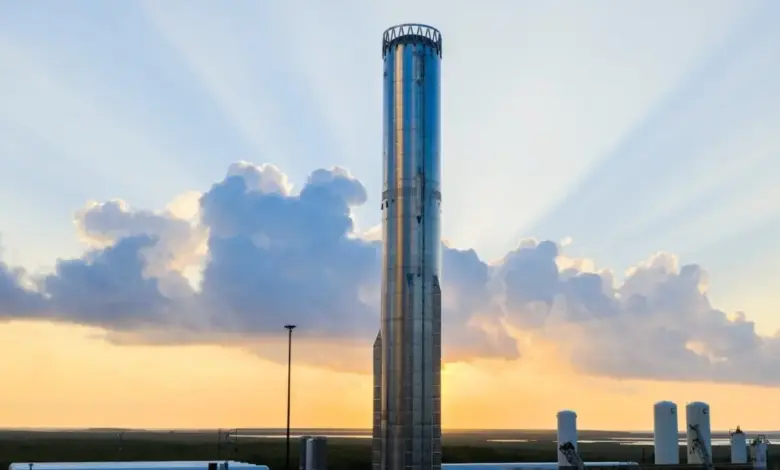
In Texas, a test stand flashed into fire and smoke during a Starship engine trial, turning a routine qualification step into a stark reminder of how fragile the road to launch can still be. The starship program is moving toward its Version 3 debut, but the latest incident shows how much is still being worked out before liftoff.
What happened at the Texas test site?
SpaceX was testing Raptor engines at its McGregor site on Monday when a large explosion was seen from outside the facility. NASASpaceflight captured the moment during a livestream, showing the test area engulfed in flames and smoke. The incident took place during the second engine test of the day involving the Raptor 3 engine, and an anomaly may have been involved before the explosion at the stand.
The engine being tested is part of Starship Version 3, an upgraded and larger version of the rocket. The new Raptor 3 engine is described as more efficient, lighter, and simpler than the earlier version, with 280 metric tons of thrust compared with Raptor 2’s 230 metric tons. SpaceX is preparing this version for a launch debut currently slated for sometime in May.
Why does this matter beyond one test fire?
The latest fire is not the first time a SpaceX engine test has ended badly. A Raptor 2 engine experienced an anomaly in May 2025 and destroyed the test stand at the company’s Texas facility. Even so, the company’s engine qualification program is designed to surface problems before a rocket is assembled for flight, and that makes failures part of the process rather than proof that the program has stopped.
Still, the timing matters. Starship Version 2 flew for the last time in October 2025, clearing the way for the newer system to take over. Since then, the debut flight for Version 3 has shifted repeatedly, moving from the second week of March to April and then to May. The pace of change has become part of the story, as each delay and each test failure shapes how much confidence observers place in the program.
How are investors and startups tied to the outcome?
The stakes reach beyond the test site. One estimate places more than $8 billion in space startup investment at risk because many companies are built around Starship’s promise of lower launch costs. The business logic is straightforward: if the rocket can carry heavy payloads more cheaply, projects that once looked impossible become more realistic.
About 47 startups have business models linked to the success of starship, including companies focused on space data centers, drug production, satellite internet, and off-Earth mining. One example is Starcloud, which wants to build large orbital data centers to ease energy pressure on Earth. Without a rocket that can move large structures at low cost, that plan remains stalled.
What do specialists say about the timeline?
Ali Javaheri, a space sector analyst at PitchBook, said investors will begin to feel nervous if Starship is not operational in the next two or three years. Finn Murphy, an industry investor, added that SpaceX needs many companies to be created in order to consume the launch capacity it wants to build. Their comments point to the same pressure: the vehicle is not only a rocket, but the foundation for a wider commercial ecosystem.
That ecosystem depends on a steep drop in launch costs. Industry data shows the cost of sending payloads to space has already fallen from more than $65, 000 per kilogram in the past to about $1, 500 per kilogram with current technologies. The expectation is that Starship could push that figure to around $100 per kilogram, a change that would help make private space stations and large satellites more viable. For now, though, the recent fire in Texas leaves that future intact but not yet secure.
Back at McGregor, the burned test stand and drifting smoke will likely be cleared before the next round of work begins. The question is whether each new test will move the program closer to its May debut, or keep reminding investors, engineers, and startups that the path to orbit is still being built on the ground.