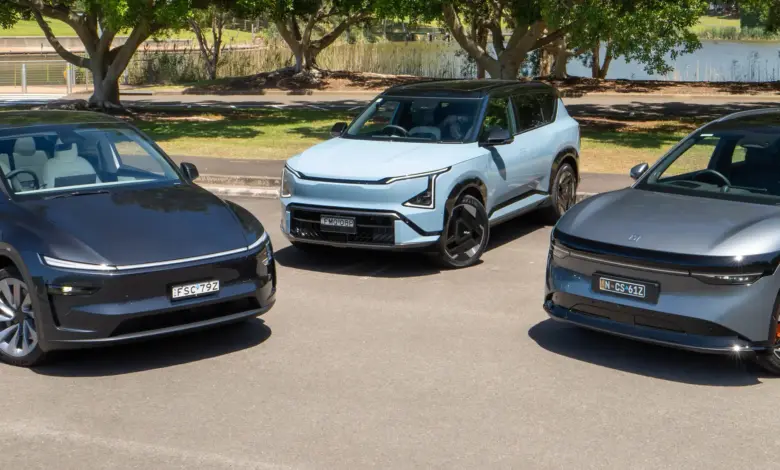
Vfacts March 2026 has landed with a stark message for Australia’s car market: electric vehicles are moving faster, and fuel-powered models are losing ground. In March 2026, battery-electric cars reached a record 14. 6 per cent share of new-vehicle sales, a first in local motoring history, as high petrol and diesel prices pushed more buyers toward EVs.
Fresh data published on April 7, 2026 ET by the Federal Chamber of Automotive Industries and the Electric Vehicle Council shows 15, 839 battery-electric vehicles were sold last month. That was up 42. 3 per cent from the month before and 88. 9 per cent from March last year, while total new-car sales fell 2. 6 per cent to 108, 703 vehicles.
Vfacts March 2026 shows a record shift in demand
The numbers point to a clear change in buyer behaviour. Sales of purely petrol-powered vehicles fell 20. 8 per cent year-on-year, and diesel vehicle sales dropped 10. 1 per cent, even as hybrids added 17, 953 to the overall tally and plug-in hybrids rose to 8, 215.
Industry data also shows electric power pulled ahead of the previous high of 11. 8 per cent set in February 2026. The timing matters: the March figures are the first concrete indication of the impact high fuel prices have had on new-vehicle sales, after conflict in the Middle East lifted fuel costs.
The average price of diesel surged past $3. 00 per litre, and 91-octane regular unleaded petrol went beyond $2. 50 per litre, before last week’s 32-cent-per-litre cut to the government fuel excise. In this market, Vfacts March 2026 is not just a sales snapshot; it is a sign of how quickly motorists are changing course when running costs rise.
Dealers, finance and rentals are feeling the change
The shift is appearing beyond showrooms. Pickles reported 60 per cent growth in used EV sales last month compared with February, while Commonwealth Bank said new electric-car finance has risen 161 per cent since the start of March.
That momentum is feeding through to individual models. The Tesla Model Y, Australia’s top-selling electric vehicle, held third place overall with 2, 818 registrations, up 63. 4 per cent. The BYD Sealion 7 jumped 244 per cent year-on-year to 1, 970 deliveries, while Tesla sales rose 23. 2 per cent to 3, 485 registrations.
On the secondhand side, Jake Sale, founder of Perth-based MotorMetrics, said prices for used EVs have started moving up. “It’s specifically EVs that buyers are looking for, ” he said. MotorMetrics’ live analysis shows Tesla’s Model Y has risen more than 6 per cent in the last two weeks of March, while the Tesla Model 3, MG4 and Polestar 2 have also increased.
Rob Chan, managing director of rental marketplace Turo Australia, said bookings for EVs and hybrids have increased 70 per cent compared with the same period last year. “People are seizing control by booking cars that make a lot of rational economic sense, ” he said.
What the latest numbers mean next
For now, Vfacts March 2026 suggests the pressure of fuel costs is still flowing through the market, from new-car sales to used inventory and rental bookings. The headline figures may shift again as more March sales detail is released, including the full electric-vehicle list, but the direction is already clear: buyers are responding fast when petrol and diesel prices climb.
If current conditions persist, Vfacts March 2026 could mark the month Australia’s EV market stopped looking like a niche trend and started looking like the new normal.