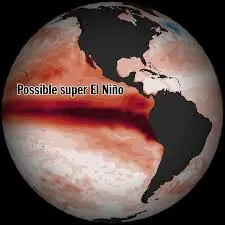
El Nino 2026 is no longer being treated as a distant possibility. The latest forecast signals say the pattern may arrive by summer, and its strength could matter as much as its timing. In the Atlantic and across Florida, that shift could suppress tropical activity in one season while increasing storminess later in the year.
Is El Nino 2026 becoming stronger than forecasters first expected?
Verified fact: La Niña is fading, and El Niño is expected to emerge by the summer of 2026. The central uncertainty is not whether the pattern is forming, but how strong it will become.
The newest run of the European Ensembles shows most members above 2 degrees Celsius above normal. That matters because sea surface temperatures in the equatorial Pacific only need to be 0. 5 degrees Celsius above normal to meet the definition of El Niño. A rise of that scale would place the developing pattern in the range of the strongest episodes on record.
Informed analysis: The significance here is not just numerical. When model output clusters above 2 degrees Celsius above normal, it suggests the current debate is shifting from whether El Niño will arrive to whether it could arrive as a major event. That is why the phrase El Nino 2026 is increasingly tied to the possibility of a “super” pattern rather than a routine one.
What is being said about the forecast—and what is still uncertain?
Verified fact: There is a recognized spring prediction barrier, a period when forecast error is greater than normal. That means confidence in long-range predictions is always more limited during this stage.
Even so, observations above and below the surface of the Pacific suggest that a strong El Niño is possible, and may even be likely. The available evidence points in the same direction: warmer waters, model support, and an increasing expectation that the pattern will arrive by summer.
Informed analysis: The public should notice the difference between certainty and probability. The forecast does not promise a specific outcome, but it does show a growing alignment between ocean conditions and model guidance. That makes El Nino 2026 a weather story with implications that extend well beyond a single season.
Who benefits if tropical storms are suppressed, and who still remains at risk?
Verified fact: In summer, El Niño typically reduces the number of named tropical storms. It increases stability and wind shear in the Atlantic, and both are harmful to tropical development.
That does not mean the tropics become harmless. Significant impacts can still occur in an El Niño year even when the overall season is below normal. Hurricane Andrew in 1992 is cited as the clearest example: a weaker season overall, but a Category 5 landfall in South Florida.
Informed analysis: This is the contradiction at the center of El Nino 2026. A quieter Atlantic does not equal zero risk. Instead, it can create a false sense of safety if the public only hears that storm counts may fall. The more important question is whether people understand that fewer storms can still include devastating outliers.
Why does El Nino 2026 matter for Florida after hurricane season ends?
Verified fact: El Niño is expected to continue through fall and winter. In Florida, winters are typically wetter and stormier in an El Niño pattern. The extra wind shear that discourages tropical systems can also help fuel thunderstorms, increasing the severe weather threat in the cool months. It may also help prevent a major drought from developing in Florida’s dry season.
Informed analysis: That means the story is not limited to hurricane counts. El Nino 2026 could reshape the seasonal balance: fewer tropical threats in the summer, but a higher chance of unsettled weather later. For communities already tracking drought risk, severe thunderstorms, and storm preparation, that matters as much as the headline forecast itself.
Put together, the evidence suggests a pattern that could suppress one category of danger while intensifying another. The public should not be told only that El Niño is coming; it should be told what that may change, when those changes are most likely, and where the remaining risks still sit.
The accountability question now is simple: as El Nino 2026 moves closer, will forecasts be communicated as a broad weather shift with tradeoffs, or reduced to a single reassuring number that hides the hazards still in play?