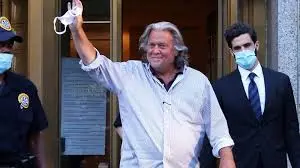
steve bannon stood at the center of a legal turn that may leave the punishment intact in memory but not in record. The US Supreme Court has sent his contempt of Congress case back to a lower federal court in Washington, D. C., and the path now appears open for dismissal.
For Bannon, one of Donald Trump’s most prominent backers, the moment carries less practical weight than it once would have. He has already served a four-month sentence in a low-security federal facility in Connecticut, which means any dismissal would be largely symbolic.
What did the Supreme Court do in steve bannon’s case?
The court issued a brief unsigned order on Monday that vacated the lower ruling that had upheld his conviction. It returned the matter to the U. S. court of appeals for the DC circuit for further consideration in light of the pending motion to dismiss the indictment.
That motion was brought by the Trump administration, which said dismissal of the criminal case is in the interests of justice. The government has also filed that motion in the lower federal court now set to take up the matter again.
steve bannon was convicted in 2022 for refusing to respond to lawmakers’ subpoenas for information about the January 2021 Capitol riot. A jury in Washington, D. C., found him guilty of contempt of Congress, and an appeals court later upheld the verdict before the Supreme Court intervened.
Why does the outcome matter if the sentence is already served?
The practical answer is that it may not change much in his daily life. The larger impact is reputational and political. A conviction that survives appeals can shape how a public figure is remembered. A dismissal, even after prison time has been served, changes the legal ending of the story.
That makes this case notable not only for steve bannon himself, but for the broader picture of how law, power, and politics intersect in Washington. He has spent the last decade in and around Trump’s political circles, has been described as a key architect of Trump’s 2016 victory, and later became a force on the right through his War Room podcast.
The record also shows how tightly this case is tied to the politics of the Capitol riot aftermath. President Joe Biden’s administration prosecuted Bannon, while the Trump administration later moved to end the case. The legal system is now being asked to decide whether the same case should remain closed in a different way.
Who is speaking, and what is being argued?
Bannon’s legal team has argued that he was following attorneys’ advice when he refused to testify. In filings to the Supreme Court, his lawyers raised questions about separation of powers and executive privilege in relation to the congressional subpoena. They also challenged the idea that willful noncompliance was legally the same as intentional refusal.
On the government side, U. S. Solicitor General D. John Sauer wrote that the administration believed dismissal is in the interests of justice. That language now sits at the center of the case as the lower court reconsiders the indictment.
The Supreme Court previously declined to intervene in Bannon’s jail sentence, which means Monday’s action does not erase the past. It does, however, create a new legal opening. For a figure who has built influence in public conflict, the result may be less about punishment than about what the final court record says when the dust settles.
In that sense, steve bannon is once again at a familiar crossroads: the same political name, the same legal file, but a different ending now within reach.
Image alt: Steve Bannon and the Supreme Court ruling that may lead to dismissal of his conviction