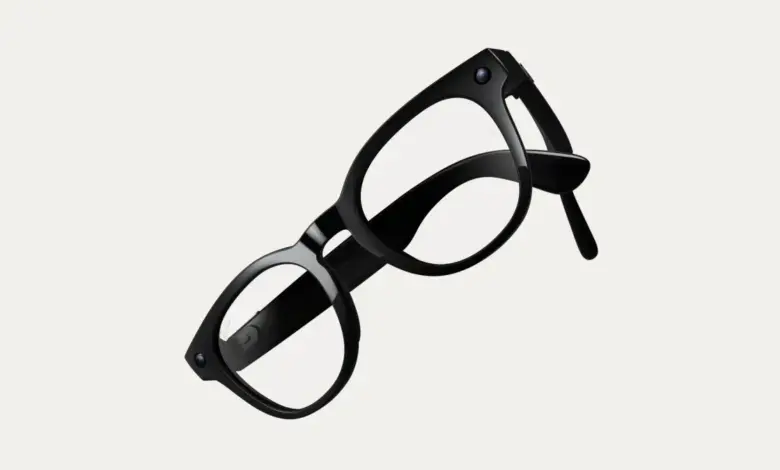
Billions of people wear glasses or contact lenses for vision correction, and Meta Glasses are now being repositioned around that reality. The new prescription-ready Ray-Ban Meta line is described as an optical-forward pair that supports nearly all prescriptions, while also being presented as the most comfortable glasses the company has designed for all-day wear.
What is being revealed by Meta Glasses now?
Verified fact: the new Ray-Ban Meta glasses come in two styles, Blayzer and Scriber, with design details aimed at fit and comfort. Blayzer is a rectangular frame available in Standard and Large sizes, while Scriber is a more rounded frame. The glasses include overextension hinges, interchangeable nose pads, and optician-adjustable temple tips.
They are available for pre-order in the United States beginning today on Meta. com and Ray-Ban. com, with availability at optical retailers in the United States and select international markets starting April 14. Pricing starts at $499. The line also adds a new Dark Brown charging carrying case.
Analysis: the shift is not just about adding prescriptions. It shows a push to make Meta Glasses look less like a novelty accessory and more like a daily utility product. That matters because comfort, fit, and prescription compatibility are the practical barriers that determine whether smart glasses stay in a drawer or become part of a routine.
Why does the prescription focus matter so much?
Verified fact: the company says many Ray-Ban Meta and Oakley Meta users already add prescription lenses to their AI glasses, which is why the new styles are framed as an optical-forward release. The new line is built to better serve people who rely on prescription glasses and all-day eyewear, while also remaining suitable for people who do not need prescription lenses.
The frame choices also point to segmentation: one rectangular design for users who want a sharper profile, and one rounded frame for those who prefer a softer look. Seasonal colors such as Transparent Matte Ice Grey and Transparent Stone Beige are also included in the broader offering.
Analysis: by centering prescription use, the product strategy moves beyond a pure tech audience. It acknowledges that eyewear lives at the intersection of fashion, medical need, and convenience. In that sense, Meta Glasses are being built to compete on everyday practicality, not only on AI features.
What is changing across the rest of the collection?
Verified fact: the broader Ray-Ban Meta (Gen 2) and Oakley Meta lines are also getting new lens and color combinations. For Oakley Meta Vanguard and HSTN, the updates include Prizm Dark Golf lenses and, for the first time, Oakley Meta Vanguard with Prizm Transitions lenses designed to adapt in any light for outdoor performance.
The company is also adding three limited-time seasonal colors for Ray-Ban Meta (Gen 2): Shiny Transparent Peach with Transitions Brown Lenses for Skyler, Matte Transparent Peach with Transitions Grey Lenses for Headliner, and Shiny Transparent Grey with Transitions Sapphire Lenses for Wayfarer.
Analysis: this wider refresh suggests the product line is being extended in two directions at once: prescription-friendly everyday wear and activity-specific styling. That dual track may help the category avoid being boxed into one narrow use case.
What software features show the device is becoming more than eyewear?
Verified fact: new software updates include hands-free nutrition tracking and Meta AI WhatsApp summaries and recall. Nutrition tracking can be done with a voice prompt or a quick photo, and Meta AI will extract key nutrition details and add them to a food log in the Meta AI app. The company says the feature will be available soon to people aged 18 and over in the United States with Ray-Ban Meta and Oakley Meta glasses, and later this summer for Meta Ray-Ban Display glasses.
Hands-free WhatsApp summaries and recall are being added to the Early Access Program, allowing users to ask for a concise group chat summary or specific message details. These interactions are described as processed on-device and remaining private with end-to-end encryption. Neural Handwriting on Meta Ray-Ban Display is also rolling out to everyone in the coming weeks and is coming to iMessage, Instagram, WhatsApp, Messenger, and native Android and iOS messaging.
Analysis: the software layer is increasingly central to the product story. Meta Glasses are no longer presented only as a camera on the face. They are being framed as an interface for logging, messaging, and quick interaction without reaching for a phone.
Accountability note: the verified facts show a company broadening its product line and adding features that deepen daily use. The unanswered question is whether comfort, privacy protections, and prescription support will be enough to make Meta Glasses feel essential rather than experimental. That answer will depend on how well the product performs in real-life use, not only on launch-day claims.