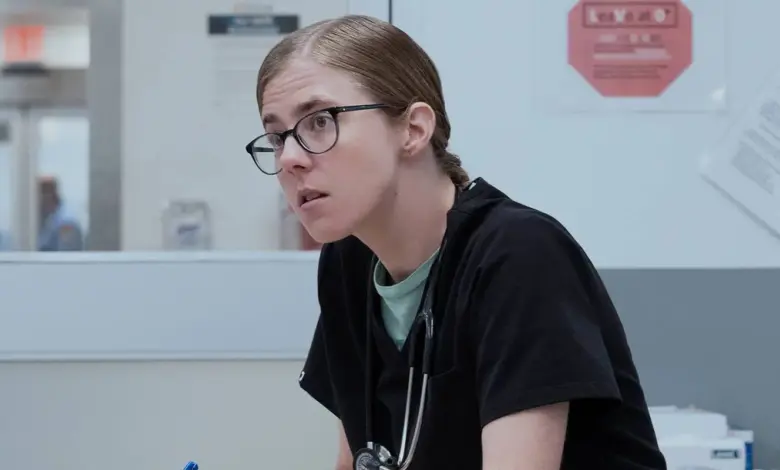
the pitt season 2 episode 13 frames a hospital under duress: a restored network, a backlog of charts, a sabbatical that could become permanent, and a single unscripted break room moment that exposes how brittle the staff has become.
What is not being told?
Verified facts: The hour-long episode titled “7: 00 P. M. ” shows the hospital’s network back online while staff race to scan patient charts. Dr. Samira Mohan (Supriya Ganesh) treats a patient, Orlando Diaz, who sustained a brain injury after leaving the hospital against medical advice. Med student James Ogilvie (Lucas Iverson) experiences a devastating professional loss. Dana (Katherine LaNasa) and Dr. Robby (Noah Wyle) continue to argue about Robby’s upcoming sabbatical; Robby finally asks, “what if I don’t come back?” The episode also contains a moment of levity born from frustration with a paper shredder that became unscripted.
Analysis: Those facts place operational strain and personal uncertainty side by side. The restored network and the backlog of charts are concrete pressures that can be quantified within the episode’s action. The personal ruptures — a med student’s professional blow, Dr. Robby’s voiced ambivalence about returning, and Mel’s fear about being rendered unnecessary — are narrative stresses that suggest the show is tracking workforce fragility as closely as clinical cases. What is not plainly stated in the episode is how these pressures translate into institutional accountability: who is responsible for the data recovery process, and what contingency plans exist when clinicians reach breaking points.
The Pitt Season 2 Episode 13 — What the break room and stairwell exchanges conceal?
Verified facts: Taylor Dearden, actor on the show, discussed Mel’s pivotal moments in Episode 13 and identified Mel’s greatest fear as “not being needed anymore. ” Dearden characterizes a stairwell scene between Mel and Dana as a release valve: Dana bluntly tells Mel to “stop feeling sorry for yourself. ” Dearden also notes that Dana’s demeanour has hardened after events across the season, citing past incidents that have changed the character’s approach. The break room conversation between Mel and Langdon (Patrick Ball) is singled out by Dearden as carrying significance for both characters.
Analysis: The break room and stairwell scenes operate as microcosms of the episode’s themes. On the surface they are interpersonal beats; viewed together with the clinical pressures, they reveal a system coping through interpersonal triage. Taylor Dearden’s account that Dana has become tougher after repeated trauma suggests the show is depicting cumulative occupational injury — emotional and professional — rather than single-episode drama. The unscripted shredder beat that became levity indicates the cast’s real-time negotiation with stress, but it also underscores how little time the fictional staff has to process trauma formally. The interplay between scripted plotlines (network restoration, chart backlog, sabbatical questions) and these small, human moments raises questions the episode leaves open: what formal supports exist for staff morale, and who makes decisions when a clinician considers not returning?
What needs accountability and transparency now?
Verified facts: The episode places a clear emphasis on staff strain: technological recovery work, a critical patient returning after leaving AMA, a trainee’s professional loss, and an attending naming the possibility of not returning from sabbatical. Taylor Dearden frames Mel’s arc around fear of redundancy and abandonment by a sister, Becca (Tal Anderson). Katherine LaNasa’s portrayal of Dana is described as having hardened following repeated incidents over the last season.
Analysis: When personal crises and operational failures coincide on screen, the public-facing question becomes institutional: how do emergency centers manage clinician retention, mental health, and workload during crises? The episode documents symptoms — exhaustion, hardening attitudes, and unanswered departures — but offers limited depiction of structural remedies. The narrative choice to let side moments (a shredder mishap, a break room talk) carry so much weight underscores a storytelling gap: scenes that dramatize system failure without showing governance or remediation leave the viewer with a clearer sense of problem than of solution.
Recommendation: For narrative accountability and for viewers seeking clarity, the production team and the series’ creative leads should make explicit in future episodes what support structures exist for clinicians within the hospital and how administrative failures will be addressed. Given Mel’s expressed fear of being unneeded and Dr. Robby’s voiced uncertainty about returning, the show can either follow through with episodes that depict institutional response or acknowledge the persistent gaps it is dramatizing.
Verified facts are drawn from the episode “7: 00 P. M. ” and on-camera comments by Taylor Dearden, Supriya Ganesh, Lucas Iverson, Katherine LaNasa, Tal Anderson, Patrick Ball, and Noah Wyle. The analysis separates interpretation from those verified elements and notes where the episode leaves questions unresolved.