Bruce Springsteen Calls the America He Wrote About ‘in the Hands of a Treasonous Administration’ — Tour Opens as Political Manifesto

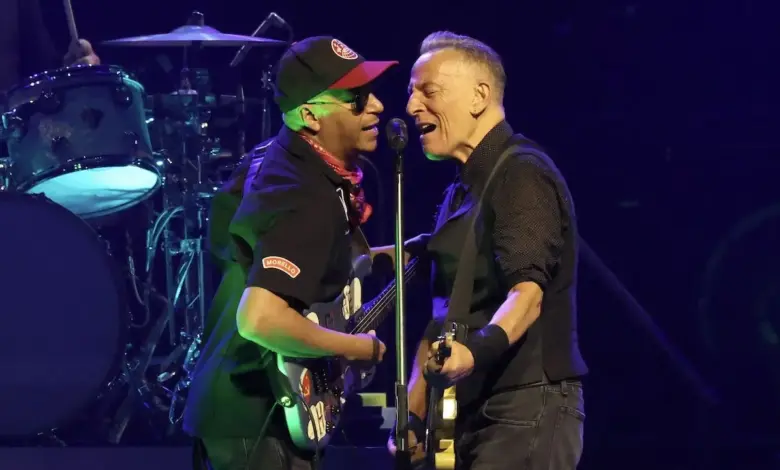
bruce springsteen used the opening night of his Land of Hope and Dreams American tour at the Target Center in Minneapolis to deliver a pre-show political manifesto, denouncing the administration in language that framed the concert as both cultural event and civic intervention.
What did Bruce Springsteen say at the opening night?
Verified fact: Bruce Springsteen, identified in the program notes as a 76-year-old New Jersey-born singer-songwriter, addressed the audience in darkness before the first note was played. He opened with a prayer for U. S. service members and then framed the evening as a defence of American ideals, democracy, the Constitution and the American promise.
Verified fact: In explicit terms he said, “The America that I love, the America that I’ve written about for 50 years, that’s been a beacon of hope and liberty around the world, is currently in the hands of a corrupt, incompetent, racist, reckless, and treasonous administration. ” He then urged the crowd to choose hope over fear, democracy over authoritarianism, the rule of law over lawlessness, ethics over corruption, resistance over complacency, unity over division, and peace over war.
Analysis: The rhetorical structure of springsteen’s introduction framed the concert as an act of civic persuasion rather than pure entertainment. By delivering a detailed list of civic priorities prior to music, the artist positioned the performance as an intervention aimed at mobilising values-based responses from the audience.
How did the performance itself reinforce that message?
Verified fact: The show opened a 27-song set with a cover of War, the anti-Vietnam protest song associated with The Temptations and Edwin Starr. The performance was augmented by guest guitarist Tom Morello, identified with Rage Against The Machine, and the set included Springsteen’s own recent protest song Streets of Minneapolis, which was surprise-released earlier in the year.
Verified fact: Springsteen addressed the crowd again before performing Streets of Minneapolis, stating that federal troops had brought “death and terror to the streets of Minneapolis” and praising the city’s solidarity as inspirational to the country. He stated that the people’s strength and commitment signalled that “this is still America. ” The night was staged at the Target Center, a 20, 00-capacity arena in Minneapolis.
Analysis: The choice of material — opening with War, including Streets of Minneapolis, and bringing Tom Morello onstage — amplified the pre-show rhetoric. These performance choices created continuity between spoken denunciation and musical protest, turning setlist decisions into a form of public argumentation about the state of the nation.
What should the public know now, and what accountability follows?
Verified fact: The Land of Hope and Dreams American tour was presented as explicitly political on its opening night. Springsteen stated the show was meant “in celebration and defence of our American ideals, ” linking his musical program to a call for civic action.
Analysis: When an artist of Springsteen’s profile places a detailed political judgment at the center of a commercial tour, it reconfigures the relationship between cultural production and civic debate. The show did not confine dissent to an interview or an op-ed; it staged dissent as a public ritual before a large arena audience. That choice raises immediate questions about how cultural leaders mobilise audiences, the role of musicians in shaping political discourse, and the expectations for response from political actors and institutions.
Accountability call: For transparency and democratic clarity, statements delivered in public performance merit clear attribution and, where they assert specific claims about government actions, a path toward substantiation or rebuttal by named institutions. Audiences deserve to know when a cultural event crosses into political campaigning and to see the evidence underlying charged claims about government conduct.
Verified fact: Springsteen closed his pre-music remarks by asking the audience to choose hope, unity and the rule of law over fear, division and lawlessness. The concert then proceeded as a 27-song setbook combining protest covers and original songs.
Policy implication: Cultural interventions that assert factual claims about government operations invite institutional response. Where Springsteen named federal troop deployments and characterised administration behaviour in grave terms, the public interest demands clarifying statements from relevant agencies or officials to address those assertions directly.
Final note: The opening night in Minneapolis reframed a commercial tour as a political event; bruce springsteen used the stage to convert music into a platform for civic mobilization, and that choice compels both scrutiny and public conversation about the boundaries between art and political accountability.