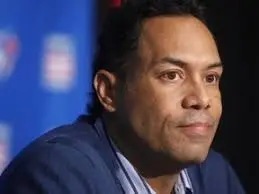
Five years after being banished from baseball, roberto alomar has publicly denied any sexual misconduct, saying he was coerced into a settlement and a nondisclosure agreement and that he has done nothing wrong. The 58-year-old described being pressured to match Major League Baseball’s payment to a complainant, expressed frustration at lack of disclosed proof, and said legal costs and risks left him little choice but to accept terms that have kept him silent.
Roberto Alomar’s account and immediate claims
In an interview, Alomar said plainly: “If I did something wrong, I’d take my name down (from Level of Excellence) myself. But I haven’t done anything wrong. ” He described repeated requests for proof — telling investigators, “Prove it to me, ” and later asking, “What proof do you have?” — and said none was provided to him. He also said he is uncertain about what he can discuss publicly about his lifetime suspension.
Alomar accused Major League Baseball of strong-arming him into an agreement that matched MLB’s payment to a female complainant of $500, 000 US and included a non-disclosure clause. He used the word “bullied, ” saying, “They say you have to match (our payment). I said, ‘What did I do? Show me what I did. ’ I didn’t want to pay. They made me pay. They forced me. ”
Background, legal trade-offs and institutional mechanics
Alomar’s account frames his decision as driven as much by practical legal calculus as by admission. He said his lawyer warned that a court fight could “wind up costing you $2-3 million in legal fees” and “this could last 10 years, ” a prospect he described as unaffordable. Faced with that warning, he said he accepted a settlement and the accompanying non-disclosure constraints rather than pursue protracted litigation.
The dispute as described places Major League Baseball and the Blue Jays at the center of the institutional response: MLB’s investigation and the matching payment are presented in Alomar’s telling as the decisive elements that produced the settlement and the lifetime ban. He emphasized that while public awareness in Toronto seems limited — “You walk around Toronto now there’s no story out there. Nobody knows the story. ” — the institutional actions have had enduring consequences for his standing and legacy.
Analysis: Causes, implications and ripple effects
Alomar’s narrative identifies four concrete drivers behind his silence: the imposition of a monetary settlement ($500, 000 US), a nondisclosure agreement, the prospect of far larger legal bills ($2-3 million) and the time horizon of extended litigation (up to 10 years). That combination, he said, produced a pragmatic decision to avoid court despite his insistence of innocence.
Where the public discussion often focuses on proof and accountability, Alomar’s statements shift attention to the procedural choices institutions make when handling misconduct allegations: the use of financial settlements, NDAs and lifetime disciplinary measures. Those instruments can resolve disputes quickly, but in Alomar’s description they also limit the ability of accused parties to contest the factual record publicly or to explain their perspective over time.
Expert perspectives drawn from the conversation
Roberto Alomar, five-time All-Star and Blue Jays great, framed his remarks around questions of evidence and fairness. He repeatedly asked to be shown proof and insisted that he “hasn’t done anything wrong. ” That direct line from a high-profile former player underscores how disciplinary processes can produce long-term reputational consequences even when the evidentiary basis is disputed in the public account.
The broader sports-management context, reflected in separate recent organizational decisions in professional hockey, shows executives emphasizing operational and reputational judgements when confronting personnel crises. Keith Pelley, president and CEO, MLSE, said organizational leaders undertake exhaustive reviews and make decisions with an eye toward institutional stability, highlighting that high-stakes personnel choices are often managed at the executive level.
What this means regionally and beyond
For the Blue Jays community and for Major League Baseball, the exchange raises questions about how teams and leagues balance expedient resolutions against transparency. Alomar’s insistence that there was no disclosed proof and his account of being compelled to match a payment and accept an NDA will prolong public debate over institutional accountability, player legacy and the limits of confidentiality in misconduct cases.
As roberto alomar re-enters the public conversation with pointed claims about coercion, settlement terms and legal warnings, the central unresolved question is whether institutions will disclose more of the investigative basis or maintain confidentiality; how that choice will shape perceptions of fairness; and whether the league’s disciplinary architecture will face renewed scrutiny from fans, former players and governance bodies. Where does accountability end and pragmatic settlement begin?