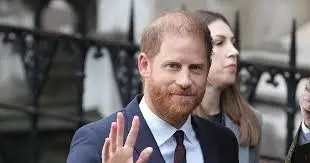
prince harry closed a bitter 10-week courtroom showdown that accused a major publisher of unlawful information-gathering at court 76 of the Royal Courts of Justice, leaving a verdict months away. The case, brought by seven claimants including Elizabeth Hurley, Sadie Frost, Sir Elton John and David Furnish, Baroness Lawrence and Sir Simon Hughes, alleged phone tapping, computer intrusions and other illicit tactics by the publisher Associated Newspapers. The trial exposed emotional testimony, a witness who reversed his position and repeated clashes with Mr Justice Nicklin over the scope of proof required.
Prince Harry’s testimony and courtroom clashes
At the heart of the hearing was Prince Harry’s two-hour appearance in the witness box. Prince Harry, Duke of Sussex and claimant in the case, told the court he had been the target of relentless coverage and said the publisher’s conduct had invaded his private life, telling the judge that the reporting had subjected him to “an endless pursuit, a campaign, an obsession with having every aspect of my life under surveillance so they could get the run on their competitors. ” In a separate moment, he described the personal cost: “made my wife’s life an absolute misery, ” his evidence showed the emotional strain on him and his family.
Mr Justice Nicklin set strict limits on what the seven claimants could use as evidence, requiring that each contested story be shown to have resulted from unlawful information-gathering and that journalists knew it was happening. That narrower test made the claim materially harder to prove, a procedural choice that framed many of the trial’s disputes and the raised-voice exchanges between the judge and the claimants’ lead barrister, David Sherborne.
Turned witness and the disputed statement
The testimony of private investigator Gavin Burrows loomed large. Burrows had signed a statement in 2021 that the claimants say admitted to some of the most serious alleged wrongdoing on behalf of the publisher; the claimants relied on that statement as central evidence. The court also heard that Burrows later disavowed parts of that statement and gave evidence from a secret location abroad, saying the signed statement was not an accurate reflection of his actions. The claimants say Burrows changed position after a falling out in 2022 with a researcher working for them, Graham Johnson, a former hacker turned investigator.
Defence argument emphasised lawful sources for many stories, pointing to leaky social circles, publicists and previously published material. The publisher, Associated Newspapers, denied acting unlawfully and contested that the contested stories could be traced to criminal information-gathering rather than legitimate reporting or other sources.
Damage, decisions and what comes next
Claimants told the court the impact was profound: Elizabeth Hurley and Sadie Frost gave emotional evidence about intrusive reporting; Sir Elton John and David Furnish described chronic intrusion; Baroness Lawrence and Sir Simon Hughes outlined reputational harms. Paul Dacre, a former editor called in evidence, offered context for a contested item by naming a then-government minister as a source for one story. The judge’s narrowing of admissible evidence means the claimants have the tougher task of linking specific unlawful acts to specific articles.
The trial has drawn to a close in the courtroom, but the legal battle is not finished. A verdict is expected months from now; the outcome will determine whether the disputed evidence and the turned witness are enough to prove unlawful information-gathering against the publisher or whether the publisher’s denials will stand. The court’s decision will be watched as what could be a final major chapter in these claimants’ legal campaigns.
Immediate reactions in court were raw and personal: Prince Harry said the coverage had been “an endless pursuit” and at times struggled to contain his emotion while giving evidence. The parties now await the judge’s ruling on the narrowed, fact-specific issues set by Mr Justice Nicklin.