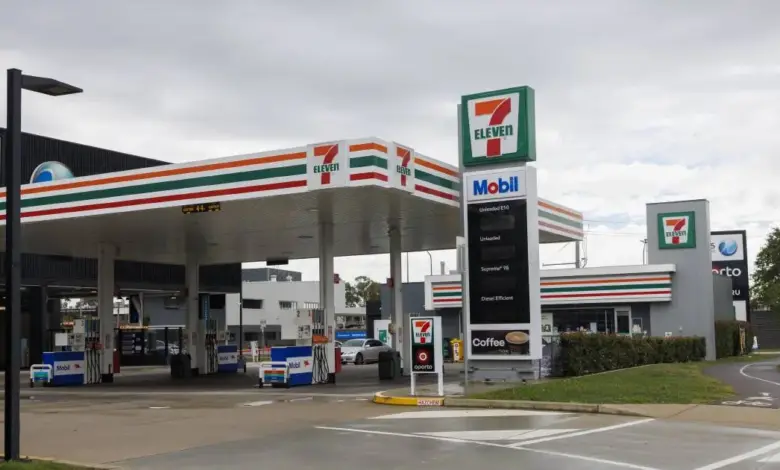
As unleaded and diesel prices fell sharply after the government halved the fuel excise, debate has widened over the treatment of transport levies — including the heavy vehicle road user charge — and whether those charges would move as quickly or evenly for commercial fleets. The excise was cut to 26. 3 cents per litre and retailers moved almost immediately, producing notable relief for motorists while exposing sharp retail variation and supply dynamics.
Heavy Vehicle Road User Charge: what the excise cut reveals about pass-through
The swift retail response to the excise cut offers a rare snapshot of how fuel taxation changes can flow to consumers. Unleaded prices fell, on average, by 16 cents per litre across capital cities, with average pump prices in Sydney, Melbourne, Brisbane and Perth sitting between 243 and 245 cents per litre. Diesel averages dropped from 323. 5 cents to 311. 1 cents per litre nationwide. Those immediate movements show that, under certain market conditions, a policy shift can be translated quickly into lower retail prices — a dynamic that proponents and critics of any change to a heavy vehicle road user charge will study closely.
That speed of pass-through was uneven. Some operators, notably Ampol, elected to apply the full reduction at selected sites from the morning the excise was halved, while committing to roll the change out across more outlets through the day. The pattern spotlights how operator-level decisions and stock management can determine whether wholesale tax changes reach buyers of both light and heavy vehicle fuels in real time.
Rapid retail pass-through, shortages and market distortion
Across the country the biggest single-city fall was recorded in Adelaide, where unleaded dropped 24. 9 cents and diesel fell 21. 3 cents — reductions almost equal to the full excise cut. Fuel availability also shifted the picture: the number of service stations without at least one fuel type fell on the day the excise was cut, reversing a recent rise in outages. In New South Wales, for example, government data showed 30 stations out of all types of fuel on the day in question, while 207 had no diesel. Those figures followed earlier daily counts that had climbed higher before easing.
New South Wales’ premier, Chris Minns, noted a behavioural element in the market, saying he strongly suspected the drop in outages reflected consumers waiting for the excise cut before refuelling. That pause in demand appears to have reduced immediate pressure on supplies and helped stations move through existing, higher-cost stocks sooner. For any policy change aimed at heavy vehicle operators, the interaction between driver behaviour, stock rotation and retailer pricing strategies will be consequential for both costs and availability.
Canberra’s window into uneven retail responses
Canberra motorists experienced tangible relief on the morning of the excise cut: NRMA data showed average unleaded in the territory fell by 13. 5 cents to $2. 45 per litre, while diesel declined by 11. 2 cents to $3. 11 per litre. Price-tracking tools recorded the territory’s cheapest unleaded at $2. 22 per litre at one Canberra site, yet other stations held higher tags. In some precincts a major operator’s outlet remained priced at $2. 74 per litre for unleaded, while premium diesel reached $3. 28 per litre at a different site — the territory’s top pump price that day.
These contrasts underline a central point for heavy vehicle operators and policy designers: an identical policy change can produce wide local variation in retail outcomes, depending on inventories, competitive positioning and the fuel-grade demanded by commercial fleets. Diesel, in particular, remained relatively expensive in many locations despite the national average fall, reinforcing that headline averages can mask regional and grade-specific effects.
Conclusion
The rapid fall in pump prices after the excise cut underscores how market mechanics, retailer choices and consumer timing combine to shape the real-world impact of fiscal changes. As governments and industry consider the implications for freight and commercial operators, the heavy vehicle road user charge will inevitably be judged against this recent example: would adjustments to that charge translate into immediate, uniform relief for truck operators, or would the same mix of uneven pass-through and regional variation reappear? The answer will depend on how taxation, stock management and retail incentive structures are aligned going forward.