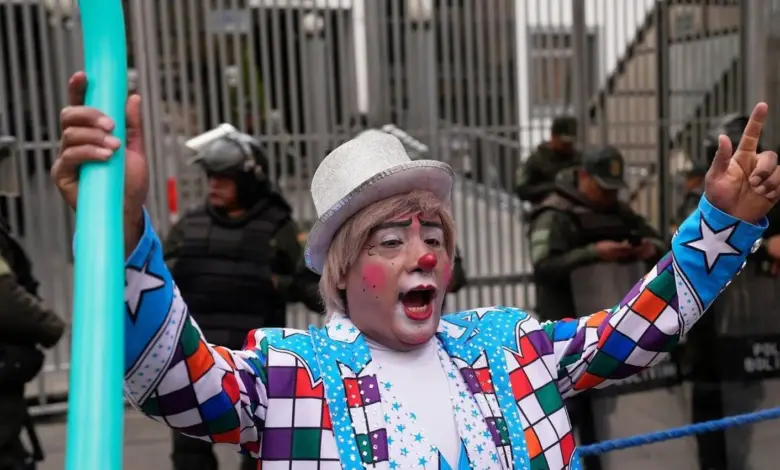
Under a high, thin sky in La Paz, costumed performers in full face paint and bright red noses spilled out from the steps of the Ministry of Education, blowing whistles and setting off small fireworks. The march — staged on Monday, March 30, 2026 (ET) — was a direct response to a government decree that limits extracurricular school activities and, performers say, threatens the handful of days each year that sustain their incomes in bolivia.
What the decree says and who it affects
The mandate issued in February requires schools to meet 200 days of lessons each year, a change that effectively bars celebrations held during regular school hours. The decree allows festivities to be moved to weekends, but performers who depend on weekday school events say that option is not a substitute. Government officials have said critiques will be taken into account when drawing up a decree for the 2027 school year, a promise that left protesters unconvinced.
Voices from the street
Wearing signature red noses and riding a unicycle, members of a local clown union gathered in front of the Ministry of Education to make their case visible. “This decree will economically affect all of us who work with children, ” said Wilder Ramírez, a leader of the local clown union who also goes by the stage name Zapallito. The performers carried signs blaming the decree for “taking away smiles, and taking work away. ”
Tailors who make costumes and photographers who work school celebrations joined the march. “This decree will diminish our income, and with the economic crisis the country is going through, our future looks increasingly gloomy, ” said Elías Gutiérrez, spokesperson for the Confederation of Artisanal Workers of Bolivia. For many of those in the procession, school performances and holiday parties are a predictable source of cash in an environment where paying gigs are scarce.
Economic context, practical impacts and limited responses
Protesters linked the decree’s timing to broader economic stress in the country: revenues from natural gas have fallen after a sustained decline in production, U. S. dollars are hard to find and imports have grown more expensive in the landlocked nation. Those structural strains were invoked by marchers as the reason why losing a few school events can be catastrophic for seasonal entertainers, costume makers and photographers who rely on those assignments.
On the immediate policy front, the decree allows celebrations on non-school days and officials have indicated they will consider the clowns’ critiques when drafting rules for the 2027 school year. For the protesters, that assurance is a modest concession: it postpones a reckoning rather than resolving how performers will survive in the months ahead. The alliance that gathered — clowns, tailors and photographers — marched through central La Paz, drawing attention to a trade often overlooked in public debates about education policy.
Back at the ministry: a scene reframed
The march began and ended in the same place, but the scene changed. What opened as a colorful, almost festive demonstration — whistles, unicycles, painted faces — closed as a sharper political plea about livelihoods and childhood. Protesters reminded passersby that one of the next national calendar events for which clowns are commonly hired is Children’s Day on April 12, and they worried that the decree would empty those invitations from school schedules.
As the crowd dispersed, the question lingered in the air: will promises to revisit the decree for the 2027 school year translate into concrete protections for those who work with children? For performers and craft workers in bolivia, the answer will determine whether the next school celebration means a paycheck or an empty stage.