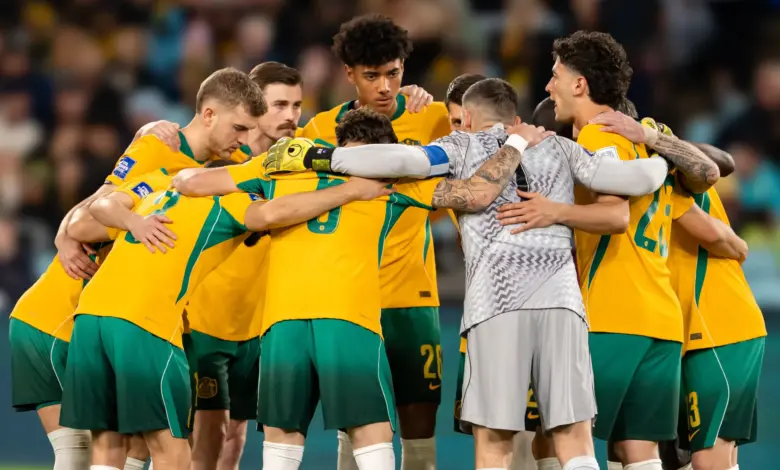
Australia vs Curacao looks like a low-stakes friendly on paper, but the fixture carries sharp contrasts: one nation roughly 17, 000 times larger, the other the smallest-ever World Cup qualifier with a population of 155, 000 — and both arrive in Melbourne with coaching upheaval and logistical strain that could matter more than the scoreline.
How do coaching changes shape the Australia Vs Curacao encounter?
Verified fact: Roel Coumans is the assistant coach working with Curaçao’s head coach Fred Rutten; Coumans previously served as assistant to Bert van Marwijk during van Marwijk’s short spell in charge of the Socceroos that ended at the 2018 World Cup. Fred Rutten took charge in February after Dick Advocaat stepped down following Curaçao’s qualification campaign.
Verified fact: Coumans described the difficulty of taking over a team close to a tournament, noting that when a new coach arrives “we knew that we had to disappoint some players” and that “there was a little bit of tension. ” He also referenced his experience of that dynamic with Australia’s 2018 transition, including a remark that he did not understand why Ange Postecoglou did not attend the World Cup after qualifying together, and that Van Marwijk was later appointed.
Analysis: Those parallels matter. Both teams have recent, high-profile coaching turnover on the eve of major competition. For Curaçao, the Dutch coaching staff’s familiarity with players reduces some risk; for Australia the memory of a late change in 2018 remains a cautionary tale. The match in Melbourne becomes more than preparation — it is a live test of how quickly a side can cohere under new or recently reconfigured leadership.
What on-field tests will the Socceroos and Curaçao present?
Verified fact: Tony Popovic, head coach of the Socceroos, highlighted the team’s desire to build identity on the ball after a physical test against Cameroon. In that earlier match the winning goal came from a 10-pass move starting deep in Australia’s half involving Paul Okon-Engstler, Jordan Bos, Kai Trewin, Patrick Yazbek, Ajdin Hrustic, Mabil and others. Popovic called the performance a work in progress and said he wanted to “continue where we finished” in the second half of that match.
Verified fact: Curaçao’s squad carries strong Dutch influence. Many senior players, including captain Leandro Bacuna and Juninho Bacuna, were born or raised in the Netherlands and represented the Oranje at youth level before switching allegiance. Tahith Chong is noted as a rare Curaçao native among the group.
Analysis: On the field this frames a clear tactical contrast. Australia is trialling an identity built on patient build-up, aggressive wingbacks and transitional weapons such as Jordan Bos and Nestory Irankunda. Curaçao’s Dutch coaching lineage and a roster steeped in European development suggest they will present a possession, technically oriented challenge rather than a purely physical test. Popovic’s desire to see how his team overcomes a “real footballing team” will be central to reading the match’s value as World Cup preparation.
Who benefits from these parallels — and what transparency should be demanded?
Verified fact: Curaçao’s World Cup qualification and subsequent travel were complicated by geopolitical disruption; a long-haul flight that might have routed Dubai instead became an itinerary including Frankfurt and Singapore, producing logistical stress and separate journeys for the squad. The island’s small player pool and the coaching staff’s prior knowledge of those players are cited as mitigating factors for limited preparation time.
Analysis: The benefits are asymmetric. Curaçao gains from coaches who already know the squad and from players with European professional experience; Australia gains a different stylistic opponent to sharpen tactical principles. The risks are also clear: late coaching changes can unsettle selections and player morale, and travel disruption compresses preparation windows.
Accountability call: National federations and coaching teams should make transparent how short-term transitions and travel contingencies were managed, and explain selection and preparation choices when they deviate from standard lead-in models. Fans deserve clarity on whether matches like this are primarily tactical rehearsals, experiments in personnel, or stress-tests of match readiness.
The immediate test is on the pitch in Melbourne — and in the scrutiny of preparation and leadership that the australia vs curacao fixture demands.